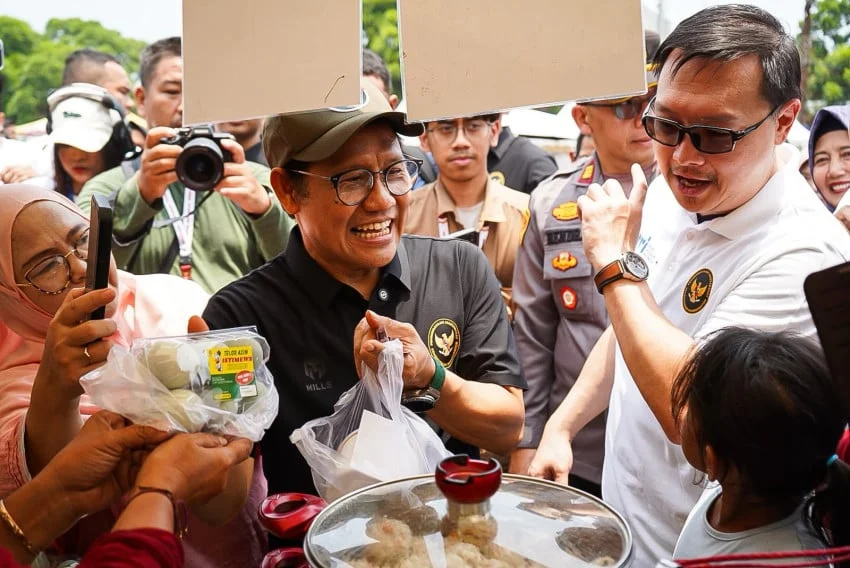
The Ministry of Coordinating for People’s Empowerment (Kemenko PM), led by Coordinating Minister A. Muhaimin Iskandar, has officially launched a strategic collaboration with the National Public Broadcasting Institution, Radio Republik Indonesia (LPP RRI), to revitalize the local economy through the 1001 Pasar Rakyat program. The initiative, which debuted at the RRI Fest in Bogor, West Java, on Saturday (19/9/2026), marks a pivotal shift in how the Indonesian government leverages state-owned media infrastructure to drive Micro, Small, and Medium Enterprises (MSME) development. By integrating digital literacy workshops with physical market access, the partnership seeks to bridge the gap between rural producers and the broader national market.
The Strategic Vision Behind 1001 Pasar Rakyat
The 1001 Pasar Rakyat program is designed to move beyond traditional subsidy-based empowerment models, focusing instead on market integration. During the inaugural event in Bogor, Minister Muhaimin Iskandar emphasized that the core objective is to transform public media spaces into commercial catalysts. By utilizing the extensive network of RRI stations across Indonesia’s vast archipelago, the government aims to create a sustainable ecosystem where local artisans, farmers, and entrepreneurs can reach wider demographics without incurring prohibitive marketing costs.
This initiative is not merely a promotional event but a structured effort to formalize the role of media in economic development. Minister Muhaimin noted that for years, public media has served as a vehicle for information and education, but under this new framework, it is being re-engineered to act as a bridge between the creative output of the community and the economic demand of the public.
Chronology of the Bogor Event and Capacity Building
The event in Bogor served as the pilot model for a nationwide rollout. The program was divided into two critical components: direct market participation and digital capacity building.
- Curation and Market Access: A total of 55 local MSMEs underwent a rigorous curation process before being selected to showcase their products in the bazar segment of RRI Fest. This selection process was intended to ensure product quality and readiness for the wider market.
- Digital Transformation Workshops: Recognizing that physical access is no longer sufficient in the modern economy, the program included a specialized workshop on social media optimization for 100 local entrepreneurs. The curriculum focused on content strategy, target audience analytics, and digital sales funnels, equipping traditional business owners with the tools necessary to compete in the digital marketplace.
The scheduling of the event was strategic, occurring at a time when the government is intensifying efforts to achieve the "Golden Indonesia 2045" vision, which necessitates a strong, decentralized economic base.
Supporting Data: The Vital Role of MSMEs in Indonesia
To understand the necessity of this initiative, one must look at the structural importance of the MSME sector in Indonesia. According to data from the Ministry of Cooperatives and SMEs, the sector contributes approximately 61% of Indonesia’s Gross Domestic Product (GDP) and absorbs nearly 97% of the total workforce. Despite these staggering figures, MSMEs often struggle with two critical barriers: technological adoption and market penetration.
The collaboration between Kemenko PM and RRI addresses these specific pain points. Research from the World Bank on digital adoption among Indonesian SMEs indicates that businesses with a strong digital presence are 80% more likely to survive market volatility. By providing the "Workshop Optimalisasi Media Sosial," the government is directly tackling the "digital divide" that often prevents rural businesses from expanding their reach beyond their immediate geographical vicinity.
Official Responses and Institutional Synergy
Minister Muhaimin Iskandar’s address during the event highlighted the necessity of a holistic approach to empowerment. "Bazar is the estuary of empowerment," he stated, illustrating that the event is the final stage of a long process that begins with training, continues through mentorship, and culminates in actual sales.
From the perspective of LPP RRI, this partnership represents a modernization of its public service mandate. As a state-owned entity, RRI has a unique reach into remote areas where commercial media might not find the audience profitable. By hosting these festivals, RRI reinforces its relevance as a pillar of community development. Observers within the Ministry suggest that this model could be replicated in every province, effectively turning the hundreds of RRI regional bureaus into "economic hubs" that provide ongoing support for local producers.
Broader Economic Implications and Future Outlook
The implications of the 1001 Pasar Rakyat program are twofold: domestic market strengthening and long-term economic resilience.
1. Decentralized Economic Growth
By focusing on regional hubs like Bogor, the program prevents the concentration of economic activity in major metropolitan areas like Jakarta. It encourages local production and consumption, which reduces logistical costs and strengthens local supply chains.
2. The Shift from Passive to Active Empowerment
Historically, government programs have been criticized for focusing too heavily on "output-based" metrics, such as the number of people trained. The Kemenko PM model shifts the metric to "impact-based" outcomes: how much did the participants’ revenue increase? How many new market channels were established? This shift is critical for the government’s target of reducing the poverty rate and increasing the national income per capita.
3. Digital Integration as a Standard
The inclusion of social media training as a mandatory component of the program signals that the government views digital literacy as a fundamental requirement for modern citizenship. This is likely to set a precedent for future social welfare and economic development programs, where technical training is no longer an optional add-on but a foundational requirement.
Challenges and Sustainability
While the program holds significant promise, analysts point to several challenges that must be navigated to ensure its long-term viability. Firstly, the sustainability of the "1001" target depends heavily on consistent funding and inter-ministerial coordination. If the program relies solely on the energy of the current administration, it may lose momentum. Secondly, the digital transformation of MSMEs is not a one-time event. The challenge will be to create a "post-workshop" support system that offers continuous mentoring, as market trends change rapidly.
Furthermore, the quality control of products sold under the "Pasar Rakyat" banner must remain high. If the program is to gain the trust of a broader consumer base, the products showcased must meet international or national standards of hygiene, packaging, and durability. Kemenko PM has indicated that the upcoming phases of the program will likely involve closer cooperation with the Ministry of Trade and the Ministry of Industry to assist with product certification and standardization.
Conclusion
The synergy between Kemenko PM and LPP RRI marks a sophisticated evolution in Indonesian economic policy. By utilizing the existing broadcasting infrastructure to facilitate real-world market access and digital training, the 1001 Pasar Rakyat program provides a blueprint for how state resources can be effectively mobilized to assist the backbone of the national economy: the MSMEs.
As the program expands from Bogor to other regions, its success will be measured by the ability of participants to transition from traditional, small-scale operations into resilient, digital-savvy businesses. The integration of media outreach with technical empowerment is a pragmatic approach that acknowledges the realities of the modern economy while remaining grounded in the needs of the local communities. If implemented with consistency and rigorous oversight, this initiative could prove to be one of the most effective tools for fostering grassroots economic independence in the coming decade. The focus now shifts to the scalability of the model and whether the collaboration can maintain its momentum as it reaches into more isolated regions of the country.