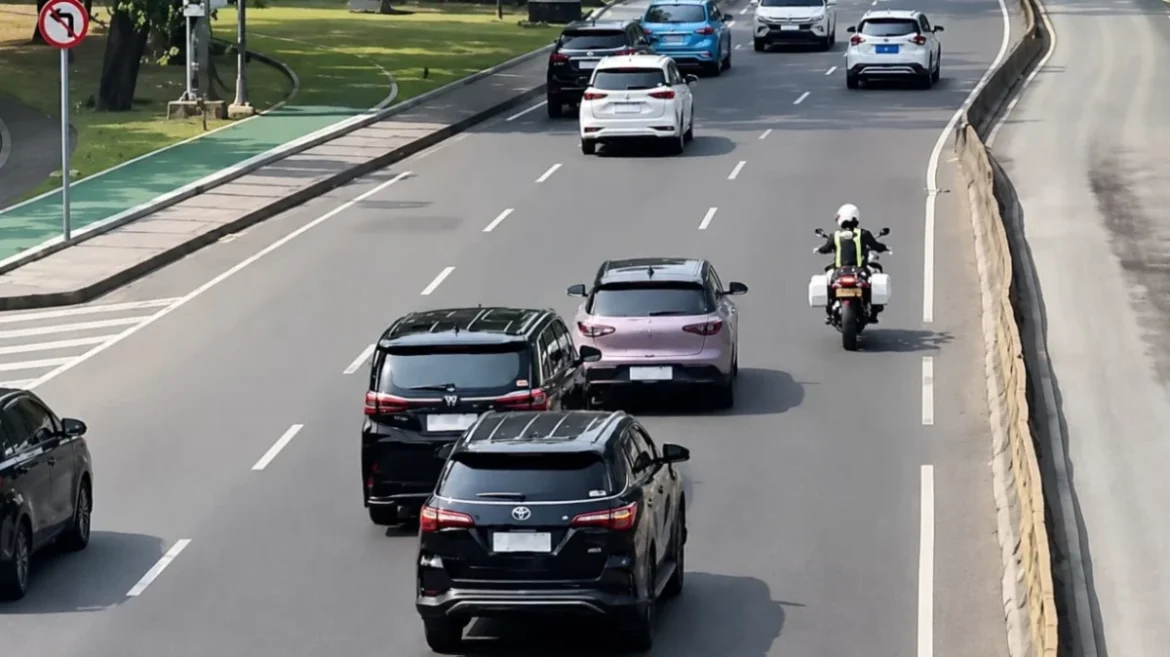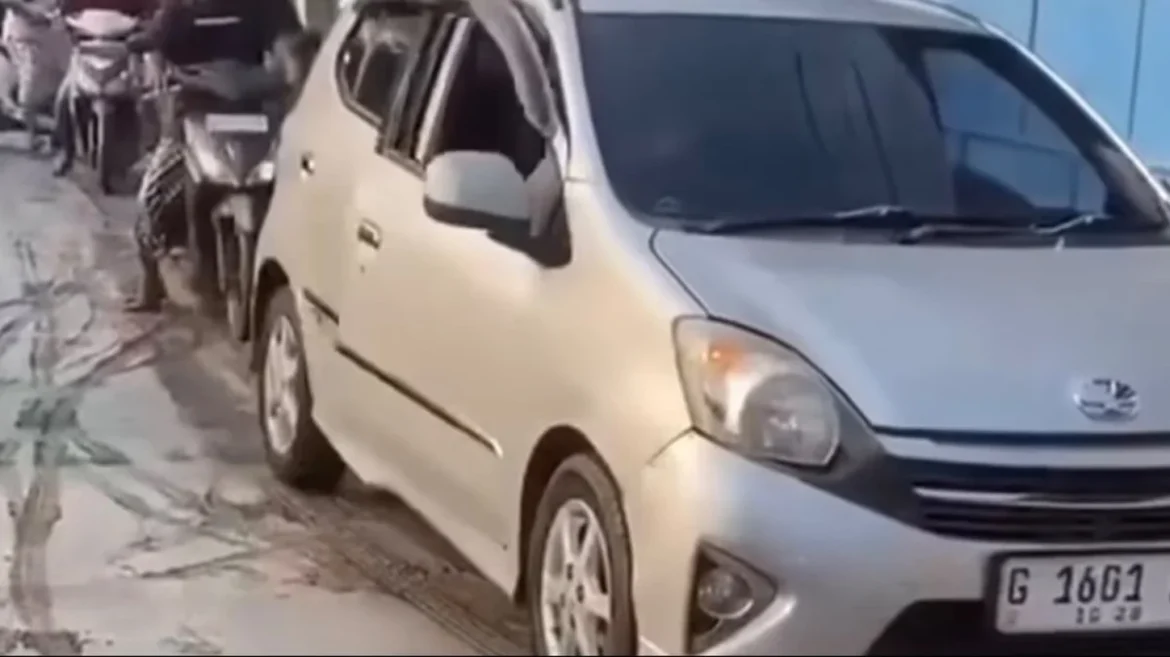
The integrity of civil infrastructure projects in Indonesia has once again been thrust into the spotlight following a viral incident in Pekalongan, Central Java, on Monday, September 28, 2026. Despite the installation of clear physical barriers, a significant number of motorists, including both motorcyclists and drivers of four-wheeled vehicles, were documented forcing their way through a segment of road currently undergoing surface repairs. The footage, which gained traction on social media platforms—specifically via the account @info_jabodetabek—has ignited a broader conversation regarding road safety, civic discipline, and the economic ramifications of premature infrastructure usage.
The Chronology of the Incident
The incident occurred on the afternoon of September 28, 2026, in a designated construction zone in Pekalongan. Construction crews had previously cordoned off the specific section of the road using vertical poles and horizontal barricades designed to prevent traffic from entering the site while the asphalt or concrete base was still curing.
According to visual evidence captured by witnesses, the unauthorized entry began when a few motorcyclists moved the temporary barricades to create a gap large enough for their vehicles to pass through. This initial breach appeared to set a precedent for other commuters. Within minutes, the makeshift opening was exploited by a steady stream of traffic, including passenger cars. The footage clearly shows the road surface in a state of flux; the material was still visibly wet, with deep tire tracks already beginning to scar the unhardened surface. Some motorcyclists were seen navigating the soft material with visible difficulty, highlighting the precarious nature of the road surface, while cars attempted to traverse the section with caution, effectively undoing the progress made by the construction team.
Infrastructure Integrity and Technical Implications
From a civil engineering perspective, the impact of such behavior extends far beyond mere traffic congestion or minor surface marks. Road construction, particularly the laying of asphalt or specialized concrete, requires a precise "curing" or "setting" period. During this window, the material undergoes chemical and physical stabilization to ensure it can withstand the heavy loads and heat friction of regular traffic.
When vehicles drive over a curing surface, the structural integrity of the pavement is compromised in several ways:
- Raveling and Rutting: The pressure from tires on semi-hardened asphalt causes the material to shift, leading to immediate rutting. This creates uneven surfaces that become permanent, significantly reducing the lifespan of the road.
- Sub-base Damage: If the load-bearing capacity of the material has not been reached, the weight of the vehicle can compress the sub-base, leading to premature cracking or "potholing" once the road is finally opened to the public.
- Bonding Failures: Driving on wet material can disrupt the bonding process between layers, which often leads to the top layer peeling off prematurely under future environmental stresses, such as heavy rain or thermal expansion.
The decision by these motorists to bypass barriers essentially guarantees that the work will have to be partially or fully redone, resulting in a direct financial loss for the local government and an extended period of inconvenience for the local community.
Socio-Economic Context of Road Infrastructure in Indonesia
The Pekalongan incident serves as a microcosm of a recurring issue in Indonesian infrastructure development: the tension between the immediate needs of road users and the logistical requirements of public works projects.
Road maintenance and development are critical drivers of the local economy. In Central Java, efficient logistics and transport corridors are vital for the textile and manufacturing sectors. When roads are closed for repair, businesses often experience minor delays. However, the lack of patience demonstrated by these specific motorists reflects a broader lack of awareness regarding the life-cycle costs of public property.
Data from the Ministry of Public Works and Housing (PUPR) consistently underscores that the cost of repairing roads damaged by premature use—caused by heavy vehicles or unauthorized traffic—is significantly higher than the cost of the initial project itself. When a road is opened prematurely, the "Return on Investment" for the tax-funded project drops drastically, as the frequency of required maintenance cycles increases.
Safety Risks and Liability
Beyond the engineering consequences, the safety risks to the drivers themselves are substantial. A road surface that is in the middle of a repair process often lacks the necessary friction coefficients required for safe driving. Motorists entering these areas risk losing traction, which can lead to single-vehicle accidents, especially for motorcyclists who are more susceptible to losing balance on uneven or sticky surfaces.
Furthermore, legal experts note that individuals who ignore construction barriers and cause damage to the public facility could, in theory, be held liable under local ordinances. While enforcement in such instances is rare, the principle remains that the destruction of public property is a violation of civil order. When motorists move physical barriers—which are legally recognized as warning signs—they are intentionally bypassing a safety protocol designed for the protection of both the worker and the public.
The Necessity of Improved Communication
The incident also highlights a systemic need for better communication in infrastructure management. Experts in urban planning suggest that the issue may not just be a lack of discipline, but a failure of information dissemination.
"When people see a road blocked, they look for the fastest path of least resistance," says an urban planning consultant familiar with regional road projects. "If there is no signage clearly directing them to an alternate route, or if the alternate route is perceived as too long or congested, drivers will inevitably attempt to breach the blockade. The solution lies in providing better, more frequent signage well before the point of construction, and perhaps using more robust physical deterrents that cannot be easily moved by a single individual."
Future Outlook and Policy Recommendations
For local authorities in Pekalongan and across Indonesia, this incident provides a case study for future road work management. To mitigate the risk of unauthorized entry, several measures could be implemented:
- Enhanced Barrier Technology: Moving beyond simple poles and plastic barricades to more substantial, interlocking concrete barriers (Jersey barriers) that are difficult to move without heavy machinery.
- Proactive Information Campaigns: Utilizing local radio, social media, and digital signage to inform residents of road closures and suggested detours at least 24 to 48 hours before work commences.
- On-site Enforcement: During the critical initial hours of setting, the presence of a flagger or a security official can be more effective than a passive sign in discouraging motorists.
- Public Awareness Initiatives: Launching educational campaigns that explain the "cost of negligence"—educating the public on how their actions lead to higher taxes and worse road conditions in the long run.
Conclusion
The images of motorists navigating the wet, freshly poured road in Pekalongan are a stark reminder of the challenges inherent in maintaining public infrastructure. While the incident may seem like a trivial disruption to some, it represents a significant failure in the shared responsibility between the state, which provides the infrastructure, and the public, which must respect the protocols necessary to ensure that infrastructure is durable, safe, and cost-effective. As Indonesia continues to invest heavily in its national road networks, fostering a culture of compliance and patience during the construction phase will be just as important as the materials used to build the roads themselves. The road ahead for better connectivity in Indonesia requires not just better engineers, but more disciplined commuters who understand that the temporary inconvenience of a detour is the price paid for a safer, more sustainable future.