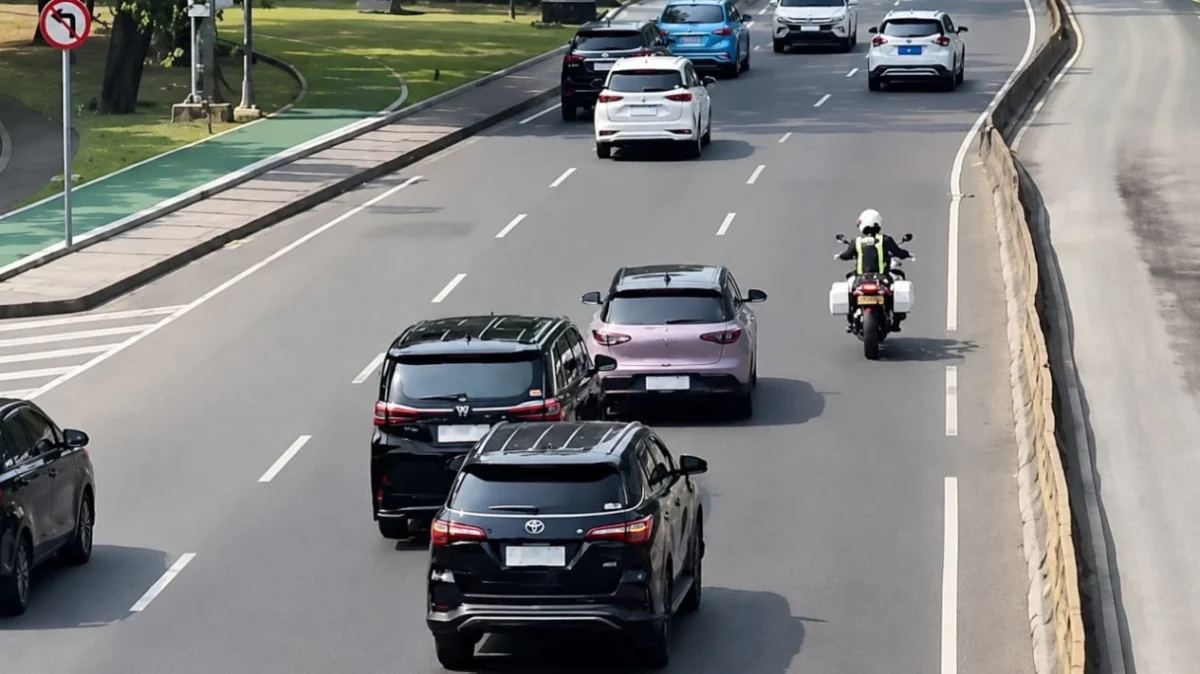
A video capturing a striking pink Geely EX2 electric vehicle calmly maintaining its lane amidst a convoy of vehicles with official escorts has ignited a fervent discussion across Indonesian social media. This widely circulated footage has not only prompted a torrent of diverse opinions but has also reignited public scrutiny over the regulations governing the use of emergency lights, specifically strobes and sirens, on public roads. The incident, which gained traction around Sunday, July 19, 2026, has brought to the forefront critical questions about road etiquette, the proper application of traffic laws, and the responsibilities of both ordinary citizens and those operating vehicles with special privileges.
The Incident and Public Reaction
The core of the viral phenomenon is the visual contrast: a vibrantly colored personal vehicle juxtaposed against a seemingly official motorcade. While the specific nature of the convoy remains unconfirmed in initial reports, the presence of escorts implies a level of official business or security detail. The Geely EX2, a distinctive electric car known for its compact size and often eye-catching color options, was observed continuing its journey without yielding to the approaching escort. This act, whether intentional or simply a misunderstanding of the situation by the driver, has been interpreted by many as a challenge to the established order of road priority.
Social media platforms have been flooded with comments ranging from outright condemnation of the Geely driver’s actions to more nuanced discussions about the effectiveness and appropriateness of emergency vehicle signaling. Some netizens have expressed frustration, viewing the incident as a blatant disregard for the safety and urgency that escorts often represent. Others have used the opportunity to voice concerns about the perceived misuse of strobes and sirens by various entities, questioning whether such signals are always warranted or if they are sometimes employed for convenience rather than genuine emergency.
Legal Framework Governing Emergency Lights and Sirens in Indonesia
The debate surrounding the pink Geely EX2 has underscored the importance of understanding Indonesia’s legal framework concerning the use of emergency lights and sirens. These regulations are not arbitrary but are meticulously outlined in national legislation to ensure order and safety on the roads.

The primary legislation governing traffic and road transportation in Indonesia is Law Number 22 of 2009 concerning Road Traffic and Transportation. This foundational law is further elaborated by Government Regulation Number 55 of 2012 concerning Vehicles.
Article 59 of Law Number 22 of 2009 is central to this discussion. It stipulates that specific vehicles can be equipped with emergency lights and sirens, contingent upon their designated function and purpose. The law categorizes these lights by color, each signifying a distinct role:
- Blue Lights and Sirens: These are exclusively designated for vehicles belonging to the Indonesian National Police (Polri). Their use signals law enforcement activity, including pursuit, traffic control, and other official duties requiring immediate attention and priority.
- Red Lights and Sirens: These are reserved for vehicles involved in critical public services and emergencies. This category includes:
- Prisoner transport vehicles: Ensuring the secure movement of individuals in custody.
- Indonesian National Armed Forces (TNI) escort vehicles: Facilitating the secure movement of military personnel or sensitive operations.
- Firefighting vehicles: Responding to fires and other emergency incidents.
- Ambulances: Transporting patients requiring urgent medical attention.
- Vehicles providing assistance at traffic accidents: Ensuring swift and safe intervention to aid those involved.
- Yellow Lights: These lights serve as a warning signal for a broader category of vehicles that, while not necessarily responding to immediate life-or-death emergencies, require special caution from other road users due to their operational nature. This group includes:
- Toll road patrol vehicles: Monitoring and managing traffic flow on highways.
- Infrastructure and traffic facility monitoring vehicles: Ensuring the upkeep and functionality of public road assets.
- Public facility maintenance and cleaning vehicles: Performing essential services that may temporarily impede traffic.
- Towing vehicles: Removing disabled vehicles from the road.
- Vehicles transporting special goods: Requiring security escorts during transit due to the nature of the cargo.
A significant distinction for yellow lights is that their use is generally not accompanied by sirens. This implies a lower level of immediate urgency compared to blue or red lights, focusing more on alerting other drivers to potential hazards or operational requirements.
Broader Implications: The Right of Way on Indonesian Roads
Beyond the specific regulations on lights and sirens, Law Number 22 of 2009 also clearly defines which vehicles are granted priority rights on the road under Article 134. This article reinforces the critical nature of the vehicles often associated with flashing lights and sirens. The list of vehicles entitled to priority includes:
- Firefighting vehicles actively responding to an emergency.
- Ambulances transporting sick or injured individuals.
- Vehicles providing assistance at traffic accidents.
- Vehicles belonging to leaders of Indonesian state institutions.
- Vehicles carrying state guests.
- Convoys accompanying a deceased person.
- Vehicles that are officially escorted by officers of the Indonesian National Police.
This comprehensive legal framework highlights that the use of strobes and sirens is intrinsically linked to the concept of granting right of way to vehicles performing essential public services or undertaking official duties that demand swift and unimpeded passage.

Evolving Guidelines for Official Escorts
In response to evolving traffic dynamics and the need for more refined operational procedures, the Korps Lalu Lintas (Korlantas) Polri, the traffic corps of the Indonesian National Police, has issued technical guidelines for traffic escorts. These guidelines, reportedly updated and emphasized in 2026, aim to ensure that the exercise of priority rights is conducted responsibly and with minimal disruption to other road users.
Key tenets of these guidelines, as observed by VIVA Otomotif on July 19, 2026, include:
- Proportional Use of Strobes and Sirens: Emphasizing that the activation of these signals should be commensurate with the actual need and urgency of the situation, avoiding unnecessary or prolonged use.
- Avoiding Hazardous Maneuvers: Mandating that escort operations must be conducted in a manner that does not endanger other road users, prioritizing safety above all else. This includes maintaining safe distances, appropriate speeds, and clear communication within the escort team.
- Promoting a Humanistic Approach: Encouraging escort personnel to adopt a more considerate and communicative approach when requesting priority on the road. This could involve using hand signals or brief verbal communication where feasible, fostering a sense of cooperation rather than imposition.
The inclusion of "humanistic approach" in these guidelines suggests a recognition that while priority is legally granted, public perception and cooperation are vital for the smooth functioning of escorts. It implies a shift towards a more community-oriented application of authority, where the necessity of the escort is clearly communicated and understood.
Analysis and Future Implications
The viral video of the pink Geely EX2 and the subsequent public discourse serve as a valuable reminder of the delicate balance between the need for efficient emergency services and the rights of all road users. The incident highlights several key areas for consideration:
- Public Awareness and Education: While laws are in place, continuous public education campaigns are crucial to ensure that all drivers understand the meaning of different emergency light colors, the circumstances under which they are used, and the legal obligations to yield.
- Enforcement and Accountability: Consistent and fair enforcement of existing regulations is necessary to deter misuse of emergency signals and to ensure that those who are legally entitled to priority do so responsibly. The public’s perception of fairness in enforcement can significantly influence compliance.
- Technology and Communication: As technology advances, there may be opportunities to improve communication between emergency vehicles and other road users. Systems that can alert drivers in advance of approaching escorts, or provide clearer visual cues, could mitigate confusion and potential conflicts.
- Protocol Refinement: The ongoing efforts by Korlantas Polri to refine escort protocols demonstrate a commitment to improving practices. Continuous review and adaptation of these guidelines based on real-world experiences and public feedback are essential.
The incident involving the pink Geely EX2, while seemingly a minor event, has amplified a critical conversation about road safety, responsibility, and the shared use of public space. It underscores that while the law grants certain privileges to emergency and official vehicles, the effective and harmonious functioning of traffic relies on the understanding, cooperation, and adherence to regulations by all parties involved. The coming months and years will likely see continued efforts to clarify these principles and ensure that emergency vehicles can perform their vital functions without unnecessary impedance, while also fostering a culture of mutual respect and safety on Indonesia’s roads.