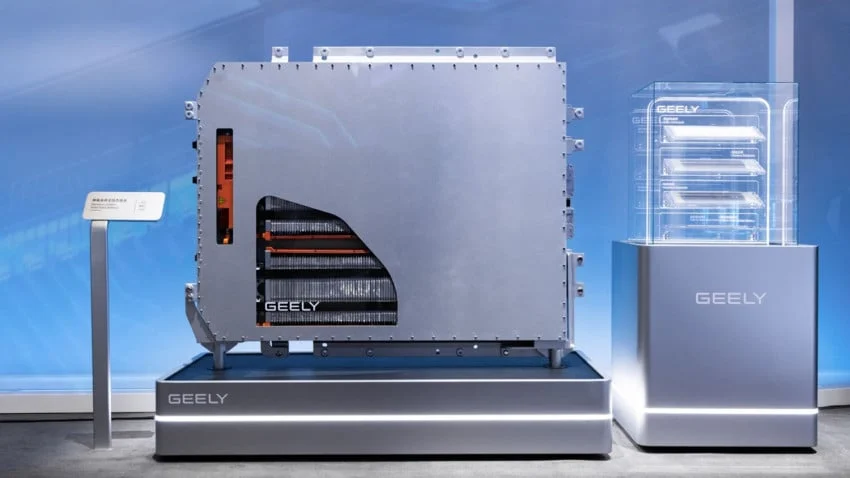
The official announcement from Geely Holding Group regarding the comprehensive integration and testing of solid-state battery technology across its entire brand ecosystem by 2027 represents a critical inflection point for the global electric vehicle (EV) industry. This strategic initiative underscores the conglomerate’s commitment to independent research and development, positioning its diversified portfolio—which includes brands such as Volvo, Polestar, Zeekr, Lotus, and Lynk & Co—at the forefront of a technological revolution that promises to overcome the enduring challenges of energy density, charging speed, and long-term battery degradation. By shifting from traditional liquid electrolyte systems to advanced solid-state architectures, Geely aims to redefine the performance benchmarks for mass-market and luxury EVs alike.
The Technological Leap: From Liquid to Solid-State
The core of Geely’s announcement centers on the successful development of a solid-state battery architecture that achieves an energy density of 500 Wh/kg. To appreciate the magnitude of this achievement, one must compare it to the current industry standard. Geely’s existing “Golden Brick” battery, which utilizes an advanced liquid electrolyte system, currently ranks among the most efficient in the world, offering a cell-level energy density of approximately 250 Wh/kg and the ability to handle massive charging power of up to 1093 kW.
The transition to a solid-state configuration effectively doubles the energy density. In practical terms, this means that the next generation of Geely-manufactured vehicles will be capable of storing twice the amount of energy in the same physical volume as their predecessors. This advancement addresses the "range anxiety" that has historically hindered mass consumer adoption of electric vehicles. Furthermore, because solid-state batteries replace flammable liquid electrolytes with solid, stable materials, they significantly enhance the safety profile of the vehicle, reducing the risk of thermal runaway and fires during high-speed charging or in the event of a collision.
Chronology of Innovation and Research Trajectory
Geely’s path to the 2027 target is not an isolated event but rather the culmination of years of focused R&D investment. The company has been systematically building its battery research division, focusing on material science and electrochemical stability.
- 2021–2022: Initial phase of testing high-nickel cathodes and silicon-anode materials to bridge the performance gap in liquid electrolyte batteries.
- 2023: Introduction of the "Golden Brick" battery, demonstrating industry-leading charging speeds and cycle life, establishing a robust testing ground for thermal management systems.
- 2024: Completion of initial lab-scale testing for solid-state prototypes, focusing on interface stability between the solid electrolyte and the electrode.
- 2025–2026: Scheduled phase for pilot production and vehicle-level integration testing, involving rigorous stress tests in varying climates and terrains.
- 2027: Anticipated start of full-scale commercial implementation across the Geely ecosystem, transitioning from prototype status to mass-market production readiness.
This timeline reflects a disciplined approach to industrialization, moving through stages of basic research, prototype validation, pilot manufacturing, and finally, full-scale commercialization.
Performance Benchmarks and Longevity
Beyond energy density, the longevity of battery systems remains a primary concern for both consumers and fleet operators. Geely has reported that its new solid-state design is engineered for an operational lifespan exceeding 600,000 miles (approximately 965,000 kilometers). This figure is transformative for the automotive industry, as it suggests that the battery pack could potentially outlast the chassis of the vehicle itself.
This durability is achieved through the use of high-stability solid electrolytes that resist the formation of dendrites—microscopic, needle-like structures that grow during charging and often lead to short circuits in traditional lithium-ion batteries. By suppressing dendrite formation, Geely ensures that the battery retains its capacity and structural integrity over thousands of charge cycles. This development provides a compelling case for the long-term economic viability of EVs, as it lowers the total cost of ownership and improves the residual value of used electric vehicles in the secondary market.
The Strategic Importance of Vertical Integration
Geely’s strength lies in its ability to deploy these batteries across a wide spectrum of brands. Unlike independent startups that must seek out manufacturing partners, Geely’s internal supply chain allows for a seamless transfer of technology from the lab to the showroom.
Industry analysts suggest that this strategy provides Geely with a distinct competitive advantage. By maintaining control over the design and production of its battery cells, the company can customize the performance characteristics of its packs for specific vehicle segments. For example, a high-performance Lotus model might prioritize the discharge rate of the 500 Wh/kg battery for rapid acceleration, while a long-range Volvo or Zeekr sedan might prioritize energy density for extended highway travel. This flexibility, facilitated by an integrated R&D ecosystem, is a major barrier to entry for competitors who rely on third-party battery suppliers.
Industry Implications and Broader Market Impact
The shift toward solid-state batteries is widely viewed by experts as the "Holy Grail" of electric mobility. As Geely pushes forward, the entire automotive landscape is forced to respond. The 2027 deadline sets a clear benchmark for competitors, including legacy manufacturers in Europe and the United States, as well as fellow innovators in the Asian market.
From an environmental perspective, the increased density and longevity of these batteries will have a significant impact on sustainability. Producing a battery requires significant energy and raw materials; by creating a battery that lasts for over 600,000 miles, the carbon footprint of the vehicle over its entire lifecycle is drastically reduced. Furthermore, because these batteries are more efficient, they require less energy to move a vehicle a set distance, further improving the "well-to-wheel" efficiency of the electrification transition.
Challenges and Future Considerations
Despite the enthusiasm surrounding the announcement, the path to 2027 is not without hurdles. Scaling the production of solid-state batteries from a laboratory environment to mass-manufacturing remains one of the most difficult engineering challenges in the modern automotive sector. The processes required to deposit thin, uniform solid electrolyte layers at a commercial scale are significantly more complex than those used for current liquid-electrolyte batteries.
Geely’s success will depend on its ability to optimize these manufacturing processes while maintaining cost-effectiveness. If the company can successfully drive down the cost per kilowatt-hour through economies of scale, it will likely trigger a rapid transition away from traditional lithium-ion technology across the entire automotive sector.
Expert Analysis and Forecasts
Industry observers have noted that Geely’s move is a direct response to the global demand for safer, lighter, and more powerful EVs. According to recent market intelligence reports, the global market for solid-state batteries is expected to grow at a compound annual growth rate (CAGR) exceeding 30% through 2030. By setting a hard date for 2027, Geely is positioning itself to capture a significant share of this emerging market.
"The move by Geely is not just about the battery; it is about the entire architecture of the vehicle," says one industry analyst. "By reducing the weight of the battery pack, the company can effectively reduce the weight of the entire car. A lighter car requires less energy to move, less heavy suspension components, and smaller, less expensive motors. The ripple effect of a 500 Wh/kg battery throughout the vehicle’s design is where the true innovation lies."
Conclusion: A New Standard for Mobility
Geely’s announcement is a testament to the rapid pace of advancement in battery technology. By focusing on both the technical specifications of the cell and the long-term operational needs of the vehicle, the company is addressing the most critical concerns of the modern consumer.
As 2027 approaches, the global automotive community will be watching Geely’s progress with intense interest. Should the company meet its targets, it will not only secure its own future in a carbon-neutral world but will also provide a blueprint for the rest of the industry. The transition to solid-state energy storage is well underway, and with this latest development, the timeline for the widespread adoption of high-performance, long-range, and ultra-durable electric vehicles has been significantly accelerated. The legacy of the "Golden Brick" has provided the foundation, but the promise of solid-state technology is what will likely define the next decade of transportation.