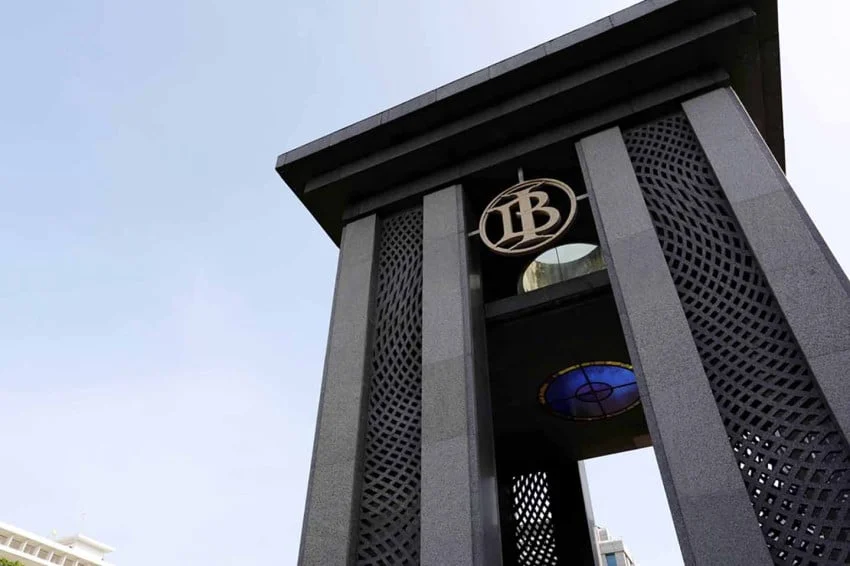
The Indonesian economy is navigating a highly volatile macroeconomic landscape as persistent external pressures and domestic financial headwinds drive the rupiah toward critical psychological thresholds. Bank Indonesia (BI), the country’s central bank, has officially addressed the mounting speculation regarding a potential adjustment to its benchmark interest rate, known as the BI-Rate. This policy scrutiny intensifies as the domestic currency experiences sharp depreciation, raising urgent questions among market analysts, investors, and policymakers regarding the optimal trajectory for Indonesia’s monetary policy through the remainder of the year.
The debate surrounding a prospective interest rate hike comes on the heels of severe currency fluctuations that have tested the resilience of the nation’s financial architecture. With the rupiah having breached the formidable milestone of Rp18,000 per United States dollar during recent trading sessions, market participants are closely monitoring every signal emanating from central banking authorities. Bank Indonesia’s deliberate and methodical approach to monetary governance is now under the microscope as the institution weighs the imperative of defending the currency against the parallel necessity of nurturing ongoing domestic economic expansion.
The Macroeconomic Context and Currency Depreciation
The recent trajectory of the Indonesian rupiah has been characterized by sustained downward pressure, driven by a complex interplay of global and domestic factors. Cumulative data released by financial authorities indicate that the local currency has depreciated by 7.74% on a year-to-date (ytd) basis leading up to the final days of September. This substantial weakening reflects broader global trends, including persistent inflationary pressures in advanced economies, shifting expectations regarding foreign central bank monetary stances—particularly the U.S. Federal Reserve—and capital outflows from emerging markets in search of higher yields abroad.
For an import-reliant emerging economy like Indonesia, a depreciating currency introduces immediate vulnerabilities, notably imported inflation. Higher costs for energy, raw materials, and essential food commodities can swiftly cascade through domestic supply chains, eroding purchasing power and complicating the inflation-targeting framework managed by Bank Indonesia. Consequently, the breach of the Rp18,000 per dollar threshold served as a major inflection point, triggering widespread speculation that the central bank might be forced to abandon its patient stance and deploy higher interest rates to stabilize the foreign exchange market.
Bank Indonesia’s Stance: A Data-Dependent Philosophy
Responding directly to market anxieties, Erwin Gunawan Hutapea, Head of the Monetary Management and Securities Assets Department at Bank Indonesia, provided critical clarity on the central bank’s decision-making process. Speaking during an official BI briefing in Jakarta, Hutapea firmly underscored that any future adjustments to the BI-Rate will not be dictated by speculative market pressures or knee-jerk reactions to short-term currency volatility. Instead, monetary policy will remain strictly data-dependent.
"So the policy interest rate is data-dependent; anyone can try to guess what BI will decide in next month’s Board of Governors Meeting (RDG), whether in November or December," Hutapea stated during the briefing.
This formulation highlights the central bank’s commitment to a systematic, evidence-based evaluation of economic indicators rather than succumbing to emotional market sentiment. Hutapea emphasized that Bank Indonesia maintains comprehensive internal projections and forecasts mapping out economic dynamics through the close of the year. However, these models are continuously stress-tested and updated during the monthly Board of Governors Meetings. By conducting rigorous, continuous assessments of incoming data—ranging from inflation prints and trade balance figures to capital flow dynamics and global economic health—BI aims to ensure that its policy stance remains agile yet anchored in empirical reality.
Balancing Stability and Growth: The Central Banker’s Dilemma
The fundamental challenge facing Bank Indonesia mirrors the classic macroeconomic dilemma: balancing external stability with internal economic momentum. Raising the benchmark interest rate is a traditional tool used by central banks to defend a domestic currency. Higher interest rates increase the attractiveness of rupiah-denominated assets, thereby curbing capital flight and dampening speculative attacks on the currency while simultaneously cooling domestic demand-pull inflation.
However, tightening monetary policy carries significant trade-offs for a developing economy striving for robust post-pandemic growth. Higher borrowing costs translate directly into elevated lending rates for corporations and retail consumers, potentially subduing credit expansion, slowing industrial production, and decelerating overall economic activity.
This delicate trade-off was recently underscored by Bank Indonesia Governor Perry Warjiyo, who pointed out that structural models indicate the broader Indonesian economy faces a growth contraction of approximately 0.1 percentage points for every 25 basis point increase in the benchmark interest rate. Given this sensitivity, any decision to hike rates must be weighed carefully against the risk of choking off the fragile momentum underpinning sectors such as manufacturing, retail, and small-and-medium enterprises (SMEs).
To navigate this tightrope, BI’s leadership continues to emphasize proportionality. The central bank is tasked with deploying a calibrated mix of instruments—spanning conventional interest rate adjustments, aggressive stabilization operations in the foreign exchange spot and domestic non-deliverable forward (DNDF) markets, and macroprudential liquidity policies—to achieve its dual mandate of price stability and sustainable economic growth.
Chronology of the Rupiah Pressure and Policy Responses
The escalation of currency volatility throughout the year has followed a distinct timeline marked by mounting external headwinds and proactive central bank interventions:
- First Quarter: Early signs of capital reallocation emerge across emerging markets as global inflation proves stickier than anticipated, pushing major central banks to maintain higher-for-longer interest rate regimes. The rupiah begins a gradual descent against a strengthening U.S. dollar.
- Second Quarter: Geopolitical tensions and supply chain disruptions amplify commodity price volatility. Bank Indonesia intervenes heavily in the foreign exchange market through triple-intervention strategies while maintaining the benchmark interest rate to support nascent domestic demand.
- July–August: Global financial markets experience heightened turbulence. The strengthening of the U.S. dollar accelerates as U.S. macroeconomic data consistently beats expectations, driving capital outflows from Indonesian sovereign bonds and equities.
- Late September: Cumulative depreciation reaches 7.74% ytd, and spot transactions briefly breach the psychological barrier of Rp18,000 per U.S. dollar. This triggers widespread market speculation regarding an imminent emergency rate hike or a definitive hawkish shift by the central bank.
- September 30: Bank Indonesia holds an official media briefing in Jakarta. Department Head Erwin Gunawan Hutapea formally addresses the market rumors, reiterating the institution’s data-dependent framework and outlining that upcoming Board of Governors Meetings in November and December will serve as the proper forums for comprehensive monetary policy reassessment.
Fact-Based Implications and Outlook for the Fourth Quarter
As Indonesia enters the final quarter of the year, the implications of the current monetary environment extend across multiple facets of the national economy.
First, corporate treasuries are being forced to adapt to heightened foreign exchange risk. Companies heavily reliant on imported raw materials or servicing foreign-currency-denominated debt face compressed profit margins, necessitating tighter hedging strategies and localized sourcing adjustments.
Second, consumer price inflation remains a central focus. While headline inflation has generally remained within BI’s target corridor, the sustained depreciation of the rupiah poses a latent threat of imported inflation heading into the year-end holiday season, when domestic demand typically surges. If currency weakness persists, the cost of imported foodstuffs and energy could trigger localized price spikes, tipping the scale in favor of a precautionary rate hike by the central bank.
Third, domestic banking liquidity is undergoing careful calibration. Bank Indonesia’s macroprudential policies are designed to ensure that while monetary policy remains appropriately tight to safeguard the currency, the banking sector retains sufficient liquidity to extend credit to productive sectors of the economy, particularly infrastructure, export-oriented industries, and green energy initiatives.
Ultimately, Bank Indonesia’s overarching message remains one of disciplined preparedness. Whether the upcoming Board of Governors Meetings in November and December will culminate in a formal upward adjustment of the BI-Rate remains contingent upon the evolution of hard economic data. As Hutapea reiterated, every policy measure enacted by the central bank is designed to represent the most measured and effective response possible—safeguarding national economic stability while steadfastly preserving the pathways of sustainable growth for Indonesia’s future.