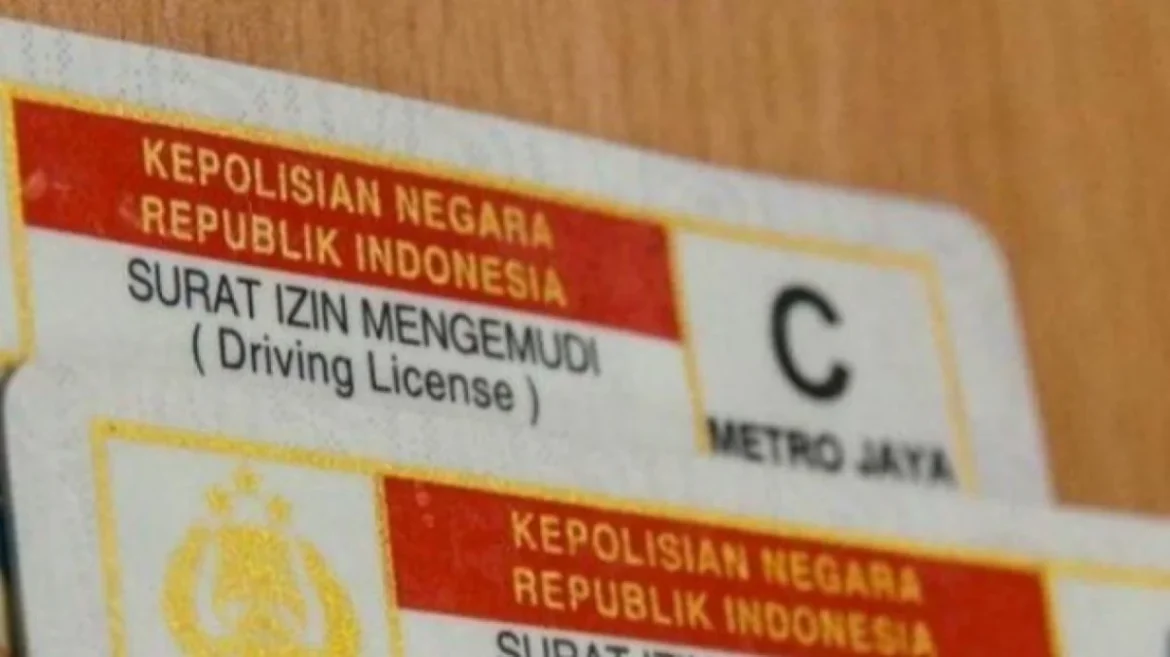
The Indonesian National Police Traffic Corps, widely known as Korlantas Polri, has officially introduced a groundbreaking self-service technology aimed at modernizing public administrative services for motorists across the country. Designated as the Kios SIM, this newly launched automated kiosk system is specifically engineered to allow citizens to print their Driver’s Licenses, or Surat Izin Mengemudi (SIM), independently without the traditional friction and prolonged waiting times typically associated with physical police stations. Unveiled during a high-profile digital innovation launch event on Friday, September 25, the facility marks a significant milestone in the ongoing digital transformation of Indonesia’s law enforcement administrative infrastructure.
According to official statements released by Korlantas Polri, the initial rollout of the Kios SIM is strictly designated for applicants processing the renewal of Class A driver licenses, which apply to private four-wheeled passenger vehicles, and Class C driver licenses, which pertain to two-wheeled motor vehicles. Furthermore, utilization of these automated kiosks is currently integrated exclusively with the Sinar application—an acronym for Presisi Nasional Interactive SIM—which operates within the broader Digital Korlantas ecosystem. This strategic integration is designed to bridge the gap between online registration and physical documentation, creating a seamless hybrid experience for millions of Indonesian drivers residing in urban centers.
Chronology and Launch of the Digital Innovations
The debut of the Kios SIM did not occur in isolation. It was unveiled alongside a suite of three other prominent digital transformation initiatives spearheaded by Korlantas Polri, reflecting a comprehensive strategy to overhaul traffic administration. The concurrent innovations include the implementation of an advanced Electronic Traffic Fine Payment System, the digitization of Vehicle Registration Certificates known as STNK Digital, and the launch of the "Siap Jalan" operational readiness application.
The introduction of these four pillars of digital policing represents months of behind-the-scenes software development, infrastructural planning, and security hardening led by traffic police IT specialists. Korlantas leadership recognized that while mobile applications had successfully shifted the initial registration phases to smartphones, the final bottleneck remained the physical printing and distribution of plastic card licenses. This bottleneck historically forced applicants to endure long queues at the Main Traffic Administration Centers, commonly referred to as Satpas Satuan Penyelenggara Administrasi SIM. By conceptualizing the Kios SIM as an automated, standalone physical terminal, Korlantas aimed to solve the final mile delivery problem of administrative document issuance.
Operational Mechanics: How Kios SIM Works
Understanding the operational workflow of the Kios SIM reveals a user-centric design philosophy intended to minimize bureaucratic hurdles while maintaining strict data security and identity verification protocols. The process begins well before the applicant steps foot near the physical kiosk machine.
Citizens initiating a license renewal must first download and access the Sinar application through the Digital Korlantas platform. Within the application, users complete the mandatory administrative steps, including digital health check validations, psychological test submissions, and the payment processing of renewal fees through authorized banking channels. Once the administrative backend clears the submission, the system generates a secure, encrypted Quick Response code, commonly known as a QR code.
Armed with this digital identifier, the applicant proceeds to the nearest operational Kios SIM booth. At the terminal, the user scans the QR code via the machine’s integrated optical scanner. The kiosk then retrieves the applicant’s profile from the centralized Korlantas database, prompting the user to perform an on-screen data verification step to confirm personal particulars, photograph, and digital signature match current records.
Upon successful confirmation of identity, the user simply presses a physical or on-screen print command. The internal mechanism of the Kios SIM automatically feeds a blank, secure card stock into the thermal or laser printing assembly, engraving the verified license data and securely ejecting the finalized, legally valid SIM card within a matter of minutes.
For motorists who arrive directly at a designated Satpas facility without completing the pre-arrival kiosk generation steps on their personal mobile devices, transitional support remains available. Such applicants can utilize terminal interfaces installed directly at the physical location to register, secure their QR code, execute the mandatory verification parameters, and proceed to immediate card production. However, Korlantas emphasizes that the core operational framework of the Kios SIM network is inextricably tied to the digital workflows established by the Sinar application.
Current Deployment Status and Geographic Scope
Despite the considerable enthusiasm surrounding the rollout, access to the Kios SIM remains restricted in terms of physical availability. During the initial launch phase, Korlantas Polri has not yet released a comprehensive, exhaustive public registry detailing every operational coordinate where the kiosks are currently installed. The deployment strategy is intentionally phased and methodical, allowing technical teams to monitor machine reliability, network stability, and user adoption rates before committing to a nationwide saturation deployment.
Nevertheless, strategic projections outlined by the traffic corps indicate that geographic expansion is already underway. In the immediate future, Korlantas plans to aggressively scale the installation of these automated printing booths across the entire Jakarta, Bogor, Depok, Tangerang, and Bekasi—collectively known as Jabodetabek—metropolitan region. Furthermore, placement strategies are not limited to traditional police installations; discussions and infrastructural assessments are currently underway to position the Kios SIM terminals inside high-traffic Public Service Malls, or Mal Pelayanan Publik, as well as selected strategic public spaces designed to maximize accessibility for working-class citizens who face time constraints during standard business hours.
Official Statements and Institutional Objectives
The Head of Korlantas Polri, Inspector General Police Wibowo, provided detailed insights into the conceptual motivations driving the deployment during the introductory weekend briefing. Emphasizing the institution’s commitment to public service reform, Inspector General Wibowo highlighted that the initiative directly addresses long-standing complaints regarding administrative inefficiencies.
"Kios SIM. This is a breakthrough that we have carried out to provide an alternative independent SIM printing option for the community, specifically for the renewal of Class A and Class C licenses using the Sinar application within Digital Korlantas," stated Inspector General Wibowo in an official briefing published by the Korlantas Polri portal.
Elaborating on the procedural simplicity of the system, Wibowo emphasized the elimination of manual desk interventions. "So the public simply needs to come to the kiosk booth. After registering, they will be given a QR code, which they just need to tap. Afterward, the community member verifies their data. If everything matches, they simply press the print button, and it automatically prints itself," he explained.
Addressing the broader macroeconomic and operational goals of the program, Wibowo underscored the necessity of decompressing overcrowded administrative facilities. "The hope is that the breakthroughs we are implementing can truly provide optimal service to the community and significantly reduce the long queues that currently accumulate at our main Satpas offices," Wibowo concluded.
Background Context: The Evolution of Indonesian Traffic Administration
To fully contextualize the introduction of the Kios SIM, one must examine the systemic evolution of Indonesia’s driver licensing framework over the past decade. Historically, obtaining or renewing a SIM card was synonymous with an arduous, half-day or even full-day ordeal. Applicants were required to navigate bureaucratic queues, submit physical paper medical certificates, undergo manual data entry by frontline police personnel, and wait indefinitely in crowded waiting rooms while physical plastic cards were manually batched and printed behind secure service counters.
These traditional operational bottlenecks routinely invited vulnerabilities, including administrative backlogs, public frustration, and opportunities for localized intermediary corruption, commonly referred to as "calo" services. Recognizing these systemic vulnerabilities, the Indonesian National Police initiated a multi-year digital transformation roadmap aimed at transparency, efficiency, and public convenience.
The launch of the Digital Korlantas application and the Sinar feature marked the first major paradigm shift, allowing citizens to bypass the initial paperwork phases entirely from their mobile devices. However, the physical issuance of the card remained a centralized chore tied strictly to operational hours at authorized Satpas locations, often resulting in severe physical congestion whenever system outages occurred or when application surges overwhelmed printing stations. The Kios SIM directly addresses this historical vulnerability by decentralizing the physical card issuance process into automated, unattended service points.
Broader Economic and Sociological Implications
The implementation of automated self-service administrative kiosks carries profound implications for urban administration, public trust, and civic convenience in Indonesia. From an administrative perspective, shifting routine renewals of Class A and Class C licenses—which constitute the vast majority of all license transactions nationwide—away from manual service windows liberates considerable police manpower. Frontline officers who previously spent hours verifying paperwork and operating manual printers can now be reallocated toward more critical traffic management duties, road safety education, and law enforcement operations.
From the perspective of the citizenry, the reduction of waiting times translates into tangible economic savings. Millions of workers in major metropolitan centers like Jakarta often have to take time off work to handle administrative chores at police stations. By introducing automated kiosks that can potentially operate extended hours or be placed in accessible public locations such as shopping malls and public service centers, the burden of administrative compliance is substantially lowered.
Furthermore, the integration of biometric verification, secure digital payments, and encrypted QR-based handshakes significantly hardens the administrative pipeline against fraudulent activities. Because physical cards are only produced after a verified digital trail has cleared national databases, the scope for unauthorized manual issuance is systematically eradicated.
Challenges and Future Outlook
Despite the overwhelmingly positive reception of the Kios SIM initiative, independent observers and traffic analysts point out several challenges that Korlantas Polri must navigate to ensure long-term success. First and foremost is the issue of hardware maintenance and network reliability. Automated self-service kiosks deployed in high-traffic public areas are inherently susceptible to technical malfunctions, paper jams, power fluctuations, and software connectivity drops. Establishing a robust, highly responsive technical support and rapid maintenance infrastructure will be vital to prevent public frustration if a kiosk unexpectedly goes offline.
Secondly, public digital literacy remains a variable factor. While smartphone penetration in Indonesia is exceptionally high, a significant demographic of motorists may still require initial assistance or physical orientation when interacting with unattended kiosk terminals for the first time. The strategic placement of customer service guides or digital assistants near initial installations during the rollout phase will likely determine how quickly the broader public adapts to the technology.
Looking forward, the successful scaling of the Kios SIM network across Jabodetabek and eventually to major provincial capitals throughout the archipelago will serve as a definitive benchmark for Indonesian bureaucratic modernization. If proven effective, the architecture of the Kios SIM could potentially be expanded in future developmental phases to accommodate other complex licensing categories, endorsement updates, or vehicle documentation services, permanently altering the operational landscape of public interaction with law enforcement agencies in Indonesia.