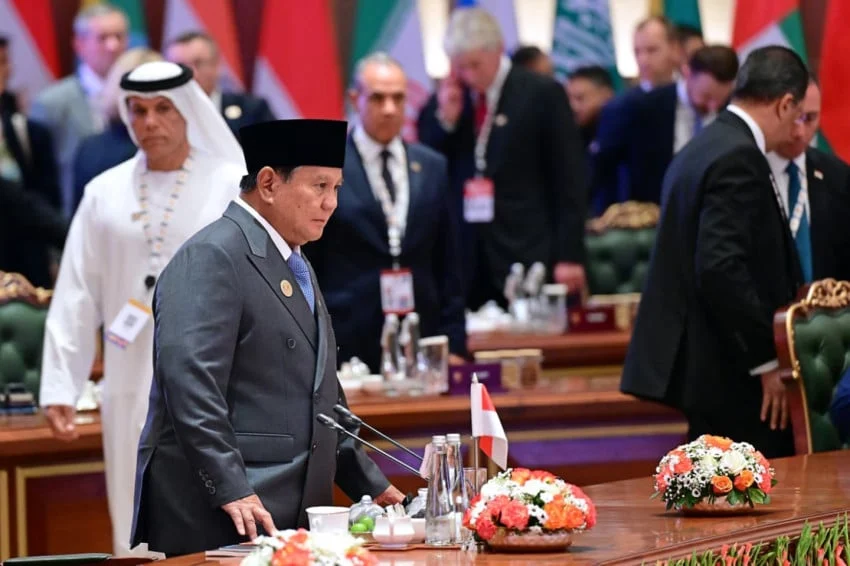
JAKARTA — Indonesian President Prabowo Subianto placed national resilience and self-reliance at the core of his international policy agenda during his address at the 18th BRICS Summit held in New Delhi, India. Addressing global leaders at a high-level restricted session, the Indonesian head of state articulated a vision of multilateral cooperation rooted in domestic economic empowerment, food security, and energy independence.
The summit, which gathered leaders and high-ranking delegates from major emerging economies, served as a premier platform for Indonesia to articulate its strategic foreign policy objectives following its formal integration into the economic bloc. President Prabowo’s remarks underscored a foundational philosophy: that external international alliances and multilateral frameworks derive their true leverage from the internal strength and prosperity of a nation’s citizenry.
Main Facts and the Core Address
Speaking during the restricted session themed "Inclusive Global Governance and Strengthening Multilateralism," President Prabowo addressed the interconnected vulnerabilities facing emerging economies in an increasingly volatile geopolitical landscape. He argued that true international sovereignty begins with the fundamental capacity of a government to sustain its population.
"Withersoever we look, the stability of a nation is tested by its ability to stand on its own feet," Prabowo noted during the session. He emphasized that unity among BRICS member states would significantly bolster the collective bargaining power and economic resilience of each participating country. However, he maintained that collective strength is merely an extension of domestic stability.
According to the Indonesian leader, national resilience originates from within, forged through the systematic fulfillment of basic societal needs. He explicitly highlighted food security, secure and diversified energy supplies, universal access to quality education, and the creation of pathways to sustainable prosperity for all citizens as the four pillars of a sovereign state.
"Kekuatan selalu bermula dari dalam negeri bersama rakyat kita—lewat kemampuan kita untuk memenuhi kebutuhan pangan mereka, menjamin pasokan energi yang mereka perlukan, mendidik anak-anak kita, serta memberikan mereka kesempatan untuk hidup sejahtera. Begitulah cara kita membangun bangsa yang tangguh dan benar-benar mandiri," Prabowo stated, reinforcing the narrative that economic self-sufficiency is the ultimate prerequisite for meaningful global participation.
Background Context of Indonesia Joining BRICS
President Prabowo’s presence at the 18th BRICS Summit marks a pivotal chapter in Indonesia’s modern diplomatic trajectory. For decades, Jakarta has adhered strictly to a "free and active" (bebas aktif) foreign policy, historically avoiding formal alignment with major geopolitical blocs that might compromise its strategic neutrality. However, the rapidly shifting architecture of global trade, post-pandemic economic recovery challenges, and the fragmentation of multilateral institutions have prompted a recalibration of Indonesia’s international engagements.
The decision to join BRICS—comprising Brazil, Russia, India, China, and South Africa, alongside newly admitted member states—has been hailed by the administration as a historic milestone. In prior statements, President Prabowo characterized Indonesia’s inclusion as a "great honor" (kehormatan besar), signaling Jakarta’s intent to play a more proactive role in shaping the rules of international commerce, financial architecture, and sustainable development.
BRICS represents a substantial share of the global population, landmass, and gross domestic product (GDP), making it an increasingly influential counterweight to traditional Western-dominated financial and political institutions such as the G7, the International Monetary Fund (IMF), and the World Bank. By integrating into this bloc, Indonesia aims to diversify its strategic partnerships, secure preferential trade agreements, and champion the collective interests of the Global South.
Chronology of the 18th BRICS Summit in New Delhi
The 18th BRICS Summit unfolded over a carefully orchestrated multi-day schedule in New Delhi, reflecting India’s diplomatic outreach and leadership within the bloc.
Day One marked the arrival of heads of state and government delegations at the summit venue, accompanied by bilateral sideline meetings aimed at ironing out trade agreements, investment pacts, and security frameworks. The initial plenary sessions focused on post-pandemic economic recovery, supply chain resilience, and the reform of international financial institutions to better reflect contemporary global demographics.
Day Two featured the high-level restricted sessions, most notably the dialogue on "Inclusive Global Governance and Strengthening Multilateralism." It was during this specialized forum that President Prabowo delivered his substantive intervention on national resilience, self-sufficiency, and domestic empowerment. The session allowed leaders to engage in frank, closed-door discussions regarding regional security flashpoints, technological sovereignty, and the transition toward green energy without compromising industrial growth.
Day Three concluded with the adoption of the New Delhi Declaration, a comprehensive communique outlining the bloc’s shared commitments to multilateralism, sustainable development, financial inclusivity—including the potential expansion of local currency settlements in international trade—and coordinated responses to climate change.
Supporting Data and Economic Context
Indonesia’s strategic pivot toward BRICS is underpinned by robust macroeconomic fundamentals and strategic resource wealth. As Southeast Asia’s largest economy, Indonesia boasts a GDP exceeding $1.3 trillion, driven by domestic consumption, robust infrastructure development, and a rapidly expanding digital economy.
However, the nation faces persistent structural challenges that align closely with the priorities outlined by President Prabowo in New Delhi:
- Food Security: With a population approaching 280 million, ensuring stable, affordable, and domestically produced food supplies remains a paramount priority. Recent global supply chain disruptions caused by geopolitical conflicts have accelerated Indonesia’s push toward agricultural modernization and food estate development.
- Energy Transition: Indonesia is one of the world’s leading producers of nickel—a critical component for electric vehicle (EV) batteries—and possesses vast reserves of coal, geothermal, and renewable energy potential. Balancing the global demand for a green transition with domestic energy affordability is a core policy tightrope.
- Education and Human Capital: To escape the middle-income trap and leverage its impending demographic dividend, Jakarta has aggressively expanded national budget allocations for education, vocational training, and social welfare safety nets.
Official Responses and Domestic Reactions
Back in Jakarta, political analysts, economic experts, and government officials have closely monitored President Prabowo’s statements at the BRICS Summit. The reception has been largely favorable, with legislative leaders praising the administration’s pragmatic approach to foreign policy.
Members of the House of Representatives (DPR RI) noted that Indonesia’s participation in BRICS does not contradict its traditional non-aligned stance. Instead, it represents an evolution toward multi-alignment—engaging constructively with both Western economies and emerging powers to maximize national economic benefits.
Business associations and chambers of commerce have likewise expressed optimism. Leaders in the manufacturing, agricultural, and energy sectors view the BRICS framework as an expanded marketplace for Indonesian exports, particularly processed mineral commodities, agricultural goods, and manufactured products. Furthermore, discussions within BRICS regarding alternative financial architectures and de-dollarization are viewed by domestic financial analysts as potential safeguards against foreign exchange volatility.
Broader Impact and Geopolitical Implications
President Prabowo’s emphasis on self-sufficiency during an international multilateral summit carries profound geopolitical implications. By asserting that external strength is entirely contingent upon domestic capability, the Indonesian president signaled to both domestic and international audiences that Jakarta will not compromise its core developmental goals for the sake of empty diplomatic optics.
The implications of Indonesia’s active engagement in BRICS can be categorized into three primary dimensions:
-
Economic Diversification and Trade Expansion
By deepening ties with BRICS economies, Indonesia gains enhanced access to massive consumer markets such as India and China, as well as resource-rich nations in Latin America and Africa. This diversification cushions the Indonesian economy against economic downturns or protectionist policies originating in traditional Western export markets. Moreover, potential frameworks for trading in local currencies could significantly reduce transaction costs and foreign exchange risks for Indonesian enterprises. -
Leadership of the Global South
Indonesia’s vocal advocacy for food security, energy independence, and inclusive global governance positions Jakarta as a natural leader within the Global South. By articulating pragmatic solutions rooted in domestic self-reliance, Indonesia provides a compelling blueprint for other developing nations seeking to navigate great-power competition between the United States and China without becoming collateral damage in trade and technological wars. -
Reform of Global Institutions
As a member of BRICS, Indonesia adds its considerable diplomatic weight to ongoing global demands for the reform of multilateral organizations. Jakarta has long maintained that institutions like the United Nations Security Council, the World Bank, and the IMF require structural overhauls to grant equitable representation and voting power to emerging and developing economies. Prabowo’s call for inclusive global governance directly reinforces this systemic critique.
Conclusion
The 18th BRICS Summit in New Delhi has served as a defining diplomatic theater for President Prabowo Subianto to outline Indonesia’s strategic worldview. By anchoring international cooperation firmly to the concept of domestic self-sufficiency—encompassing food, energy, education, and social welfare—Prabowo has redefined Indonesia’s approach to multilateralism. As the nation steps into its new role within the BRICS bloc, the administration’s focus remains resolutely fixed on building a resilient, self-reliant nation capable of commanding respect on the global stage through inner strength and economic sovereignty.