
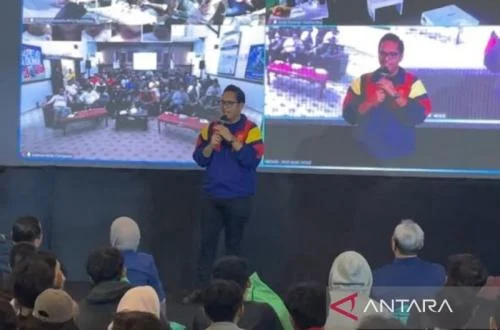
In a decisive call for continued professionalism and civic duty, Medan Mayor Rico Tri Putra Waas issued a firm reminder to all civil servants (ASN) within the Medan City Government to uphold their regular work schedules and responsibilities immediately following the highly anticipated Final of the 2026 FIFA World Cup. The directive, delivered with a mix of seriousness and casual warmth, came during a vibrant public viewing event attended by the Minister of Communication and Digital, Meutya Hafid, underscoring the government’s dual commitment to fostering community spirit through major events while safeguarding public service delivery. The Mayor’s emphasis on responsibility highlights a perennial challenge for governments worldwide: balancing widespread public enthusiasm for global spectacles with the imperative of maintaining operational efficiency, particularly within the crucial public sector.
The Directive: Upholding Civil Service Professionalism
Mayor Rico Tri Putra Waas’s message was succinct but potent, delivered amidst the electrifying atmosphere of a communal viewing event. "Don’t skip work, okay? Don’t let the excuse be that you were invited by the Minister to watch together, but then don’t show up for work tomorrow," Waas stated, his tone carefully calibrated to convey both authority and understanding. This carefully worded admonition was a proactive measure designed to mitigate potential disruptions to public services that often accompany major global sporting events, especially when their climactic moments fall on the cusp of a working day. The 2026 World Cup Final, scheduled for a Monday morning in Indonesia due to time zone differences with the host nations, presented a specific scenario where late-night or early-morning celebrations could easily spill over into the start of the work week, impacting productivity and public accessibility to essential government services.
The role of ASN in Indonesia is foundational to the functioning of the state. These individuals are tasked with executing government policies, providing public services, and ensuring the smooth operation of administrative functions across various sectors, from healthcare and education to infrastructure and social welfare. Any significant absenteeism or decline in productivity among this vital workforce can have tangible consequences for citizens who rely on these services daily. Mayor Waas’s call, therefore, was not merely about attendance; it was a reinforcement of the core principles of public service: dedication, professionalism, and an unwavering commitment to the public good. It also subtly underscored the broader government agenda to enhance the professionalism and accountability of the civil service, a recurring theme in national administrative reforms. The Mayor’s proactive communication aimed to preempt any lapse in duty, framing the enjoyment of the World Cup as a shared experience that should not, however, supersede professional obligations.
A Shared Experience: The World Cup Final Viewing Event
The backdrop for Mayor Waas’s important message was a large-scale public viewing event (nobar) co-hosted by the Medan City Government and the Ministry of Communication and Digital (Kemenkomdigi). Such events serve multiple purposes: they foster a sense of community and national unity, provide a safe and controlled environment for large gatherings, and allow citizens to collectively experience moments of global significance. The presence of Minister Meutya Hafid at the event further elevated its profile, signaling a collaborative effort between local and central government entities in engaging with the populace. Her participation not only lent institutional weight to the gathering but also highlighted the Ministry’s role in leveraging digital platforms and media for public engagement and information dissemination.
The logistics of organizing such a significant event, often held in public squares or designated open spaces, involve meticulous planning for security, crowd control, technical infrastructure for broadcasting, and public amenities. For the 2026 World Cup Final, these considerations would be paramount, ensuring that the spectacle could be enjoyed by thousands while maintaining order and safety. The shared laughter, cheers, and occasional groans that characterize a nobar event are powerful social glue, transforming a solitary viewing experience into a collective memory. It is within this context of shared excitement that Mayor Waas strategically placed his directive, making it a part of the communal conversation rather than a detached decree. This approach aimed to ensure that the message resonated more effectively with the target audience, acknowledging their enthusiasm while gently guiding them back to their responsibilities. The event itself, facilitated by Kemenkomdigi, was lauded by Mayor Waas as a positive initiative, providing valuable entertainment and a platform for citizens to engage with sports, particularly football, which holds a special place in the hearts of many Indonesians.
The Global Spectacle: World Cup 2026 Context
The 2026 FIFA World Cup marks a significant milestone in the tournament’s history, being the first to be jointly hosted by three nations: the United States, Canada, and Mexico. This expanded geographical footprint, coupled with an enlarged format featuring 48 teams (up from 32), promises an even grander spectacle and a broader global reach. The tournament’s expanded scale means more matches, more participating nations, and consequently, an even greater global audience. For Indonesian viewers, the geographical distance and time zone differences present unique viewing challenges, often pushing key matches, particularly the final, into late-night or early-morning slots. The 2026 Final falling on a Monday morning in Indonesia exemplifies this challenge, directly impinging on the conventional start of the work week.
The FIFA World Cup is more than just a football tournament; it is a global cultural phenomenon that transcends sports. It unites nations, ignites passions, and often sets the rhythm of daily life in many parts of the world for its duration. In Indonesia, football commands an immense following, with legions of passionate fans who keenly follow international leagues and tournaments. The World Cup, in particular, becomes a national obsession, with discussions dominating social media, workplaces, and family gatherings. This pervasive influence is precisely why governmental bodies, like the Medan City Government, must consider its potential impact on civic functions and actively manage public expectations and responsibilities during such periods. The anticipation for 2026 is already building, promising a tournament that will once again captivate billions globally and undoubtedly impact routines across Indonesia.
Return to the National Airwaves: TVRI’s Broadcasting Rights
A point of immense national pride highlighted by Minister Meutya Hafid was the announcement that Indonesia, through its state-owned public broadcaster TVRI, would once again serve as an official broadcaster for the 2026 FIFA World Cup. This marks a significant return after a 24-year hiatus, a period during which private commercial broadcasters predominantly held the rights to air the prestigious tournament. The Minister expressed profound satisfaction, stating, "After 24 years, in 2026, we are again a broadcaster of the World Cup. In the future, we can broadcast it again." This statement not only celebrates the immediate achievement but also hints at a long-term strategy for TVRI to reclaim its prominent role in national sports broadcasting.
The return of the World Cup to TVRI is highly symbolic. As the oldest television station in Indonesia, TVRI holds a unique position as a public service broadcaster, mandated to provide information, education, and entertainment to all segments of society, regardless of their ability to pay for premium cable or satellite services. By securing the broadcasting rights, TVRI ensures that the World Cup will be accessible to a broader audience across the archipelago, including remote areas where commercial alternatives may be unavailable or unaffordable. This aligns with Kemenkomdigi’s broader mandate to promote digital inclusion and ensure equitable access to information and public content. From a historical perspective, TVRI’s previous role as a World Cup broadcaster during earlier eras solidified its place in the national consciousness. Reclaiming this role not only reconnects with a legacy but also reaffirms the importance of public broadcasting in shaping national experiences and fostering a sense of shared identity through major cultural and sporting events. It also presents an economic narrative, as securing such rights involves substantial financial investment, reflecting a strategic decision to prioritize public access over purely commercial interests.
Balancing Enthusiasm with Responsibility: Implications for Productivity and Public Service
The call from Mayor Waas to maintain productivity following the World Cup Final is not an isolated incident but a reflection of a recurring administrative challenge faced by governments and businesses globally during major events. The economic impact of absenteeism and reduced productivity can be substantial. For the public sector, this translates directly into potential delays in service delivery, longer queues for administrative processes, and a general slowdown in government operations. While a single day of reduced efficiency might seem minor in isolation, cumulative effects across a large workforce like the ASN can significantly impede progress on critical projects and daily civic functions.
Consideration of employee welfare versus organizational demands is a delicate balance. While celebrating national achievements or enjoying global spectacles is important for morale and public well-being, the continuity of essential services cannot be compromised. Human Resources departments within government agencies often prepare for such events by reminding staff of attendance policies, promoting flexible work arrangements where feasible, or even implementing contingency plans to ensure critical functions remain staffed. Such directives from city leaders serve as a top-down reinforcement of these policies, emphasizing the unique responsibility civil servants bear to the public. In a broader context, this situation highlights the constant tension between leisure and labor, and how societies navigate collective enjoyment without sacrificing collective progress. The government’s communication strategy in these instances is crucial: it must acknowledge and even facilitate public enjoyment while simultaneously setting clear expectations for professional conduct. This approach aims to minimize the negative externalities of widespread public enthusiasm, channeling it constructively rather than allowing it to disrupt essential societal functions.
Fostering Health and National Pride: Beyond the Game
Beyond the immediate concerns of productivity, Mayor Waas also articulated a broader, more aspirational vision during the nobar event. He expressed hope that the momentum generated by the World Cup would serve as a powerful motivator for the younger generation to embrace healthier lifestyles. "Stay healthy always. Hopefully, Medan City will also become a healthy city," he remarked, linking the global celebration of athletic prowess to local aspirations for public health. This message resonates deeply within Indonesia, where national campaigns often promote physical activity and well-being as cornerstones of a productive society.
Major sporting events like the World Cup have an undeniable capacity to inspire. They showcase the pinnacle of human physical achievement, dedication, and teamwork, qualities that can motivate individuals to pursue their own health and fitness goals. For the youth, witnessing the world’s best athletes compete can spark an interest in sports, encourage participation in physical activities, and foster an understanding of the discipline required to achieve excellence. By connecting the excitement of the World Cup to the pursuit of a healthy lifestyle, Mayor Waas cleverly leveraged the event’s appeal to promote a positive social agenda. Furthermore, the aspiration for Medan to become a "healthy city" aligns with global urban development trends that prioritize public health, green spaces, and community well-being as integral components of sustainable urban living. This vision extends beyond mere physical health, encompassing mental well-being and a vibrant, active citizenry that contributes positively to the city’s overall development and reputation.
Looking Ahead: Sustaining Momentum and Professionalism
The 2026 FIFA World Cup, with its expanded format and global reach, is poised to be an unprecedented event. For Indonesia, and particularly for cities like Medan, the experience will be a testament to how effectively local governments can manage public enthusiasm while maintaining essential civic functions. Mayor Rico Tri Putra Waas’s proactive message serves as a timely reminder that while celebrations are important, public service remains paramount. The seamless integration of entertainment and responsibility is a delicate balancing act that requires clear communication, strategic planning, and a deep understanding of community dynamics.
The return of the World Cup to TVRI’s airwaves symbolizes a broader commitment to public access and national pride, reinforcing the role of state broadcasters in uniting the nation. As Indonesia looks towards 2026, the discussions around productivity, public service integrity, and the inspirational power of sports will continue to evolve. The directives issued by leaders like Mayor Waas are not just about a single day’s attendance; they are part of an ongoing effort to cultivate a culture of professionalism and accountability within the civil service, ensuring that the wheels of government continue to turn efficiently, regardless of the allure of global spectacles. Ultimately, the successful navigation of such events will reflect Indonesia’s maturity as a nation that can celebrate grand occasions with passion, yet remain steadfast in its commitment to progress and public welfare.


