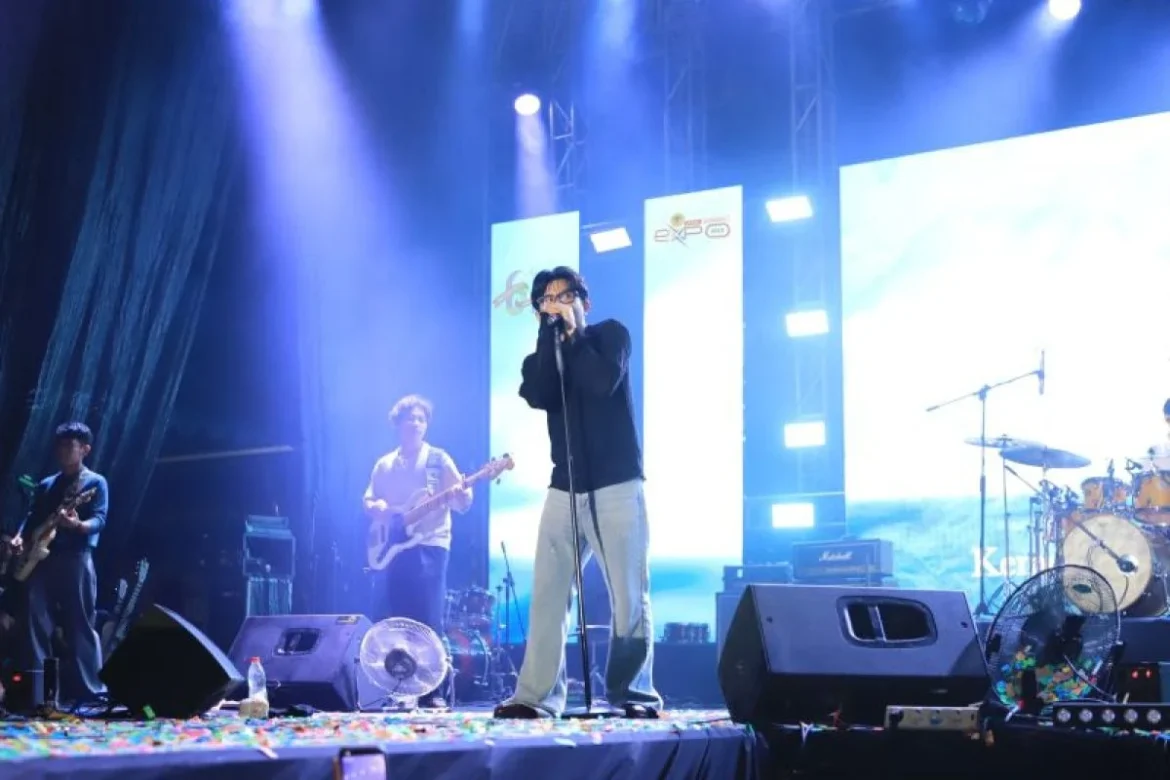
The Indonesian music industry was recently rocked by a high-profile controversy involving one of the country’s most beloved pop bands, Juicy Luicy. Known for their emotionally resonant hits that regularly top streaming charts, the Bandung-based group found themselves at the center of a logistical and contractual storm that ultimately resulted in the cancellation of their highly anticipated performance at the XYZ Liveground music festival. Held at the Temenggung Abdul Jamal indoor-outdoor venue in Batam on September 5, 2026, the festival promised an unforgettable night of live music, featuring other heavyweights such as Dewa 19 featuring Marcello Tahitoe (Ello), and DJ Whisnu Santika alongside MC DRWE.
However, the prevailing sentiment among the thousands of attendees by the end of the night was not one of musical euphoria, but rather of profound disappointment and confusion. The absence of Juicy Luicy—a band whose tracks like "Lantas" and "Sialan" have become anthems for millions of heartbroken Indonesians—left a glaring void in the festival’s line-up. What should have been a standard weekend festival appearance quickly devolved into a public relations battle characterized by conflicting narratives, finger-pointing over excess baggage fees, disputed contractual obligations, and a viral wave of social media commentary.
To understand how a routine festival booking culminated in a complete breakdown of communication and a cancelled performance, it is vital to examine the chronological sequence of events, the financial and logistical realities of modern touring bands, the official stances of both the promoters and the management, and the broader implications this incident holds for the Indonesian live entertainment ecosystem.
The Festival Setup and High Expectations
The XYZ Liveground music festival was billed as one of the major entertainment highlights of the year in Batam, an industrial and tourism hub strategically located near Singapore. Promoters had invested heavily in assembling a diverse, high-caliber line-up designed to draw audiences from across the Riau Islands and neighboring regions. The inclusion of Juicy Luicy was considered a major selling point. The band’s distinct brand of melancholic pop music has cultivated a fiercely loyal fan base, often referred to as fans of sentimental ballads, ensuring strong ticket sales well in advance of the event date.
Festival preparations at the Temenggung Abdul Jamal venue were reportedly well underway by early September. Logistics, sound engineering, lighting, and hospitality riders were meticulously coordinated, at least from the perspective of the event organizers. Ticket holders arrived in high spirits on Saturday, September 5, 2026, anticipating a seamless evening of world-class performances. Yet, as the hours ticked closer to Juicy Luicy’s scheduled set time, whispers began to circulate among festival staff and eager fans near the barricades. The band was nowhere to be found.
As the reality of the cancellation set in, festival organizers were forced to publicly address the absence, leading to an initial wave of confusion that soon escalated into a full-scale public controversy.
Detailed Chronology of the Batam Breakdown
The unfolding of the cancellation can be traced through a distinct series of events that began days before the festival and culminated in digital fallout lasting well into the following week.
1. The Pre-Event Planning and Booking Phase
Months prior to September 5, 2026, Juicy Luicy was officially contracted to perform at the XYZ Liveground festival in Batam. Contracts were signed, rider requirements were exchanged, and initial deposits or payments—including performance fees and travel arrangements—were processed. Both parties anticipated a routine festival execution, given the band’s extensive touring experience across the Indonesian archipelago.
2. The Departure Day Logistical Friction
The root of the physical breakdown occurred on the day of travel. According to statements released by the XYZ Liveground organizing committee, complications arose at the departure airport when the Juicy Luicy touring party attempted to check in for their flight to Batam. The group encountered issues regarding excess baggage. Musical instruments, personal gear, merchandise, and wardrobe requirements had accumulated to a volume and weight that exceeded the airline’s standard complimentary allowances, triggering immediate penalty fees.
Faced with a logistical roadblock that threatened to halt the journey entirely, festival organizers stated that they intervened remotely. Promoters claimed they offered a direct and practical solution to the traveling party: pay the excess baggage fees immediately out-of-pocket to ensure the flight’s departure, with the explicit promise that the expense would be promptly reimbursed by the promoter upon the band’s arrival in Batam.
3. The Breakdown in Travel and Refusal to Board
Despite the proposed reimbursement mechanism offered by the promoters, negotiations between the on-site touring personnel and the event organizers reportedly stalled. For reasons that remain a point of contention between the two camps, the decision was made by the Juicy Luicy camp not to proceed with the journey. The band members and their essential crew did not board the flight, effectively grounding their travel plans and making it impossible for them to reach Batam in time for sound checks, let alone the evening performance.
4. The Festival Night and Audience Disappointment
As the clock approached the band’s designated set time, the empty stage at Temenggung Abdul Jamal confirmed the worst fears of the waiting public. Thousands of ticket holders, many of whom had purchased passes specifically to see the Bandung act, expressed vocal displeasure. Festival organizers were compelled to pivot quickly, restructuring the set orders of the remaining acts—including Dewa 19 and Whisnu Santika—to fill the schedule. Promoters issued on-site apologies to the disgruntled crowd, citing unforeseen travel complications.
5. Divergent Public Statements and Contractual Disputes
In the days immediately following the aborted trip, the narrative split into two opposing versions. Juicy Luicy took to their official social media channels to address the backlash, suggesting that the cancellation was fundamentally tied to unfulfilled obligations and unresolved responsibilities on the part of the event promoter.
Conversely, the XYZ Liveground organizers pushed back against this narrative by releasing a detailed breakdown of their own. The promoters maintained that they had fulfilled all primary contractual duties. They asserted that performance fees had been paid in full, and that comprehensive arrangements for round-trip flights, hotel accommodations, local ground transportation, hospitality riders, and technical stage requirements had all been successfully secured and paid for prior to the event. In the eyes of the promoters, the core issue was not a systemic failure of the contract, but rather an unmanageable dispute over on-the-spot logistical costs that escalated beyond resolution.
6. Social Media Backlash and the Silence of Management
By September 10, 2026, the controversy had saturated digital platforms. Fans and industry observers debated the responsibilities of artists versus promoters when unexpected travel hurdles arise. The situation intensified personal scrutiny on the band members; notably, vocalist Julian Kaisar, popularly known as Uan, drew public attention when his official Instagram account temporarily became inaccessible amid the online chatter.
As of mid-September 2026, the band’s official management has yet to issue a comprehensive, formal press conference or point-by-point rebuttal to the promoter’s claims, leaving the public with an incomplete picture of the internal discussions that took place during those critical pre-flight hours.
Analyzing the Financial and Logistical Realities of Modern Touring
To contextualize the Juicy Luicy baggage dispute, industry analysts point to the complex ecosystem of modern music touring in Indonesia. As regional music festivals proliferate across second- and third-tier cities—driven by rising middle-class disposable income and a post-pandemic hunger for live entertainment—logistical friction has become increasingly common.
For a major band like Juicy Luicy, touring is rarely a simple matter of buying a commercial airline ticket. Professional acts travel with specialized gear, extensive wardrobe changes, personal management teams, road managers, audio engineers, and public relations personnel. When flights involve regional airports or connecting routes to island destinations like Batam, airline baggage policies can present sudden financial hurdles.
In standard event production contracts, clauses dictate who bears the cost of excess baggage, technical riders, and sudden logistical spikes. However, when disputes arise in real-time at an airport check-in counter hours before a show, the margin for error is razor-thin. A breakdown in trust—where an artist’s team is hesitant to advance personal or corporate funds based on promises of reimbursement—can lead to immediate cancellations that cost far more in damaged goodwill than the original fee in dispute.
The Broader Implications for the Indonesian Live Music Scene
The public fallout between XYZ Liveground and Juicy Luicy serves as a cautionary tale for the broader Indonesian entertainment industry, highlighting several critical areas that require systemic improvement:
- Communication Protocols: The incident underscores the necessity of establishing clear, real-time crisis communication channels between tour managers and festival directors. When unexpected travel anomalies occur, relying on fragmented phone calls or text messages at 6:00 AM airport check-ins frequently leads to misinterpretation and escalation.
- Contractual Clarity on Incidental Expenses: Clearer predefined protocols regarding who handles spontaneous, day-of-travel expenditures—such as unexpected baggage weight surcharges or last-minute flight modifications—can prevent minor operational inconveniences from derailing multi-million rupiah productions.
- Reputational Vulnerability: In the era of social media, digital perception is often formed before official statements are even drafted. Both artists and promoters suffer measurable reputational damage when administrative disputes spill over into public feuds, alienating the lifeblood of the industry: the fans.
Conclusion and Outlook
The cancellation of Juicy Luicy’s performance at the XYZ Liveground festival in Batam on September 5, 2026, will likely be remembered as one of the most avoidable logistical controversies of the touring season. While the promoters maintain that financial compensation and foundational riders were fully honored, the band’s management points to unfulfilled obligations that made travel untenable.
For the fans in Batam who purchased tickets in good faith, explanations and corporate statements offer little consolation for a missed musical experience. As the dust begins to settle and both parties navigate the aftermath of the fallout, the incident stands as a stark reminder that the magic of live music relies just as heavily on backstage logistics and transparent communication as it does on melodic songwriting and powerful vocal performances. Whether formal legal actions or reconciled statements will follow remains to be seen, but the Indonesian music industry at large will undoubtedly study this case to prevent similar logistical meltdowns in the future.