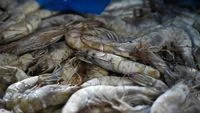
In a decisive crackdown aimed at protecting domestic fisheries and ensuring fair market competition, the Indonesian Ministry of Marine Affairs and Fisheries (MMAF) has successfully intercepted and secured 1,048 tons of imported shrimp across several regions in East Java. The large-scale enforcement operation was designed to thwart a growing illicit practice: the diversion of imported fishery commodities—specifically designated for processing and re-export—into the domestic retail and wholesale markets.
According to preliminary estimates released by the ministry, the swift intervention successfully averted potential state losses totaling approximately Rp405.8 billion. The operation highlights the government’s tightening grip on trade compliance, customs regulations, and the protection of local shrimp farmers who have faced severe economic pressures from unregulated foreign supply influxes.
Chronology and Execution of the Enforcement Operation
The multi-agency oversight operation began following a surge in public complaints and anxiety among local aquaculture stakeholders. Domestic shrimp farmers and industry associations raised red flags regarding an unusual abundance of foreign shrimp circulating in local markets at prices that threatened native production livelihoods.
Acting on these tip-offs, the Directorate General of Marine and Fisheries Resources Surveillance (PSDKP), operating under the MMAF, launched a targeted intelligence-gathering and field inspection campaign in mid-September. The investigation zeroed in on operations linked to designated Bonded Zones (Kawasan Berikat) in East Java, where foreign raw materials are legally permitted to enter duty-free strictly for industrial processing and subsequent international export.
By Tuesday, September 22, PSDKP enforcement teams had mapped out and secured the illicitly handled inventories. The operation culminated in the seizure and sealing of significant volumes of imported crustaceans distributed across multiple warehouses and facilities in regions including Probolinggo and Pasuruan.
A detailed breakdown of the seized commodities reveals a diverse origin of the imported marine products:
- Canada: 19.16 tons of pink shrimp, intercepted and sealed within storage facilities in Probolinggo and Pasuruan.
- Argentina: 885.3 tons of red shrimp, representing the lion’s share of the intercepted volume.
- Ecuador: 144 tons of Pacific whiteleg shrimp (udang vaname).
Regulatory Framework and the Bonded Zone Violation
The crux of the legal violation centers on the misuse of Bonded Zone privileges. Under Indonesian trade and customs regulations, raw materials imported into Bonded Zones enjoy fiscal incentives, such as exemptions from import duties and certain taxes, on the explicit legal condition that these goods undergo substantial transformation or processing and are subsequently re-exported abroad. They are legally barred from entering the domestic consumption market, a restriction designed to prevent foreign goods from undercutting local industries that do not enjoy the same tax and duty reliefs.
When imported raw shrimp meant for re-export is leaked into local distribution channels, it creates an unlevel playing field. Local shrimp farmers, who bear the full cost of domestic production, feed, and disease management, find themselves competing against heavily subsidized or tax-relieved foreign imports.
Marine Affairs and Fisheries Minister Sakti Wahyu Trenggono emphasized that the government maintains a zero-tolerance policy toward such trade distortions.
"We will not allow imported shrimp that are specifically allocated for export needs to infiltrate the local market. If violations are found, we will take firm action in accordance with applicable regulations," Minister Trenggono stated via an official ministry broadcast.
Inter-Agency Synergy and Tax Compliance Probes
The enforcement operation went beyond mere fisheries regulation. Recognizing the complex financial mechanisms often associated with Bonded Zone infractions—such as tax evasion, false customs declarations, and illicit financial flows—the Directorate General of PSDKP forged a strategic operational alliance with the Directorate General of Taxes (DJP) under the Ministry of Finance.
This cross-ministerial coordination ensures that the investigation adopts a comprehensive approach. While PSDKP evaluates administrative and criminal fisheries violations, tax authorities are simultaneously conducting parallel audits to scrutinize corporate tax compliance, inventory tracking, and financial reporting of the implicated importing entities.
Pung Nugroho Saksono, Director General of PSDKP, explained that the ongoing probe will determine the exact nature of the legal breaches committed by the importing entities.
"We will continue to strengthen supervision over the circulation of imported fishery commodities. Every violation will be dealt with in accordance with our authority and prevailing regulations," Pung asserted. He further clarified that if investigations uncover administrative non-compliance, punitive measures will follow standard administrative law. However, if deliberate criminal elements—such as smuggling syndicates or fraudulent documentation—are uncovered, the case will be escalated to full criminal prosecution.
Broader Economic Implications and Impact on Domestic Aquaculture
The interception of the 1,048 tons of shrimp serves as a critical bellwether for Indonesia’s broader agricultural and aquacultural economy. Indonesia has long positioned itself as a major global player in shrimp production, with millions of small-scale and industrial farmers relying on stable market absorption and fair pricing structures.
In recent years, domestic shrimp producers have voiced mounting concerns regarding global market fluctuations, rising operational costs, and the downward pressure exerted by surplus international production from countries like Ecuador and Argentina seeking alternative export destinations amid tightening restrictions in Western markets.
Industry analysts note that unmonitored leakages of foreign seafood into developing domestic markets can trigger cascading economic effects:
- Price Depression: An oversupply of cheap foreign shrimp artificially depresses farm-gate prices, squeezing profit margins for local cultivators to unsustainable levels.
- Investment Deterrence: Prolonged market instability discourages capital investment in modernizing national aquaculture infrastructure, hatchery improvements, and disease-mitigation technologies.
- State Revenue Leakage: The unauthorized diversion of Bonded Zone commodities deprives the state of vital import duties, value-added taxes, and regulatory compliance fees.
By intervening decisively in East Java, the MMAF aims to restore market confidence, signal a stern warning to potential regulatory evaders, and safeguard the livelihoods of the nation’s domestic aquaculture workforce. The ministry has vowed to maintain heightened vigilance across all major entry ports and bonded logistics centers nationwide to ensure that international trade agreements and domestic protection policies are strictly upheld.