
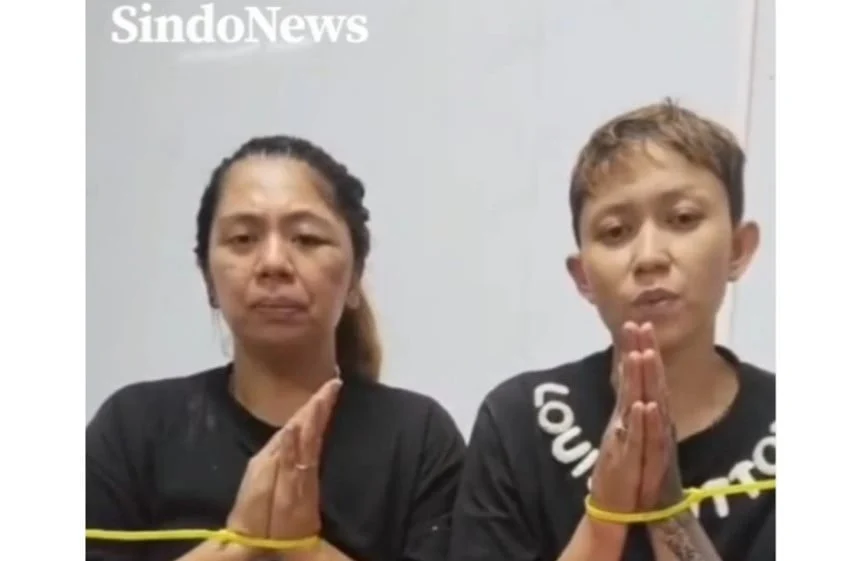
The Indonesian government, through the National Central Bureau (NCB) Interpol Indonesia, has officially launched a coordination effort with security authorities in Myanmar following the circulation of a distressing video showing two Indonesian women allegedly being held captive and subjected to physical restraint. The victims, identified as Indonesian citizens (WNI), appeared in a viral social media video where they were seen handcuffed and pleading for assistance, claiming they had been victims of a transnational human trafficking syndicate. According to the reports, the captors have demanded a ransom of Rp220 million from the victims’ families in Indonesia, threatening further harm if the payment is not met.
The incident has sparked significant concern within the Indonesian Ministry of Foreign Affairs and the National Police (Polri), highlighting the growing danger of fraudulent job offers that lead to modern-day slavery in Southeast Asia’s conflict-prone regions. Brigadier General Dr. Untung Widyatmoko, Secretary of NCB Interpol Indonesia, confirmed on Sunday, July 19, 2026, that his office has been monitoring the situation closely and has initiated formal communication channels with Myanmar’s security apparatus to locate and rescue the individuals.
The Geography of Lawlessness: The Myawaddy Conflict Zone
The primary challenge facing Indonesian authorities is the specific location where the victims are believed to be held. Investigative leads suggest the women are currently trapped in Myawaddy, a town in southeastern Myanmar’s Kayin State, situated directly across the border from Thailand’s Mae Sot district. Myawaddy has gained international notoriety as a "gray zone" or a lawless enclave where the central Myanmar military government (the Junta) holds little to no actual control.
Control of the Myawaddy region is currently fragmented among various ethnic armed organizations (EAOs), most notably the Karen National Union (KNU) and its armed wing, the Karen National Liberation Army (KNLA), as well as splinter groups like the Border Guard Force (BGF). Because these areas are outside the administrative reach of the Myanmar capital, Naypyidaw, traditional diplomatic interventions and standard police operations are exceptionally difficult to execute.
The region has become a global hub for "scam compounds"—massive, fortified industrial parks where thousands of foreign nationals are forced to conduct online fraud operations, including "pig butchering" crypto scams and illegal gambling schemes. These compounds are often protected by local militias, making them virtually impenetrable to outside law enforcement without high-level military or rebel cooperation.
Chronology of the Incident and Ransom Demands
The case came to public light after a video began circulating on various social media platforms, including X (formerly Twitter) and Instagram. In the footage, the two women are seen in a darkened room, their wrists bound by metal handcuffs. They appeared visibly traumatized, describing a harrowing ordeal of physical abuse and psychological torture. They claimed they were lured to the region by the promise of high-paying jobs in the customer service sector, only to find themselves sold into a "scamming factory."
The victims explained that their "employers" had set a quota for fraudulent activities that they were unable to meet. As punishment for their perceived lack of productivity, they were allegedly subjected to electric shocks and physical beatings. The captors then transitioned from labor exploitation to kidnapping for ransom, contacting the victims’ families in Indonesia. The demand for Rp220 million (approximately $14,000 USD) was presented as a "debt repayment" for the costs the syndicate allegedly incurred in transporting the women to Myanmar—a common tactic used by human traffickers to justify extortion.
Brigadier General Untung Widyatmoko emphasized that while the location is known to be a stronghold for the KNU, the Indonesian government is exploring every possible avenue. "We have monitored the situation and, more importantly, we have established communication with the relevant security authorities in Myanmar," he stated. However, he cautioned that the volatility of the Myawaddy region limits the speed at which a physical rescue operation can be conducted.
The Rise of "Pig Butchering" and Transnational Organized Crime
This case is not an isolated incident but rather part of a systemic surge in human trafficking across Southeast Asia. Since the COVID-19 pandemic, transnational criminal organizations—often with roots in China or other parts of East Asia—have shifted their operations from traditional casinos to online fraud. Myanmar’s political instability following the 2021 military coup has provided the perfect vacuum for these syndicates to flourish.
Data from the United Nations Office on Drugs and Crime (UNODC) and the UN Human Rights Office indicates that hundreds of thousands of people from across the globe are currently being held against their will in such compounds. In Myanmar alone, it is estimated that at least 120,000 people may be held in situations where they are forced to carry out online scams. Indonesia has become a primary "source country" for these victims due to the high number of young, tech-savvy individuals seeking employment abroad to escape domestic economic pressures.
The modus operandi usually begins with a fraudulent job advertisement on social media platforms like Facebook or Telegram. These ads promise salaries ranging from $1,000 to $3,000 per month, inclusive of housing and travel expenses, for roles described as "Data Entry" or "Digital Marketing" in Thailand. Once the victims arrive in Bangkok or Mae Sot, they are illegally transported across the Moei River into Myanmar, where their passports are confiscated, and they are forced into labor.
Official Responses and Diplomatic Hurdles
The Indonesian Ministry of Foreign Affairs (Kemlu) has repeatedly issued warnings regarding job offers in Myanmar, Cambodia, and Laos. However, the allure of high wages continues to draw victims. Judha Nugraha, the Director for the Protection of Indonesian Citizens at Kemlu, has previously noted that the "non-state actor" element in Myanmar makes these cases the most difficult to resolve.
In standard international law enforcement, Interpol would work with the national police of a host country. However, in the case of Myawaddy, the Myanmar National Police often cannot enter the territory controlled by the KNU. Therefore, the Indonesian government must often rely on informal networks, local NGOs, and sometimes direct negotiations with the rebel groups themselves to secure the release of its citizens.
"Because they work for scamming companies located in rebel-controlled areas, the complexity is doubled," Untung Widyatmoko explained. He added that the priority remains the safety of the victims, and authorities are working to ensure that any intervention does not inadvertently put the women in greater danger.
Supporting Data on Indonesian Trafficking Victims
The scale of the problem is reflected in the statistics provided by the Indonesian Embassy (KBRI) in Yangon. Over the past three years, the embassy has handled hundreds of cases involving WNI trapped in scam centers. In 2023 alone, dozens of Indonesians were successfully repatriated from the Myawaddy area, often through the assistance of the Thai authorities after the victims managed to escape or were "dumped" at the border by syndicates who feared the heat of international media attention.
However, for every successful rescue, many more remain trapped. The Indonesian Migrant Workers Protection Agency (BP2MI) has highlighted that many of these victims do not go through official migrant worker channels (non-procedural), which makes tracking them significantly harder. The use of visit visas instead of work visas allows traffickers to bypass the scrutiny of the Ministry of Manpower.
Broader Implications and the Need for Regional Cooperation
The situation in Myanmar poses a significant challenge to the Association of Southeast Asian Nations (ASEAN). Under the "Five-Point Consensus," ASEAN has attempted to broker peace in Myanmar, but the ongoing civil war continues to provide a safe haven for criminal enterprises that threaten the security of the entire region. The "ASEAN Declaration on Combating Trafficking in Persons Caused by the Abuse of Technology," adopted in 2023, acknowledges that online scams are a regional crisis requiring a unified response.
For Indonesia, the implications are both humanitarian and a matter of national security. The extortion of Indonesian families and the torture of its citizens abroad demand a robust response that goes beyond reactive rescue missions. Analysts suggest that there must be a greater focus on "preventive diplomacy" and domestic public awareness campaigns.
Furthermore, there is a pressing need for digital literacy. Many victims are lured because they do not recognize the red flags of a "scam" job offer, such as the lack of a formal contract, the requirement to travel on a tourist visa, or the vague nature of the company’s operations.
Conclusion and Future Outlook
As of the latest update, the two Indonesian women remain in captivity. The viral nature of their plea has put immense pressure on the Indonesian government to act swiftly. While NCB Interpol Indonesia and the Ministry of Foreign Affairs continue their quiet diplomacy and tactical coordination, the case serves as a grim reminder of the dangers lurking in the borderlands of Southeast Asia.
The resolution of this hostage situation will likely require a multi-faceted approach involving the Thai military (to secure the border), the Myanmar authorities (where possible), and the KNU leadership. For the families of the victims, the wait is agonizing, and the Rp220 million ransom remains a crushing burden they cannot meet.
The Indonesian government continues to urge its citizens to verify any foreign job offers through the official "SiskoP2MI" system and to remain vigilant against social media recruitment. The fight against the Myawaddy scam syndicates is far from over, and as long as the conflict in Myanmar persists, these zones of lawlessness will continue to claim victims from across the region.
