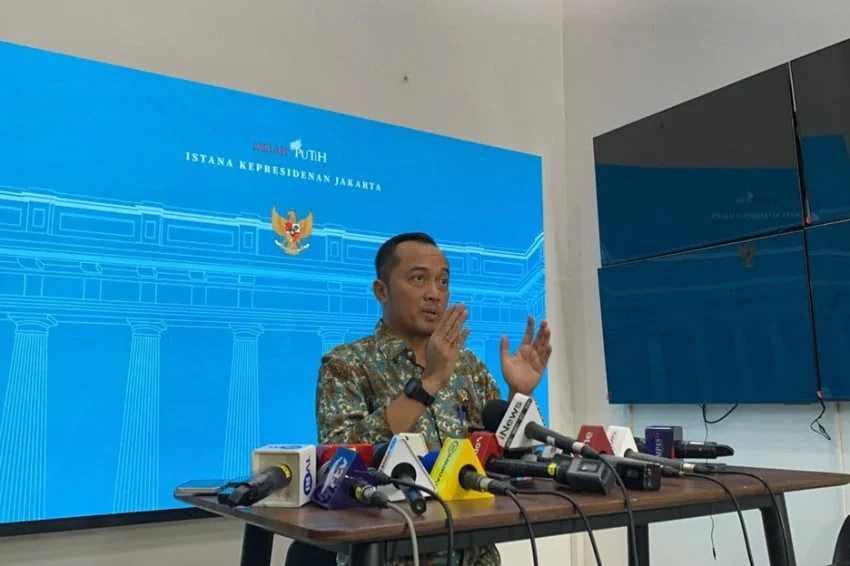
The Legislative Body (Baleg) of the Indonesian House of Representatives (DPR) has engaged in a series of strategic consultations with civil society organizations to refine the drafting of the Agrarian Reform Bill. Among the key participants in the recent parliamentary session held in Jakarta was the Urban Poor Consortium (UPC), an advocacy group that has long campaigned for the rights of marginalized communities facing land displacement. During the session, the UPC presented a formal proposal for the establishment of a specialized agrarian court, citing the failure of the current judicial system to protect the rights of citizens who often lack formal land documentation when pitted against corporate or state entities.
The discourse surrounding agrarian reform in Indonesia has remained a contentious issue for decades, characterized by complex land tenure laws, overlapping regulatory frameworks, and frequent clashes between local communities and major developers or state-owned enterprises. The proposed legislation seeks to harmonize these conflicting interests, but as the deliberations progress, the structural mechanisms for dispute resolution have emerged as the primary point of contention.
The Structural Inadequacy of Current Judicial Processes
Guntoro Gugun Muhammad, the Advocacy Coordinator for the Urban Poor Consortium, highlighted a systemic bias within the current legal framework. He argued that the reliance on formal, rigid documentation—often referred to as "positivist" jurisprudence—effectively disqualifies vulnerable communities from obtaining justice. In the current Indonesian judicial environment, the burden of proof rests heavily on the plaintiff. For communities residing on land for generations without formal land titles (Sertifikat Hak Milik), the lack of legal documentation serves as an insurmountable barrier, leading to almost inevitable defeat in court.
"We are dealing with a legal system that is strictly positivist in nature," Guntoro stated during the parliamentary hearing. "When citizens lack formal proof, they are destined to lose. This is precisely why a specialized agrarian court is not just a suggestion, but a necessity to address the historical and social realities of land possession in our country."
The UPC’s proposal is predicated on the belief that agrarian disputes are inherently different from standard civil or criminal cases. They involve deep-seated socioeconomic factors, historical land usage, and communal rights that traditional courts are ill-equipped to evaluate. By isolating these cases into a specialized court, advocates hope to incorporate a broader evidentiary standard that recognizes customary usage and historical residence.
The Debate Over the National Agrarian Reform Agency (BRAN)
A significant portion of the legislative debate centers on the proposed formation of the National Agrarian Reform Agency (BRAN). While the government and some legislators have envisioned BRAN as a central authority capable of managing land redistribution and conflict resolution, civil society groups are raising alarms regarding the consolidation of power.
The UPC has explicitly rejected the notion of granting BRAN both legislative and judicial functions. Guntoro warned that giving a single government body the power to both initiate and adjudicate land disputes would create a dangerous conflict of interest. He argued that such a structure would essentially turn the agency into a "judge and jury" over the very conflicts it is tasked with managing, potentially undermining the separation of powers necessary for a fair judicial process.
Instead, the UPC proposes a nuanced model: BRAN should act as a legal representative and advocate for the community. In this proposed framework, the agency would possess the "legal standing" to file cases on behalf of marginalized groups. This would effectively act as a protective buffer, preventing individual citizens from having to confront powerful corporate entities or state institutions directly—a scenario that historically leads to an uneven playing field.
Historical Context and the Escalation of Land Conflicts
To understand the urgency of the current discussions, one must look at the recent history of agrarian conflict in Indonesia. According to data from the Consortium for Agrarian Reform (KPA), thousands of conflicts have erupted across the archipelago over the last decade. These disputes often stem from large-scale infrastructure projects, plantation expansions, and mining operations that encroach upon communal or smallholder land.
The chronology of these disputes frequently follows a familiar pattern:
- Initial Claim: A corporation or the state claims a specific tract of land based on national-level permits.
- Displacement: Local residents, who have occupied the land for decades, are pressured to vacate.
- Litigation: Communities attempt to seek legal redress, but face high litigation costs and a lack of formal documentation.
- Enforcement: In the absence of a fair resolution, disputes often escalate into physical confrontations between protesters and security forces.
The government’s attempt to formalize agrarian reform through new legislation is an acknowledgment that the existing Land Law of 1960 is insufficient to handle the complexities of modern development. However, civil society groups fear that without institutional safeguards, such as the proposed agrarian court, the new bill will simply codify existing imbalances rather than resolve them.
Data-Driven Perspectives on Land Injustice
The gravity of the situation is reflected in the statistics regarding land tenure. A significant portion of rural and urban poor populations in Indonesia live on land that remains technically categorized as state-owned forest or government-controlled land, despite long-term occupation. The Ministry of Agrarian Affairs and Spatial Planning has attempted to address this through the "Land Certification for the People" program, but this initiative largely focuses on land that is already legally clear, rather than land embroiled in complex, multi-party disputes.
Data indicates that the lack of institutionalized mediation results in:
- Prolonged Conflict: Cases often drag on for 5 to 15 years, during which time land becomes unproductive and social cohesion in the affected regions is destroyed.
- Economic Inequality: Marginalized populations lose their primary asset, plunging families deeper into poverty.
- Environmental Degradation: Disputed lands are often subject to rapid extraction or development before the legal status is finalized, leading to irreversible ecological damage.
Broader Implications and Institutional Reactions
The suggestion of an agrarian court has sparked a debate within the legal community. Critics of the proposal argue that creating new, specialized courts could further complicate an already overburdened judicial system. They suggest that the focus should instead be on improving the capacity of existing courts to handle agrarian cases through specialized training for judges.
However, proponents, including the UPC, insist that training is insufficient. They argue that the structural problem is the legal standard itself. An agrarian court, they suggest, could adopt "restorative justice" principles that prioritize the restoration of land rights to the long-term inhabitants, rather than focusing solely on the presence of a government-issued title.
As the Baleg DPR continues its deliberations, the influence of civil society will be crucial. The willingness of the committee to listen to organizations like the UPC signals a shift toward a more inclusive legislative process. Whether these recommendations will be integrated into the final draft of the Agrarian Reform Bill remains to be seen.
The Path Forward: Towards a Balanced Reform
The ultimate goal of the Agrarian Reform Bill is to foster a more equitable distribution of land assets. For this to succeed, the legislative body must navigate the tension between the state’s desire for streamlined development and the fundamental rights of its citizens.
The UPC’s proposal provides a roadmap for a more balanced approach. By separating the role of "case initiator" (BRAN) from the role of "adjudicator" (the proposed Agrarian Court), the legislation could effectively lower the barrier to entry for marginalized groups. This institutional structure would ensure that the state remains accountable to the people, even while pursuing national development goals.
As the session concluded, the consensus among observers was that the current draft of the bill is far from final. The inclusion of an agrarian court remains a radical but increasingly popular idea among advocates who believe that without such a body, the promise of "Agrarian Reform" will remain an abstract policy goal rather than a lived reality for the Indonesian people. The coming months of debate in the House will determine if the legislature is truly committed to protecting the land rights of the vulnerable or if the status quo, which heavily favors those with formal title and influence, will prevail.