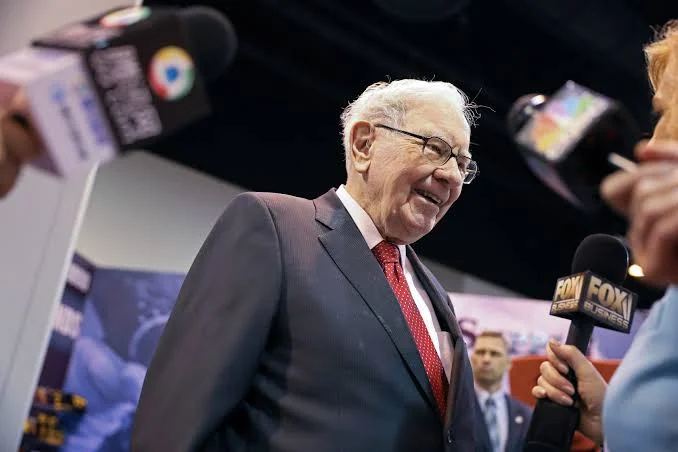
JAKARTA — In an epochal moment for global finance, Warren Buffett officially stepped down as the chairman of Berkshire Hathaway on Friday, September 18, bringing a formal close to more than six decades of stewardship that redefined modern investing. While relinquishing his long-held chairmanship, the 95-year-old billionaire—universally celebrated as the "Oracle of Omaha"—will remain on the company’s board of directors, maintaining a symbolic and advisory link to the multi-trillion-dollar conglomerate he built from the ground up.
Recognizing his monumental contributions and the irreplaceable legacy he leaves behind, Berkshire Hathaway’s board of directors appointed Buffett as chairman emeritus. This prestigious honorary title is traditionally bestowed upon visionary founders, retiring executives, or esteemed directors to honor a lifetime of service and profound, long-term impact on an enterprise.
Buffett’s departure from the chairman’s desk marks the definitive culmination of a carefully orchestrated, multi-year succession plan. It follows his decision nearly nine months prior to step down as chief executive officer (CEO), handing over operational control to his handpicked successor and longtime lieutenant, Greg Abel. Together, these moves close the book on arguably the most successful tenure in corporate history, transitioning Berkshire Hathaway into a new era under established leadership while preserving the unique culture that fueled its decades of extraordinary growth.
Reflecting on his departure in a characteristically candid and reflective letter to shareholders, Buffett offered a philosophical perspective on the passage of time and his unmatched professional journey.
"Time always wins. However, time has been merciful to me," Buffett wrote in his shareholder address. "After more than 60 years, I still have the best job in the world. Not many people my age can say the same, and I have never felt better about what is to come."
The Succession of Leadership: Howard Buffett Takes the Reins
With Warren Buffett stepping back from day-to-day governance, Berkshire Hathaway has initiated the next phase of its leadership structure. Howard Buffett, Warren’s eldest son and a member of the board of directors since 1993, has officially stepped into the role of non-executive chairman.
Unlike his father, who uniquely combined the roles of visionary investor, CEO, and chairman for decades, Howard Buffett will not hold an active management position. Instead, his primary mandate as non-executive chairman will be to lead the board of directors, oversee corporate governance, and act as the ultimate custodian of the corporate culture that has defined Berkshire Hathaway since the mid-20th century.
Financial analysts and governance experts have underscored the importance of this appointment. Howard Buffett’s chief responsibility will be protecting and perpetuating the distinct decentralized operating philosophy championed by his father. This philosophy grants Berkshire’s vast network of subsidiary companies total autonomy to manage their day-to-day operations without bureaucratic interference or micromanagement from the corporate headquarters in Omaha, Nebraska.
The structural separation between Greg Abel—who commands the operational helm as CEO—and Howard Buffett as non-executive chairman ensures a continuation of corporate checks and balances. Market observers note that this division mirrors best practices in modern corporate governance, easing any potential investor anxieties regarding the post-Warren Buffett transition.
A Measured and Deliberate Transition
The news of Buffett’s departure as chairman did not catch Wall Street off guard. For years, Berkshire Hathaway has deliberately and transparently managed the question of succession, conditioning investors, analysts, and employees for the inevitable day when the company would operate without its founding genius at the helm.
Brian Jacobsen, chief economist at Annex Wealth Management in Brookfield, Wisconsin, emphasized the calculated and smooth nature of the transition.
"This always was a question of when, not if. Buffett has done this transition with elegance," Jacobsen noted. "This step feels much more like the completion of a meticulously planned succession process than any sort of sudden leadership upheaval."
While Buffett did not issue a formal medical bulletin regarding his physical health, he recently shared a lighthearted anecdote underscoring his advanced age. He recounted a recent meeting with his one-year-old great-grandson, joking that the toddler was already "moving a little bit faster" than he was.
Chronology of an Empire: From Failing Textile Mill to Global Powerhouse
To fully grasp the magnitude of Warren Buffett’s departure, one must look back at the improbable evolution of Berkshire Hathaway. When Buffett took control of the failing New England textile manufacturer in 1965, the company was struggling against structural economic headwinds and declining profitability.
Instead of remaining confined to the textile industry, Buffett utilized Berkshire as a vehicle for astute capital allocation, systematically channeling cash flows into undervalued public equities and high-performing private enterprises. Over the next six decades, this disciplined strategy transformed a distressed textile mill into a sprawling multinational conglomerate with a market capitalization exceeding $1.1 trillion.
Buffett’s investment philosophy—famously dubbed "value investing"—pioneered the art of identifying fundamentally sound companies trading below their intrinsic value and holding them for the long term. This patient, analytical approach stands in stark contrast to the short-termism often plaguing modern capital markets, serving as an educational blueprint for generations of investors, financial analysts, and corporate executives worldwide.
Furthermore, Buffett’s down-to-earth persona, folksy wisdom delivered from the stage of the annual Berkshire Hathaway shareholder meeting in Omaha (affectionately dubbed "Woodstock for Capitalists"), and transparent annual letters made him a beloved global icon. His ability to explain complex financial concepts in plain, accessible language democratized investing for millions.
An Unrivaled Portfolio of Iconic Brands and Strategic Assets
Today, the Berkshire Hathaway empire stands as a titan of American industry, spanning a breathtaking array of economic sectors. Unlike its trillion-dollar peers in the modern stock market, which are overwhelmingly concentrated in big tech, Berkshire’s valuation is anchored by the physical and financial backbone of the global economy.
The conglomerate’s wholly owned subsidiaries and majority stakes include:
- GEICO: One of the largest automobile insurance providers in the United States, generating consistent float that fuels Berkshire’s investment machine.
- BNSF Railway: A monumental freight railroad network moving critical goods across North America.
- Berkshire Hathaway Energy: A major utility provider powering millions of homes and businesses, with substantial investments in renewable energy.
- Dairy Queen: The iconic global ice cream and fast-food chain.
- Industrial, manufacturing, and retail operations: A diverse array of businesses producing everything from industrial components to luxury jewelry and retail goods, alongside legacy brands like Ginsu knives and World Book encyclopedias.
In addition to its operating businesses, Berkshire maintains a massive equity portfolio worth hundreds of billions of dollars. Its foundational stock holdings include mega-cap stalwarts such as Apple, American Express, Coca-Cola, and Google-parent Alphabet. This diversified asset base provides the conglomerate with unmatched financial resilience, enabling it to act as a lender of last resort during periods of severe macroeconomic distress, as memorably demonstrated during the 2008 global financial crisis.
Broader Market Implications and the Post-Buffett Horizon
As Berkshire Hathaway embarks on this new chapter under Greg Abel as CEO and Howard Buffett as non-executive chairman, financial markets are closely monitoring how the conglomerate will deploy its monumental cash reserves. Known for maintaining a fortress balance sheet, Berkshire has often accumulated massive piles of cash and short-term U.S. Treasury bills when equity markets appeared overvalued.
Analysts predict that while the day-to-day management style will remain fundamentally unchanged, the sheer scale of the company means that future capital allocation decisions will face unique challenges. Finding investment targets large enough to meaningfully move the needle for a $1.1 trillion enterprise remains a formidable task for Abel and his team of investment managers, Ted Weschler and Todd Combs.
Nevertheless, the orderly transition of power executed on Friday ensures that Berkshire Hathaway’s institutional DNA remains intact. By stepping down as chairman while retaining his seat on the board and the honorary title of chairman emeritus, Warren Buffett has ensured that his wisdom remains accessible to the leadership team, even as he entrusts the future of his life’s work to the next generation.
For global financial markets, the moment marks the end of an era defined by unrivaled patience, intellectual rigor, and integrity. Yet, as Berkshire Hathaway transitions smoothly into its post-Buffett reality, the enduring strength of its balance sheet, the autonomy of its operating units, and the timeless principles of value investing established by the Oracle of Omaha remain firmly embedded in its foundation.