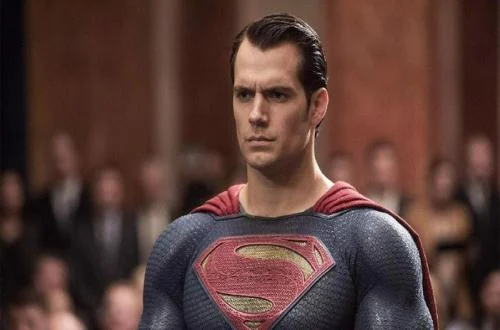
The landscape of modern superhero cinema continues to evolve through distinct creative visions, yet the prospect of cinematic crossovers remains a constant point of discussion among industry insiders and fans alike. Robert Pattinson, who redefined Gotham City’s protector in director Matt Reeves’ 2022 blockbuster, has openly addressed the structural and thematic challenges of integrating his iteration of the Caped Crusader into a broader, interconnected franchise. Specifically, Pattinson has expressed skepticism regarding whether his grounded, psychological crime-noir version of Bruce Wayne could seamlessly coexist alongside the upcoming, more traditional superhero elements introduced by David Corenswet’s Superman within James Gunn’s newly minted DC Universe (DCU).
This divergence in storytelling tones highlights a deliberate strategy by Warner Bros. Pictures and DC Studios to support parallel cinematic universes. While the DCU under James Gunn aims for a cohesive continuity featuring fantastical elements, interconnected storylines, and iconic comic-book iconography, Reeves’ universe—often referred to by fans as the "BatVerse"—prioritizes an isolated, gritty, and hyper-realistic examination of corruption, trauma, and detective work. Pattinson’s recent remarks illuminate not only the creative boundaries of his specific franchise but also the psychological toll required to inhabit a character built upon such an uncompromisingly dark aesthetic.
Thematic Incompatibility and the Isolation of Reeves’ Gotham
During promotional interviews surrounding his upcoming cinematic projects, Robert Pattinson elaborated on why the transition of his Bruce Wayne into a larger shared universe presents significant narrative hurdles. Speaking to media outlets, the actor noted that the meticulous world-building established in The Batman relies heavily on a restrained, atmospheric realism that actively distances itself from superhuman threats like aliens, mythical amazons, or metropolis-defending heroes.
"I think it would be kind of difficult to bring this version of Bruce out of his world," Pattinson explained during a discussion with LADbible, a sentiment later amplified across various entertainment platforms. He emphasized that the stylistic choices of the production are so specific and pervasive that the narrative DNA of the film resists dilution. According to Pattinson, the immersive nature of the production leaves a lasting impression on those who bring the characters to life, making the prospect of shifting tones jarring for both the performer and the audience.
This creative wall stems from Matt Reeves’ foundational vision for The Batman. Released in March 2022, the film steered away from the comic-book sci-fi tropes of previous iterations, presenting instead a neo-noir detective thriller. In this Gotham, Bruce Wayne is less a global vigilante and more a reclusive, traumatized aristocrat struggling to solve a series of political murders orchestrated by a Riddler modeled after real-world serial killers. Introducing a character operating in such a bleak, street-level ecosystem to cosmic beings like Superman would fundamentally alter the suspension of disbelief carefully constructed by the filmmakers.
The Psychological Toll of Sustained Darkness
Beyond narrative and tonal contradictions, Pattinson’s hesitation is deeply rooted in the physical and mental demands of portraying a character immersed in relentless gloom. The actor shared that the production environment of Reeves’ universe is designed to evoke a heavy, oppressive mood that inevitably bleeds into the actor’s real-world experience during lengthy shooting schedules.
"You’re in the dark all the time, both mood-wise and lighting-wise," Pattinson recalled, describing the months spent on set. He noted that the limited exposure to natural light and the persistent emotional gravity of playing a deeply conflicted, vengeance-driven Bruce Wayne created an environment that "merges into your psyche." For an actor to pivot from months of psychological exhaustion in a hyper-realistic Gotham to the bright, optimistic, and high-stakes environment typically associated with a Superman film would require a complete deconstruction of the character’s established behavioral framework.
This intense preparation has become a hallmark of Pattinson’s approach to the role. Unlike cinematic universes where actors routinely jump between crossover cameos and team-up films, the standalone nature of the Reevesverse allows performers to dive deeply into serialized character studies without the narrative distraction of setting up future franchise installments.
Evolution of the DC Cinematic Landscape: Parallel Universes
The discussion surrounding Pattinson’s Batman arrives at a pivotal juncture for Warner Bros. Discovery and its DC adaptation strategy. Under the leadership of James Gunn and Peter Safran, DC Studios has established a multi-pronged approach to its intellectual properties, formally dividing projects into two distinct categories: the primary DCU continuity and the "DC Elseworlds" banner.
The DCU proper officially launches its cinematic slate with projects centered around traditional comic book mythologies, highlighted by the casting of David Corenswet as the quintessential Man of Steel. Corenswet’s Superman is designed to embrace the classic, hopeful, and expansive nature of the character, serving as the cornerstone for a sprawling universe that will incorporate various superhuman beings, supernatural entities, and interconnected arcs. Upcoming releases in this shared universe include high-profile features such as the horror-thriller Clayface and the highly anticipated Man of Tomorrow, which acts as a direct continuation of the overarching Superman narrative.
Conversely, Matt Reeves’ The Batman franchise, along with Todd Phillips’ Joker films, operates safely under the "Elseworlds" label. This classification grants filmmakers the creative freedom to explore mature, director-driven visions without the constraints of maintaining continuity with a broader timeline. By keeping these properties quarantined from the main DCU, studio executives have consciously prioritized artistic autonomy and distinct visual identities over cinematic synergy, effectively avoiding the fatigue sometimes associated with tightly bound franchise models.
Chronology and Production Status of The Batman Part II
As speculation regarding crossover potentials continues among fans, production on the continuation of Pattinson’s journey in Gotham is actively moving forward. The timeline for the franchise illustrates a deliberate, methodical approach to filmmaking, prioritizing quality and meticulous world-building over rapid-fire sequel releases.
- March 2022: The Batman premieres globally to critical acclaim, grossing over $770 million worldwide and solidifying a fresh, noir-inspired direction for the character.
- Late 2022 to 2023: Warner Bros. officially greenlights The Batman Part II, with Matt Reeves returning to write and direct. Concurrently, plans for television expansion move forward, leading to the development of related streaming content exploring the Gotham underworld.
- 2024–2025: Pre-production schedules face adjustments due to industry-wide strikes and extensive script refinements by Reeves and co-writer Mattson Tomlin, ensuring the narrative depth matches or exceeds the original film.
- Late 2025 to 2026: Principal photography commences. Cast members offer occasional glimpses into the production’s trajectory, maintaining strict secrecy regarding plot details and antagonist inclusions.
- February 18, 2028: The scheduled theatrical release date for The Batman Part II, cementing a six-year gap between the original film and its direct sequel.
Addressing the direction of the upcoming sequel, Pattinson offered tantalizing hints during recent press engagements. Speaking to Collider, the actor noted that the narrative structure of the next chapter departs significantly from expectations while honoring the emotional core established in the first film.
"The first movie was a different approach for a Batman movie, and this one is as well," Pattinson stated. "It really takes a sharp turn away from the first one, but somehow maintains the flavor of it." This commitment to creative subversion suggests that rather than leaning into familiar tropes or setting up external universe expansions, Reeves and his team are doubling down on the claustrophobic, introspective nature of Gotham’s internal conflicts.
Industry Implications and Fan Reception
The clear boundary drawn between Robert Pattinson’s Batman and David Corenswet’s Superman reflects a broader maturation within the blockbuster film industry. For years, the prevailing Hollywood model—heavily popularized by interconnected superhero universes—dictated that all properties must eventually converge into massive crossover events to maximize box office potential. However, recent audience reception and fatigue regarding overly complex continuity webs have signaled a shift in consumer preference.
By allowing distinct creative visions to exist simultaneously, Warner Bros. Studios is testing a hypothesis: that audiences can appreciate contrasting interpretations of legendary characters without needing them to inhabit the same space. Moviegoers are increasingly showing an appetite for director-driven auteur projects that prioritize mood, narrative integrity, and thematic depth over corporate synergy.
For the DCU, the success of Corenswet’s Superman will depend on its ability to build an engaging, hopeful, and expansive world that honors comic book roots. For the Reevesverse, the success of Pattinson’s upcoming sequel relies entirely on its dedication to psychological realism, atmospheric tension, and localized stakes.
Ultimately, Robert Pattinson’s assessment that his Batman cannot easily cross paths with the broader DCU is not a critique of the studio’s broader plans, but rather a validation of the unique identity The Batman has carved out. As Hollywood navigates the balance between shared universes and standalone artistic expressions, the conscious separation of Gotham’s grim underworld from the sunlit heights of Metropolis serves as a reminder that sometimes, the most compelling storytelling comes from keeping a hero locked firmly within the shadows of their own specialized world.