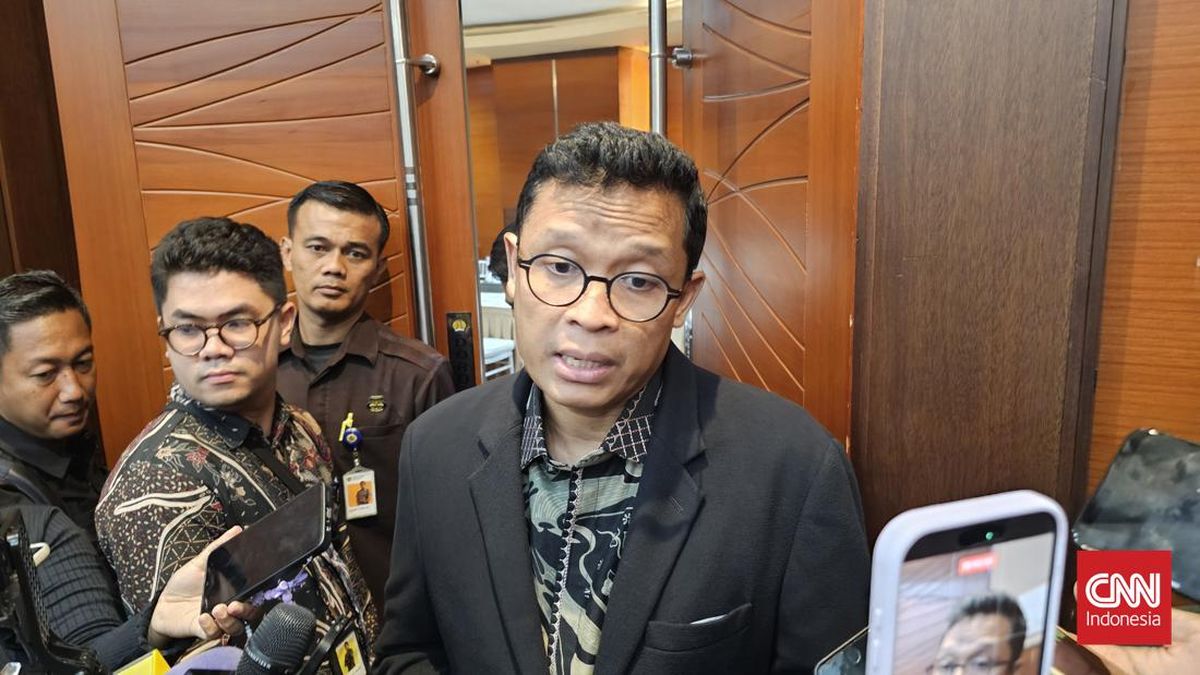
The Director General of Taxes at the Ministry of Finance, Bimo Wijayanto, has provided a comprehensive clarification regarding the involvement of the Indonesian National Armed Forces (TNI) and the National Police (Polri) in the supervision of taxpayers, emphasizing that their role is strictly limited to information coordination and the development of intelligence networks. Speaking at a press conference held at the Ministry of Finance headquarters in Jakarta on Tuesday, July 21, 2026, Bimo addressed growing public discourse and concerns regarding the potential for "tax enforcement" by military personnel. He asserted that the partnership with territorial officials is not intended for tax audits or the direct collection of levies, but rather to enhance the accuracy of the tax database through localized insights.
The clarification follows the issuance of Circular Letter Number SE-8/PJ/2026 concerning Guidelines for Taxpayer Compliance Supervision, which was officially enacted on July 15, 2026. This document has sparked significant debate across social media and financial circles, with some critics suggesting that the government is adopting a "militaristic" approach to fiscal policy. However, Bimo clarified that the circular is primarily an internal refinement of existing protocols that have been in place since 2020. According to the Director General, the update was necessary to synchronize manual field observations with the government’s increasingly sophisticated digital tax infrastructure.
The Evolution of Tax Supervision: From 2020 to 2026
The integration of territorial officials into the tax information ecosystem is not a new phenomenon in Indonesia. The Directorate General of Taxes (DJP) first established a framework for collaborating with local authorities and security forces in 2020 to address the challenges of the "shadow economy" and unregistered businesses. The 2026 Circular Letter (SE-8/PJ/2026) serves as a technical refinement, providing clearer boundaries for field officers and ensuring that all data-gathering activities remain within the corridor of the law.
Bimo Wijayanto noted that the "polemic" surrounding this issue was largely due to a misunderstanding of the term "information networking." In the context of Indonesian governance, the Village Supervisory Officers (Babinsa) from the TNI and the Community Police Officers (Bhabinkamtibmas) from the Polri are the most well-informed entities regarding the economic landscape of rural and suburban areas. They possess granular knowledge of land ownership, business transitions, and local economic shifts that might not yet be reflected in centralized digital records.
"This is an internal guideline for the DJP. It is not a mandate for soldiers to knock on doors and ask for tax payments," Bimo explained. "We are utilizing their presence to verify data. For instance, if our digital system shows a vacant plot of land but the local Babinsa reports a thriving warehouse operation on that site, that is a data discrepancy we need to resolve. The Babinsa provides the lead; the tax professional conducts the audit."
Field Data Collection vs. Digital Surveillance
The SE-8/PJ/2026 outlines two primary methods for gathering economic data to improve compliance: field data collection and non-field data collection. These methods are designed to complement each other, creating a "360-degree view" of the taxpayer’s profile.
1. Field Data Collection (Direct Observation)
This method involves tax officers visiting residential areas, business districts, or specific activity sites to identify potential tax subjects or objects. Under the new guidelines, this process includes:
- Visitation: Direct visits to verified business addresses.
- Canvassing (Penyisiran): Systematic area-by-area sweeps to identify unregistered businesses.
- Direct Observation: Monitoring the volume of activity at a commercial site.
- Information Networking: This is where Babinsa and Bhabinkamtibmas play a role. They act as "informational anchors" who can help tax officers navigate local social structures and provide context on business operations within their jurisdiction.
2. Non-Field Data Collection (Digital Integration)
Despite the focus on field cooperation, Bimo emphasized that the DJP’s "primary weapon" is technology. The department has invested heavily in three core digital pillars:
- Compliance Risk Management (CRM): An automated system that scores taxpayers based on their risk of non-compliance. High-risk profiles are flagged for closer scrutiny.
- Geo-tagging and Geospatial Observation: Using satellite imagery and digital maps to track physical assets and land use changes in real-time.
- The Coretax System: A centralized, integrated tax administration system that simplifies reporting for taxpayers while providing the DJP with a unified database to detect anomalies.
Bimo argued that the involvement of physical personnel is becoming less frequent as the Coretax system matures. "Our digital tools are far more advanced today than they were five years ago. We use geo-tagging to see where economic activity is happening. The human element—the coordination with village officials—is only for clarification when the digital data requires a local context," he added.
Addressing Public Concerns and Institutional Boundaries
The announcement has drawn mixed reactions from various sectors. Economic analysts suggest that while information sharing is vital for broadening the tax base, the optics of involving the military in fiscal matters can be sensitive in a democratic society. Historically, the "dual function" of the military in Indonesia remains a point of academic and political debate, and any perceived expansion of their role into civilian administration is often met with scrutiny.
In response to these concerns, Bimo Wijayanto reiterated that the DJP holds the sole authority for tax assessment and collection. The Babinsa and Bhabinkamtibmas do not have the legal power to issue tax assessments, seize assets, or demand financial records. Their role is strictly limited to providing "supporting information" to help the DJP build a more accurate map of the national economy.
Legal experts have noted that for this cooperation to remain effective and non-controversial, there must be strict Standard Operating Procedures (SOPs). There are concerns that without clear boundaries, local officials might overstep, leading to potential intimidation of small business owners. The DJP has countered this by stating that the SE-8/PJ/2026 includes specific codes of conduct to prevent such occurrences.
The Broader Impact: Boosting the Tax-to-GDP Ratio
The push for better data collection is part of a larger government strategy to increase Indonesia’s tax-to-GDP ratio, which has historically lagged behind other emerging economies in the region. By 2026, the government aims to bring more of the informal sector into the tax net, a task that requires boots on the ground in addition to digital surveillance.
Many small and medium-sized enterprises (SMEs) in Indonesia operate in a "gray area," where they are physically present but administratively invisible to the tax authorities. By leveraging the network of Babinsa and Bhabinkamtibmas, the DJP hopes to identify these entities not necessarily to penalize them, but to assist in their formalization. Formalization allows these businesses to access banking services, government subsidies, and international markets, which ultimately contributes to broader economic growth.
"We are not looking to burden the people," Bimo stated during the press conference. "We are looking for fairness. When a large business operates without paying taxes while a compliant neighbor pays their share, it creates an uneven playing field. Our goal with this networking is to ensure that everyone contributes their fair share based on their actual economic capacity."
Chronology of the Policy Implementation
The journey toward this integrated supervision model has been several years in the making:
- 2020: The DJP begins formalizing cooperation with the Ministry of Home Affairs and law enforcement to share data on local businesses.
- 2022-2024: Development and pilot testing of the Coretax system and CRM modules.
- 2025: A significant increase in "geo-tagging" initiatives allows the DJP to map commercial zones with high precision.
- July 15, 2026: SE-8/PJ/2026 is signed, consolidating field observation protocols and formalizing the "information networking" role of territorial officials.
- July 21, 2026: Director General Bimo Wijayanto holds a press conference to clarify the scope of the policy following public outcry.
Conclusion and Future Outlook
As the Directorate General of Taxes moves forward with the implementation of SE-8/PJ/2026, the focus will remain on balancing aggressive revenue collection with the protection of taxpayer rights. The "information networking" approach highlights the government’s recognition that technology alone cannot solve the complexities of a diverse and geographically vast economy like Indonesia’s.
For the average taxpayer, the immediate impact of this policy will likely be an increase in "visitasi" or requests for clarification if their reported income does not match the observed reality of their business operations. However, for those already compliant and integrated into the digital tax system, the DJP promises a more seamless and less intrusive experience.
The success of this initiative will depend on the transparency of the DJP and the discipline of the territorial officials involved. By clarifying that the military and police are "partners in information" rather than "tax collectors," Bimo Wijayanto hopes to quell the controversy and refocus the public conversation on the importance of fiscal self-sufficiency. As Indonesia strives for its "Golden Indonesia 2045" vision, the evolution of its tax administration into a data-driven, multi-agency ecosystem appears to be a cornerstone of its economic strategy.