
The corruption investigation currently shaking the Ministry of Agrarian Affairs and Spatial Planning/National Land Agency (ATR/BPN) has taken a dramatic turn, casting a long shadow over the office of Minister Nusron Wahid. Following a high-stakes Operation Hand-Catch (OTT) conducted by the Corruption Eradication Commission (KPK), four individuals identified as close associates of the Minister have been officially named suspects in a bribery and gratification scandal centered on the illicit procurement of Land Use Rights (HGB) in Bogor Regency, West Java. The development has sparked intense public scrutiny regarding the extent of potential institutional involvement and the integrity of land governance in Indonesia.
The four individuals identified as the suspects—Arif Sugiyanto (ARF), Fahd El Fouz (FEZ) alias Fahd A Rafiq, Erwin (ERW), and Muhammad Fakhry (MF)—are reportedly part of an inner circle tied to Minister Nusron Wahid. Their arrest has prompted widespread speculation about the systemic nature of the graft, with observers questioning whether the corruption is isolated to these individuals or if it suggests a deeper, more entrenched issue within the Ministry’s regional permitting processes.
The Anatomy of the Bogor HGB Scandal
The case revolves around the manipulation of HGB permits—a critical legal instrument in Indonesian property law that allows companies or individuals to utilize state-owned or private land for a specified period. In the context of Bogor Regency, which serves as a major satellite region for Jakarta’s expansion, land value is exceptionally high, and control over permits often translates into significant financial gain.
According to preliminary findings by the KPK, the suspects allegedly acted as intermediaries, facilitating the fast-tracking or "smoothing" of land certification processes in exchange for substantial kickbacks from developers and land speculators. The operation specifically targeted the bureaucratic hurdles that often delay HGB issuance, creating a "pay-to-play" environment where those who did not grease the palms of the suspects found their applications stalled indefinitely.
The scale of the alleged corruption underscores the high stakes of land management in West Java. As industrial and residential projects continue to proliferate in the Bogor corridor, the demand for clear, legal land titles has surged, providing ample opportunity for corrupt actors to exploit the complexity of the BPN’s regulatory framework.
Chronology of the KPK Operation
The investigation reached a boiling point on September 15, 2026, when the KPK launched a coordinated sting operation. The operation was the culmination of weeks of surveillance and intelligence gathering, triggered by whistleblower reports detailing a sophisticated extortion network operating within the vicinity of the Ministry’s regional offices.
- Initial Intelligence (Early August 2026): KPK investigators began tracking suspicious financial transactions linked to several individuals known to have proximity to the Ministry of ATR/BPN.
- Surveillance (Late August – Early September 2026): Evidence was gathered showing systematic meetings between the suspects and representatives of real estate firms seeking expedited HGB approvals.
- The Sting (September 15, 2026): KPK agents moved in simultaneously across multiple locations in Jakarta and Bogor, intercepting the suspects as they allegedly finalized a transaction involving a significant cash bribe.
- Formal Charges: Within 24 hours of the detention, the KPK officially elevated the status of the four suspects, citing sufficient evidence of corruption under the Corruption Eradication Law.
KPK’s Stance on the "Inner Circle" Question
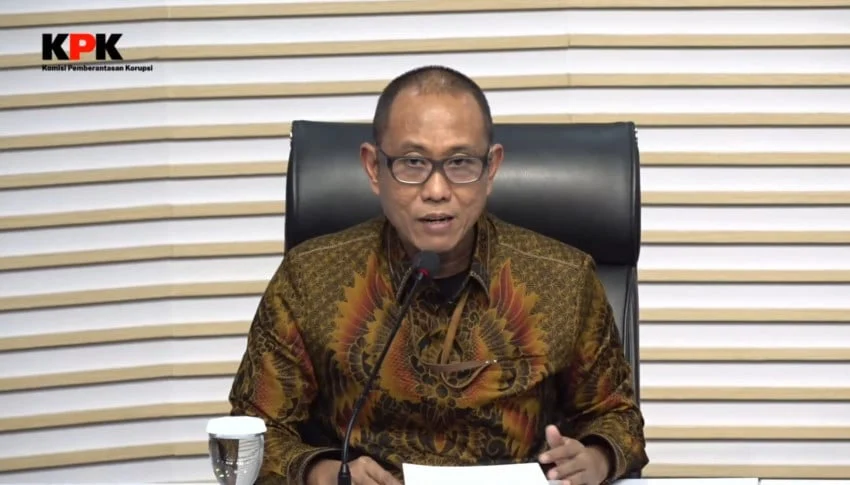
During the official press briefing at the KPK’s Merah Putih Building, Acting Director of Investigations Achmad Taufik Husein addressed the elephant in the room: the connection between the suspects and Minister Nusron Wahid. Responding to inquiries about whether the investigation would climb higher up the political ladder, Taufik emphasized the procedural constraints of the initial arrest.
"It is important for the public and the media to understand that we operate within a strict 1×24-hour window following an OTT," Taufik explained. "Our primary focus in that limited timeframe is to process the individuals caught in the act and secure the evidence at hand. The investigation is ongoing, and we are currently working to map the full network involved."

Taufik avoided naming the Minister as a target, adhering to the KPK’s policy of not commenting on ongoing investigations until concrete evidence emerges. However, he did note that the Commission would follow the money trail wherever it leads, suggesting that the investigation is far from complete and that further suspects—potentially including higher-level officials—could be identified as the probe progresses.
Systemic Implications for Land Governance
The arrest of four individuals with close ties to a sitting Cabinet Minister has significant implications for the administration of President Prabowo Subianto, which has made bureaucratic reform and the eradication of corruption a cornerstone of its agenda. The Ministry of ATR/BPN is often viewed as one of the most prone to corruption due to the high financial stakes of land title management.
If the investigation reveals that the suspects used the Minister’s name or office to intimidate regional officials or influence decisions, it could necessitate a massive overhaul of how the BPN handles permit applications. Currently, the digital transformation of land certificates (e-certificates) is the Ministry’s primary defense against such fraud. This scandal suggests, however, that while the systems are becoming digital, the human element—the intermediaries who exploit personal relationships—remains the weakest link.
Economic analysts suggest that such scandals can severely dampen investor confidence. Investors require legal certainty; when land titles are subject to bribery and political influence, the cost of doing business in Indonesia increases, and the risk of future litigation over land ownership rises.
Legal and Political Fallout
As the case moves into the formal discovery phase, the defense strategies of the four suspects will be under intense observation. Fahd A Rafiq, one of the primary suspects, is no stranger to the justice system, and his involvement adds a layer of complexity to the case. The presence of seasoned political operators within the suspect list suggests that this may not be a simple bureaucratic bribery case but a more complex political network.
For Nusron Wahid, the challenge is twofold. Politically, he must distance his ministry from the actions of his "trusted associates" without appearing to abandon them in a way that suggests a cover-up. Administratively, he must prove that the Ministry’s internal oversight mechanisms are robust enough to prevent such incidents from recurring.
Legal experts, such as those from the Indonesian Corruption Watch (ICW), have urged the KPK to remain independent and transparent. "The key to public trust in this case will be the willingness of the KPK to expand the investigation to anyone involved, regardless of their proximity to power," a representative noted in a separate statement. The public is watching to see if the KPK’s "limited time" excuse during the press conference was merely a procedural reality or a sign of reluctance to touch high-level political figures.
Conclusion
The HGB bribery scandal in Bogor serves as a sobering reminder of the challenges inherent in reforming land governance in Indonesia. As the KPK continues to sift through the evidence and interrogate the four suspects, the focus will remain on the intersection of political influence and administrative corruption. Whether this case leads to a fundamental shift in how the Ministry of ATR/BPN operates or remains a high-profile but localized incident will depend on the thoroughness of the upcoming trial and the commission’s resolve to pursue the investigation to its natural conclusion.
For now, the four suspects remain in detention as the legal machinery of the state grinds forward. The case has already achieved one outcome: it has put the entire bureaucratic apparatus of the Ministry on notice that, in the current climate, even those considered "close" to the corridors of power are not immune to the reach of the law. As the nation waits for further developments, the demand for transparency remains paramount in ensuring that the integrity of land ownership—a fundamental right of every Indonesian—is protected from the shadows of corruption.
