

The World Resources Institute (WRI) Indonesia has issued a stark warning regarding the sustainability of the nation’s fiscal health, asserting that the government’s energy subsidy budget is at risk of significant expansion if the national logistics system continues its heavy reliance on diesel-powered trucks. During the Indonesia Zero Emission Heavy-Duty Vehicle Summit held in Jakarta on Thursday, July 23, WRI Indonesia highlighted that the current structure of the transportation sector leaves the country’s economy dangerously exposed to the unpredictable fluctuations of global oil prices, which are increasingly influenced by geopolitical instabilities in energy-producing regions.
Nirarta Samadhi, the Country Director of WRI Indonesia, emphasized that the high level of dependency on diesel for the movement of goods makes the national logistics and transportation sectors highly vulnerable. He noted that historical data shows a clear correlation between international oil price surges and a corresponding spike in government spending on energy subsidies and compensations. This financial burden, he argued, diverts critical resources away from other development priorities and creates a cycle of fiscal uncertainty.
The Fiscal Impact of Global Oil Volatility
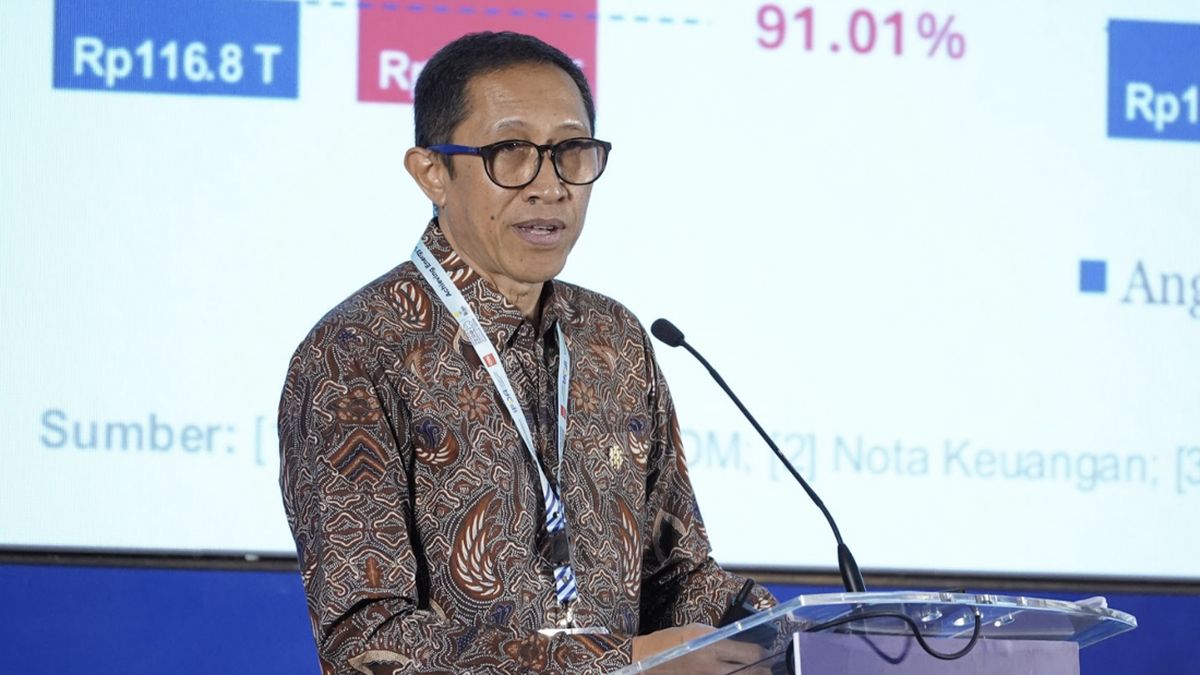
To illustrate the severity of this vulnerability, Nirarta pointed to the fiscal crisis of 2022. During that year, a combination of post-pandemic demand surges and geopolitical conflicts led to a dramatic rise in global energy costs. Consequently, the Indonesian government’s budget for energy subsidies and compensations skyrocketed by approximately 261.4 percent. The expenditure jumped from an initial estimate of Rp152.5 trillion to a staggering Rp551.2 trillion. This massive reallocation of state funds was necessary to maintain domestic price stability but highlighted the fragile nature of a diesel-dependent economy.
According to Nirarta, the conditions observed in 2022 are beginning to resurface in the current global climate. Escalating tensions in the Middle East have once again heightened the risk of disruptions to the global oil supply chain. As a net importer of fuel, Indonesia remains at the mercy of these external shocks. The WRI analysis suggests that without a structural shift in how the country powers its logistics fleet, any significant disruption in the Persian Gulf or other major oil corridors will inevitably lead to another round of budgetary strain for the Indonesian Treasury.
The fragility of the system is not only visible in the state’s balance sheets but also on the ground. Nirarta pointed to the frequent long queues of trucks at Public Fuel Filling Stations (SPBU) across the archipelago as a physical manifestation of a logistics system on the brink. These queues, he argued, are more than just an operational nuisance or a cause for distribution delays; they are a symptom of a deeper systemic weakness. The fact that the movement of essential goods can be paralyzed by the availability or pricing of a single fuel source underscores the need for urgent diversification.
The Logistics Paradox: High Impact from a Small Fleet
A central theme of the WRI’s warning is the disproportionate impact that heavy-duty vehicles (HDVs) have on both the economy and the environment. Data presented at the summit revealed that while trucks and heavy vehicles account for only about 6.2 million units—or roughly 3.7 percent of the total number of vehicles in Indonesia—their contribution to the transportation sector’s carbon footprint is massive. This small segment of the vehicle population is responsible for an estimated 31.7 percent of all land transport emissions.
This disparity creates a unique opportunity for targeted intervention. Nirarta explained that because the logistics sector is so concentrated, transitioning this specific fleet to cleaner energy sources would yield outsized benefits. "The number of units is relatively small, but the impact on energy consumption and emissions is enormous," he stated. "If we want to achieve significant results in reducing emissions while simultaneously saving on diesel consumption, then the transformation of the trucking sector must be the top priority."
Currently, between 80 and 90 percent of Indonesia’s national logistics system relies on road transport. This means that almost every consumer product, industrial raw material, and agricultural commodity is moved by diesel engines. This near-total reliance on a single, carbon-intensive fuel source for the backbone of the economy is what WRI describes as a "logistics trap" that prevents the country from achieving true energy independence.
Evaluating the Biodiesel Mandate and the Supply-Demand Gap
The Indonesian government has not been idle in the face of these challenges. For several years, the Ministry of Energy and Mineral Resources has championed a mandatory biodiesel program, which has evolved from B30 (a blend of 30 percent palm-based fuel and 70 percent diesel) to B35, B40, and the recently launched B50. Nirarta acknowledged the success of this program in reducing the nation’s reliance on imported diesel.
In 2024, data indicates that approximately 36.2 percent of the national diesel supply is derived from biodiesel, which has successfully pushed the proportion of imported diesel down to around 11.8 percent of the total supply. While this is a significant achievement in terms of trade balance and the utilization of domestic palm oil resources, WRI Indonesia warns that biodiesel alone is not a "silver bullet."
Modeling conducted by WRI suggests that the demand for diesel will continue to outpace domestic production capacity. By 2040, the national requirement for diesel is projected to reach 87.5 million kiloliters if there is no fundamental change in transportation technology. In contrast, even with planned refinery upgrades and increased biodiesel production, domestic capacity is only expected to reach approximately 26.5 million kiloliters. This widening gap indicates that Indonesia cannot simply "produce its way" out of the problem; it must also manage and reduce the demand for liquid fuels.
Electrification as a Strategic Game Changer
The proposed solution from WRI Indonesia is the aggressive electrification of the logistics sector. This alignment is particularly relevant given President Prabowo Subianto’s stated goal of achieving national energy self-sufficiency within the next five to seven years. Nirarta argued that if the administration is serious about energy sovereignty, the transformation of the freight transport sector is the most effective "game changer" available.
The transition to electric heavy-duty vehicles (E-HDVs) offers a twofold benefit: it removes the logistics sector from the volatile global oil market and leverages Indonesia’s domestic electricity production potential, which can increasingly be sourced from renewable energy such as geothermal, hydro, and solar power. Furthermore, electrification addresses the urgent need to meet the country’s Enhanced Nationally Determined Contribution (E-NDC) targets under the Paris Agreement.
However, the path to electrification is not without its hurdles. Industry experts and stakeholders at the summit noted several challenges that must be addressed by the government and the private sector:
- Infrastructure Development: Unlike passenger EVs, electric trucks require high-capacity charging infrastructure along major logistics corridors, such as the Trans-Java and Trans-Sumatra toll roads.
- Initial Capital Costs: The purchase price of an electric truck is currently significantly higher than its diesel counterpart, necessitating financial incentives or innovative leasing models for logistics companies.
- Battery Technology and Weight: For heavy-duty long-haul transport, the weight and charging time of batteries remain technical bottlenecks that require further investment in fast-charging technology.
- Grid Readiness: The State Electricity Company (PLN) must ensure that the grid can handle the high-load demands of industrial-scale charging stations without compromising the stability of the local power supply.
Broader Economic and Environmental Implications
The implications of failing to modernize the logistics sector extend beyond the state budget. High logistics costs in Indonesia—which are among the highest in Southeast Asia as a percentage of GDP—are directly influenced by fuel prices. When diesel prices rise or subsidies are cut, the cost of transporting food and basic goods increases, leading to inflationary pressure that disproportionately affects low-income households. By stabilizing logistics costs through electrification, the government could provide a more predictable environment for economic growth.
From an environmental perspective, the "greening" of the logistics fleet is essential for Indonesia’s "Net Zero Emission 2060" goal. As major global corporations increasingly demand "green supply chains" to meet their own sustainability targets, Indonesian logistics providers who fail to transition to zero-emission vehicles may find themselves at a competitive disadvantage in the international market.
In conclusion, WRI Indonesia’s message at the summit serves as a call to action for the new administration. While the biodiesel program has provided a temporary buffer, the long-term fiscal and environmental health of the nation depends on a structural shift. The transformation of the 6.2 million trucks currently traversing Indonesia’s roads from diesel-guzzling liabilities into a modern, electrified fleet is presented not just as an environmental necessity, but as a strategic imperative for national security and fiscal stability. As global oil markets remain fraught with tension, the window of opportunity to insulate the Indonesian economy through energy diversification is narrowing.
