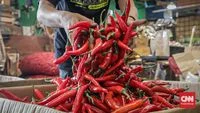
The relentless progression of extreme weather patterns has once again exposed the vulnerability of Indonesia’s agricultural supply chains, manifesting most acutely in a steep and sudden escalation of chili pepper prices at traditional markets throughout Tangerang Regency, Banten. Over the past few weeks, vendors and consumers at Pasar Gudang Tigaraksa have found themselves grappling with a severe market shock. The cost of staple varieties, particularly bird’s eye chili and curly red chili, has surged dramatically, placing a heavy financial burden on both small-scale merchants struggling to maintain their daily turnover and households attempting to navigate an increasingly restrictive cost of living.
This localized price spike is not an isolated market anomaly; rather, it is the direct domestic consequence of prolonged meteorological droughts that have severely impaired agricultural productivity in primary horticultural hubs across the island of Java. As the dry season intensifies, driven by broader climatic shifts, the agricultural sector faces critical resource constraints that threaten food security and economic stability at the grassroots level.
Chronology and Market Realities in Tigaraksa
The upward trajectory of chili prices at Pasar Gudang Tigaraksa began subtly in the early weeks of the dry season before turning into a steep hike over the preceding fortnight. According to local merchants, the velocity of the price increase caught both suppliers and retailers off guard, largely because the adjustments originated directly from major wholesale distribution centers.
Soleh, a 46-year-old chili vendor operating within the Tigaraksa marketplace, has observed these disruptions firsthand. Reflecting on the timeline of the price adjustments, Soleh noted that the hikes materialized rapidly several weeks prior. The cost structure dictated by major central markets shifted overnight, forcing local retailers to adjust their pricing merely to break even.
Before the current wave of inflation, bird’s eye chili—locally known as cabai rawit merah—retailed at a relatively stable baseline of approximately Rp60,000 per kilogram. Within a matter of weeks, that figure climbed to a staggering Rp85,000 per kilogram. A parallel surge affected curly red chili (cabai merah keriting), which historically hovered around Rp40,000 per kilogram under normal market conditions. Today, consumers must pay roughly Rp60,000 per kilogram for the same quantity.
This compressed timeline illustrates the fragile nature of agricultural logistics in Indonesia. When production centers face immediate environmental shocks, the shockwaves reach municipal wet markets within days, bypassing standard market buffering mechanisms and instantly punishing the consumer base.
The Root Cause: Extreme Drought and Agricultural Failures
At the heart of the price surge lies an escalating water crisis in key agricultural regions neighboring Banten, particularly within the provinces of West Java and Central Java. These provinces have long served as the primary breadbasket supplying fresh produce to the densely populated urban and suburban sprawl of Greater Jakarta, including Tangerang.
Soleh and fellow market observers point directly to the ongoing meteorological drought as the primary culprit behind the supply contraction. Cultivating chili peppers requires precise climatic conditions, adequate moisture management, and reliable irrigation. The extreme dry spell has disrupted traditional planting seasons, leaving farmers unable to maintain soil hydration.
Worse still, the severity of the drought has triggered widespread crop failures across major farming districts in West Java. Numerous agricultural plots have withered before reaching maturity, while plants that survived the initial heat stress have suffered from drastically reduced yields. Farmers are caught in a compounding crisis: the cost of artificial irrigation has skyrocketed, while the output per hectare has plummeted. Consequently, the total volume of harvested chili arriving at wholesale distribution hubs has contracted sharply, creating a classic supply deficit that naturally dictates higher market prices.
Economic Fallout for Micro-Retailers
The implications of soaring chili prices extend far beyond abstract macroeconomic inflation metrics; they directly threaten the livelihoods of independent market vendors. For merchants like Soleh, whose daily income depends entirely on turnover volume rather than high profit margins per unit, the price surge has proven deeply damaging.
In the wake of the price hikes, Soleh reported a catastrophic 30 percent drop in overall sales revenue. This decline is not driven by a lack of consumer desire for the product—chili remains an indispensable component of Indonesian cuisine—but rather by a systemic contraction in purchasing power.
When commodity prices rise by 40 to 50 percent in a short span, average consumers adjust their purchasing behavior defensively. Regular patrons who previously bought chili by the kilogram have been forced to ration their purchases. Many now buy merely a quarter or half of a kilogram, while others omit the ingredient entirely from certain culinary preparations. For retailers, this reduction in basket size translates to slower inventory turnover, increased risk of spoilage for unsold perishable goods, and diminished daily take-home earnings.
Consumer Strain and Household Budget Pressures
The retail shock is felt just as acutely on the demand side of the transaction. Tanti, a 37-year-old local resident and consumer navigating the stalls at Pasar Gudang Tigaraksa, voiced the frustrations shared by countless households across Tangerang.
For Tanti, the inflated cost of chili compounds a broader pattern of rising living expenses that squeeze household budgets from multiple directions. With numerous financial obligations ranging from children’s educational expenses to basic household utilities, families have little fiscal room to absorb sudden food price inflation.
"If possible, the price should be lowered because there are so many other basic needs to meet, not to mention provisions for the children and other essential household expenses," Tanti remarked.
Her sentiment reflects the broader socio-economic friction caused by volatile food prices. In Indonesia, chili peppers occupy a unique space as both a daily dietary staple and a politically sensitive volatile food (bahan pangan strategis). When prices spike uncontrollably, it places an immediate psychological and financial burden on working-class and middle-class families alike, amplifying anxieties regarding overall economic security.
Broader Implications and the Call for Intervention
The situation unfolding in Tangerang highlights systemic vulnerabilities in national food distribution and agricultural resilience. Horticulture in Indonesia remains heavily dependent on seasonal rain-fed systems, leaving it exceptionally vulnerable to climate anomalies such as El Niño or prolonged dry seasons.
As extreme weather events become more frequent due to global climate change, agricultural regions require urgent structural modernization. This includes the expansion of modern irrigation infrastructure, the adoption of climate-resilient crop varieties, the enhancement of cold-chain logistics, and the establishment of localized buffer stocks to cushion against sudden production collapses.
In the immediate term, market participants are looking to the government for decisive intervention. Vendors like Soleh have explicitly called upon policymakers to step in, safeguard supply chains, and implement stabilization measures to prevent further price escalation while the extreme dry spell persists.
Potential policy responses available to regional and central governments include organizing subsidized market operations (operasi pasar), facilitating direct distribution channels from surplus regions to deficit areas to cut out speculative middlemen, and providing direct agricultural relief to drought-stricken farmers to accelerate recovery for the upcoming planting season.
Without proactive governance and targeted market interventions, supply-side shocks driven by climate volatility threaten to become an recurring cycle, continuously eroding consumer purchasing power and destabilizing the micro-economies of traditional marketplaces across the archipelago.