
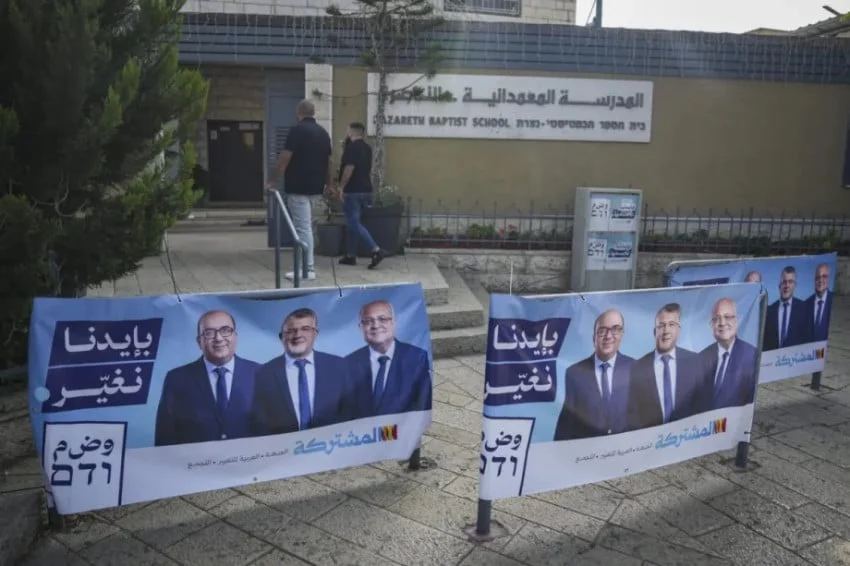
TEL AVIV — The political landscape in Israel has grown increasingly tense following the conclusion of the recent parliamentary elections, with the Joint Arab List launching a severe accusation against Prime Minister Benjamin Netanyahu’s ruling Likud party. According to the prominent Arab political alliance, Likud has engaged in a deliberate campaign to undermine the democratic election results by inciting hatred against Arab voters and attempting to delegitimize their political representation within the Knesset.
The allegations, which surfaced in the wake of the vote count, highlight a deepening rift over minority participation and civic rights in the country. The Joint Arab List asserts that the aggressive rhetoric deployed by Netanyahu and his political allies reflects a profound anxiety regarding the growing legislative influence and mobilization capacity of the Arab electorate. Furthermore, the coalition contends that the right-wing bloc is struggling to accept the remarkably high voter turnout among Arab citizens—a phenomenon that played a decisive role in preventing Netanyahu’s coalition from securing the critical 61-seat threshold required to form a stable majority government in Israel’s 120-seat parliament.
Background and Context of Arab Political Participation in Israel
To understand the gravity of the accusations made by the Joint Arab List, it is essential to examine the socio-political backdrop of the Arab minority in Israel, who make up approximately 20 percent of the country’s population. For decades, Arab citizens have navigated a complex reality of social integration, systemic discrimination, and political marginalization. While they hold voting rights and have consistently elected representatives to the Knesset, their representation has frequently been targeted by mainstream right-wing parties seeking to rally their own nationalist base.
In recent election cycles, political dynamics have shifted significantly. The emergence of coalitions like the Joint Arab List and the United Arab List (Ra’am) has demonstrated the potential of a unified or strategically coordinated Arab electorate. However, this rise in political clout has been met with intensified political polarization. Right-wing factions, led predominantly by Likud, have historically framed Arab political parties not as legitimate democratic opponents, but as security threats or allies to hostile regional entities—a narrative that critics argue borders on incitement and voter suppression.
Escalation of Tensions: Chronology of the Electoral Clash
The friction between the Joint Arab List and the Likud party did not materialize overnight; rather, it is the culmination of a protracted electoral season marked by legal battles, public rhetoric, and heightened security concerns.
-
Pre-Election Maneuvers (Months Prior to the Vote): Long before citizens cast their ballots, political tensions were visible in the Central Election Committee. Various right-wing factions attempted to disqualify individual Arab candidates and entire political lists, citing controversial interpretations of Israel’s Basic Laws regarding support for terrorism or opposition to the state’s Jewish character. The Supreme Court ultimately intervened in several cases to overturn these disqualifications, but the legal challenges created an atmosphere of hostility.
-
Campaign Trail Rhetoric (Weeks Before the Election): As campaigning intensified, Likud intensified its messaging regarding the necessity of a decisive right-wing victory. Analysts noted an increase in warnings from conservative politicians about alleged voter fraud or irregularities in Arab-majority localities. The Joint Arab List argues that these warnings were not based on factual evidence, but were instead designed to cast doubt on the legitimacy of Arab votes before they were even counted.
-
Polling Day and High Turnout (Election Day): On October 27, polling stations in Arab towns such as Nazareth witnessed a surge in civic participation. Despite widespread disillusionment with state institutions and frustrations over rising crime rates, Arab voters turned out in droves.
-
Post-Election Accusations (Current Phase): Following the release of the final preliminary results, which showed that Netanyahu’s coalition fell short of the magic number of 61 seats due in part to the robust performance of Arab parties, the Joint Arab List issued its formal condemnation. They accused Likud of rolling out a post-election strategy aimed at delegitimizing the very voters who denied them an outright majority.
Catalysts for High Voter Turnout
The Joint Arab List pointed to specific systemic grievances that drove Arab voters to the ballot boxes in unprecedented numbers, defying predictions of widespread voter apathy. According to the coalition, the surge in participation was a direct democratic response to several key domestic crises:
- Socio-Economic and Security Failures: Communities within the Arab sector have suffered from an unprecedented wave of violent crime and organized gang activity over recent years. Leaders within the Arab community have repeatedly accused the central government and law enforcement agencies of institutional neglect, noting that clearance rates for crimes in Arab towns are disproportionately lower than in Jewish localities.
- State Policies and Civil Rights Violations: The coalition highlighted ongoing grievances related to government-backed policies, including the controversial enforcement of building demolition orders in unrecognized villages, forced evictions, and what they describe as systemic discrimination in resource allocation.
- Regional Conflicts: The backdrop of ongoing regional warfare and heightened security operations profoundly impacted the psychological and political state of Arab citizens, many of whom find themselves caught in a complex identity dilemma between their Palestinian heritage and their Israeli citizenship.
Rather than addressing these pressing domestic concerns, the Joint Arab List argues, the Likud party chose to deflect public attention by scapegoating the Arab population and questioning their civic loyalty.
Broader Implications for Israeli Democracy
The public clash between the Joint Arab List and Likud carries significant implications for the future of Israeli governance, democratic norms, and social cohesion. Political analysts suggest that the ongoing reliance on divisive rhetoric during campaigns erodes public trust in democratic institutions, including the judiciary and the electoral commission.
When major political factions openly question the legitimacy of a significant minority’s participation in the democratic process, it deepens existing societal fractures. For Israel’s parliamentary system—which historically relies on complex coalition-building—the persistent ostracization of Arab parties complicates the formation of stable governments and forecloses opportunities for bipartisan cooperation on critical civil issues, such as public safety and economic development.
Furthermore, the international community closely monitors how Israel treats its minority populations. Delegitimizing the political representation of one-fifth of the citizenry risks drawing diplomatic scrutiny and intensifying debates surrounding civil equality within the state.
As the political dust settles and parties prepare for potential coalition negotiations or even the prospect of renewed stalemate, the core debate over the place of Arab citizens in Israeli democracy remains unresolved. The allegations brought forward by the Joint Arab List underscore a fundamental question that continues to challenge the nation: whether Israeli politics can evolve to embrace a truly inclusive democratic framework, or whether electoral competition will remain ensnared in cycles of polarization and identity-based incitement.
