
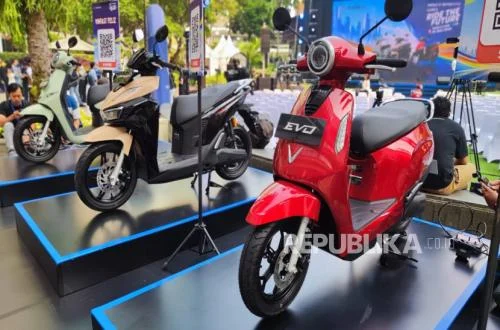
JAKARTA, Indonesia – July 18, 2026 – Vietnamese electric vehicle manufacturer VinFast officially launched its latest trio of electric motorcycles in Indonesia today, marking a significant step in its ambitious expansion strategy within the Southeast Asian market. The VinFast Evo, VinFast Feliz II, and VinFast Viper were unveiled at an event held at Tribeca Park, Central Park, West Jakarta. A key differentiator of VinFast’s offering is its flexible ownership model, presenting consumers with both battery subscription plans and the option to purchase the motorcycles outright with batteries included.
This strategic introduction aligns with VinFast’s broader objective to accelerate the adoption of electric vehicles (EVs) in Indonesia, a nation with a burgeoning two-wheeler market and a government actively promoting sustainable mobility. The company views Indonesia’s vast two-wheeler landscape as a prime opportunity, especially given the government’s target to have 13 million electric motorcycles on the road by 2030.
A Strategic Entry into a Promising Market
Yordan Satriadi, CEO of VinFast Indonesia E-Motorcycle, expressed optimism about the company’s prospects in the Indonesian market. "We observe that the Indonesian public is becoming increasingly savvy in managing their expenditures," Satriadi stated during the launch event. "Simultaneously, the government has set ambitious targets for the development of electric vehicles. This presents an excellent opportunity for VinFast."
The pricing announced for the new models underscores VinFast’s commitment to making electric mobility accessible. The VinFast Evo is priced at Rp 17.5 million (on-the-road, Jakarta) under the battery subscription scheme. The VinFast Feliz II is available for Rp 18.5 million, while the top-tier VinFast Viper is positioned at Rp 22 million (OTR Jakarta), both also incorporating the battery subscription system.
Satriadi elaborated on the rationale behind the dual pricing strategy. "VinFast is not only offering attractive initial prices but also providing flexibility so that customers can choose the ownership scheme that best suits their mobility needs," he explained. This approach aims to cater to a diverse range of consumer preferences and financial capacities, encouraging wider adoption of electric motorcycles.
Key Features and Ownership Models
The battery subscription model is central to VinFast’s strategy in Indonesia. This model allows consumers to purchase the electric motorcycle at a lower upfront cost, with the battery – a significant component of an EV’s price – being leased. This arrangement is designed to reduce the initial financial barrier to entry and provide peace of mind regarding battery performance and eventual replacement.
Consumers opting for the battery subscription will benefit from VinFast’s expanding network of battery swapping stations. This service aims to eliminate range anxiety and the inconvenience of lengthy charging times, allowing riders to quickly exchange a depleted battery for a fully charged one.
For those who prefer outright ownership, the option to purchase the motorcycle along with its battery is also available, offering greater control and long-term cost predictability. This dual approach recognizes that different consumer segments may have varying priorities regarding upfront investment versus ongoing operational costs.
Comprehensive Warranty and Launch Promotions
Beyond competitive pricing and flexible ownership, VinFast is bolstering its value proposition with a robust warranty package. All VinFast electric motorcycles launched in Indonesia will come with a vehicle warranty of up to six years or 72,000 kilometers, whichever comes first. This extensive warranty coverage aims to instill confidence in the durability and reliability of VinFast’s products.
To further incentivize early adoption and address immediate user needs, VinFast is offering special launch promotions. For a limited period, customers who purchase a VinFast electric motorcycle will receive one year of complimentary battery swapping services at VinFast’s network of stations. This benefit is capped at a maximum of 20 battery exchanges per month per motorcycle.
"We expect this service to help reduce ownership costs while providing users with a sense of security in their daily use of electric vehicles," Satriadi commented, highlighting the dual benefit of cost savings and enhanced user experience.
Furthermore, as part of the launch campaign, VinFast is inviting potential customers to experience its electric motorcycles firsthand. Those who place a booking with a deposit of Rp 100,000 are eligible to participate in a full-day test ride program, allowing them to thoroughly evaluate the performance and features of the new models.
VinFast’s Global Ambitions and Indonesian Market Significance
The Indonesian launch is a critical component of VinFast’s broader international expansion strategy. Vo Thi Cam Tu, Managing Director of VinFast E-Motorcycle Overseas Market, emphasized Indonesia’s strategic importance. "Indonesia is one of the strategic markets for VinFast’s expansion in the Southeast Asian region," she stated in a prior announcement. "The high level of enthusiasm from the public since the pre-order program opened has strengthened our conviction in the prospects of electric vehicles in Indonesia."
VinFast’s strategy in Indonesia is built upon three core pillars:
- Consumer-Centric Product Development: Introducing products that are specifically tailored to meet the needs and preferences of Indonesian consumers. This involves understanding local riding habits, road conditions, and aesthetic preferences.
- Comprehensive Ownership Experience: Providing a holistic ownership experience through excellent after-sales service and an efficient battery swapping network. This aims to ensure customer satisfaction and loyalty.
- Strengthened Sales and Service Support: Investing in robust sales channels and customer service infrastructure to provide accessible and reliable support across the archipelago.
Cam Tu reiterated the company’s long-term commitment. "We believe Indonesia is ready for greener and smarter mobility," she remarked. "Our long-term commitment is realized through our products, services, and the battery swapping ecosystem that we are continuously developing."
The Electric Motorcycle Landscape in Indonesia
The Indonesian government’s push for electric vehicle adoption, particularly for motorcycles, is driven by several factors. The country has one of the largest motorcycle populations globally, and a significant portion of its transportation emissions comes from these vehicles. Transitioning to electric motorcycles is seen as a crucial step in reducing air pollution in urban centers and meeting national climate change mitigation goals.
The target of 13 million electric motorcycles by 2030 signifies a substantial undertaking, requiring concerted efforts from manufacturers, policymakers, and consumers. VinFast’s entry with multiple models and a focus on battery swapping addresses key challenges that have historically hindered EV adoption: high initial costs and charging infrastructure limitations.
Supporting Data and Market Trends
- Global EV Market Growth: The global electric two-wheeler market is experiencing rapid growth. According to various market research reports, the sector is projected to expand at a compound annual growth rate (CAGR) of over 10% in the coming years, driven by increasing environmental awareness, government incentives, and technological advancements.
- Indonesia’s Two-Wheeler Dominance: Indonesia is the third-largest motorcycle market in the world, with ownership rates exceeding 40% of households. This vast installed base represents a significant opportunity for electrification.
- Government Incentives: The Indonesian government has introduced various incentives, including tax breaks and subsidies, to encourage the production and adoption of EVs. While specific details may evolve, the overarching policy direction favors a transition to cleaner transportation.
- Battery Swapping Technology: Battery swapping technology is gaining traction as a viable solution for electric motorcycles. It offers a practical alternative to traditional charging, especially in dense urban environments where charging times can be a deterrent. Companies like Gesits, Electrum, and now VinFast are actively developing and deploying such solutions in Indonesia.
Analysis of Implications
VinFast’s entry into the Indonesian market with its differentiated approach is likely to have several significant implications:
- Increased Competition: The introduction of new models from a global player like VinFast will intensify competition in the Indonesian electric motorcycle segment. This could lead to further innovation, improved product offerings, and potentially more competitive pricing from existing manufacturers.
- Acceleration of Battery Swapping Infrastructure: VinFast’s emphasis on battery swapping could spur further investment and expansion of swapping station networks across the country. This would benefit not only VinFast users but also contribute to the broader development of EV infrastructure.
- Consumer Choice and Affordability: The battery subscription model, in particular, has the potential to make electric motorcycles more affordable for a wider segment of the Indonesian population, thereby accelerating the transition away from internal combustion engine vehicles.
- Market Validation: The success of VinFast’s strategy in Indonesia could serve as a model for other international EV manufacturers looking to enter similar emerging markets, demonstrating the viability of localized strategies and flexible ownership models.
The company’s commitment to a long-term presence, as articulated by its leadership, suggests a strategic vision beyond mere product launches. By investing in local production capabilities (if future plans include this) and building a robust after-sales service network, VinFast aims to establish itself as a significant player in Indonesia’s sustainable mobility future. The success of its initial offerings and the response to its unique ownership models will be closely watched as Indonesia navigates its path towards a greener transportation ecosystem.
