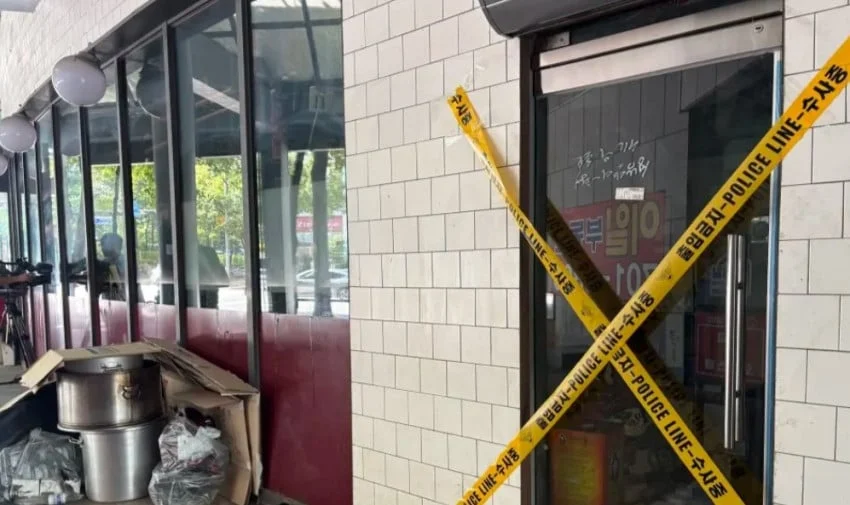
A restaurant in Seongnam, South Korea, bearing the name of Chinese President Xi Jinping, became the target of a targeted vandalism attack that has sparked diplomatic discussions and concerns regarding the safety of business owners in the region. On September 24, a group of unidentified men, wearing masks to conceal their identities, forced entry into the establishment during the early morning hours, systematically destroying furniture and defacing the property with lacquer spray. The perpetrators, reportedly Chinese nationals, fled the country shortly after the incident, complicating the ongoing police investigation.
Chronology of the Incident
The incident unfolded in the early hours of September 24 in Seongnam, a prominent city located immediately south of Seoul. According to surveillance footage released by local law enforcement, four individuals wearing dark clothing and face masks arrived at the premises under the cover of darkness. The group gained entry through the front entrance, immediately proceeding to cause significant property damage.
Witness reports and CCTV evidence indicate that the attackers brought cans of lacquer spray, which they used to coat the walls, tables, and interior decor of the restaurant. Beyond the aesthetic defacement, the group reportedly overturned heavy furniture and dismantled fixtures, rendering the business temporarily inoperable. The precision and speed of the attack suggest a degree of coordination, leading authorities to suspect that the motive was rooted in political or symbolic resentment rather than typical criminal vandalism.
Local authorities in Seongnam confirmed that the suspects successfully exited South Korea shortly after the attack. The speed of their departure has led to international cooperation inquiries between the South Korean police and their counterparts in China to track the identities of the individuals involved.
The Owner’s Perspective and Intent
The owner of the restaurant, who has remained a central figure in the aftermath of the attack, has publicly addressed the controversy surrounding the establishment’s name. In interviews with local media outlets, the proprietor explained that the choice of the name "Xi Jinping" was purely commercial, intended to evoke a high-quality Chinese culinary experience.
"I wanted the restaurant to be synonymous with the highest standards of Chinese cuisine in South Korea," the owner stated. He firmly denied any underlying political agenda, emphasizing that the nomenclature was an attempt at brand positioning rather than an expression of political allegiance or affiliation with the Chinese Communist Party. The owner expressed shock at the severity of the backlash, noting that he had operated the business with the intention of fostering cultural exchange through gastronomy, not political discourse.
Contextualizing Political Tensions
The vandalism of the restaurant occurs against a backdrop of complex and often strained relations between Seoul and Beijing. While the two nations share deep economic ties, historical disputes, cultural sensitivities, and divergent geopolitical alliances have periodically fueled tensions among their respective populaces.
In recent years, "cultural appropriation" debates have surged in East Asia, with netizens from both nations frequently clashing over the origins of traditional clothing, cuisine, and customs. When a business adopts a name that is politically sensitive—especially one as high-profile as the leader of the People’s Republic of China—it risks becoming a lightning rod for broader societal frustrations.
Security analysts point out that in an era of heightened nationalism, public figures and institutions often become targets for individuals looking to express disapproval of state policies. While the owner of the Seongnam restaurant insists his intent was neutral, the symbolic weight of the name "Xi Jinping" in a foreign country created an environment where the restaurant was viewed as an affront by certain nationalistic groups.
Implications for Local Business and Security
The attack has raised significant concerns among the business community in the Seoul metropolitan area regarding the safety of establishments that utilize sensitive names or branding. Following the incident, local authorities in Seongnam have increased patrols in commercial districts, though they have stopped short of labeling the event as a direct threat to the broader Chinese expatriate community.

Legal experts suggest that the incident could lead to a precedent-setting case regarding international legal cooperation. Because the suspects left the jurisdiction immediately, the South Korean Ministry of Justice may have to navigate a complex path to seek extradition or legal recourse. If the suspects are identified as Chinese citizens, the incident may test the effectiveness of existing bilateral law enforcement treaties between the two nations.
Furthermore, the incident has highlighted the vulnerability of small business owners to international political currents. As the digital age allows for the rapid spread of images and videos—such as the CCTV footage of this attack—a local business dispute can quickly become an international news story, potentially affecting the livelihood of the entrepreneur and the safety of their staff.
Official Responses and Public Sentiment
While official statements from the Chinese government have been limited, the incident has generated significant chatter on social media platforms in both China and South Korea. In South Korea, the consensus among public commentators has been one of concern regarding the rule of law. Many have argued that regardless of the restaurant’s name, the act of targeted destruction is a violation of South Korean sovereignty and a threat to public order.
Conversely, some voices within the Chinese diaspora have argued that the use of a political leader’s name for a private business is inappropriate and "disrespectful," which they contend prompted the attack. This divide in public sentiment underscores the difficulty of maintaining social harmony in an era where global political identities are increasingly projected onto local businesses.
Broader Economic and Geopolitical Impact
The incident serves as a microcosm of the risks inherent in the globalized economy. As South Korea continues to host a diverse array of international businesses, the protection of these establishments is paramount to maintaining the country’s image as a stable hub for commerce.
The economic implications are twofold:
- Business Stability: Small business owners must now consider the potential "political risk" of their branding, a factor previously relegated to multinational corporations.
- Tourism and Migration: The incident may influence the perception of safety among the Chinese expatriate community in Korea and vice versa, potentially impacting tourism and student exchange programs if the atmosphere remains tense.
Furthermore, the use of violence to express political disagreement is a concerning trend that local authorities are eager to curb. By treating the case as a criminal matter rather than a political one, the South Korean police aim to discourage future vigilante actions, emphasizing that domestic disputes should be settled through the legal system rather than through property destruction.
Future Outlook and Law Enforcement Efforts
As the investigation enters its next phase, the focus remains on identifying the four men seen in the footage. The South Korean National Police Agency (KNPA) is currently working with immigration records to track the flight paths of the suspects. While the names of the individuals remain redacted due to the ongoing investigation, officials have indicated that they are analyzing digital footprints and social media activity to determine if the attack was organized online.
The restaurant, meanwhile, faces a difficult road to recovery. Beyond the physical repairs, the owner must navigate the reputational damage and the potential for repeat attacks. There have been calls from local business associations for increased security measures, including improved surveillance and panic-button installations in businesses that have been flagged as potentially sensitive.
Ultimately, the attack on the Xi Jinping-named restaurant in Seongnam serves as a stark reminder of how global geopolitics can permeate the most mundane aspects of daily life. As the investigation unfolds, the incident will likely remain a key point of reference in discussions regarding the balance between freedom of expression in business and the necessity of maintaining order in a multicultural, politically sensitive landscape.
The international community will be watching closely to see how the South Korean government manages this case. The outcome will likely determine whether such targeted acts of political vandalism are addressed with the full weight of the law, or if they continue to present a challenge to the safety of small-scale entrepreneurs in the heart of East Asia. For now, the shuttered, spray-painted doors of the restaurant in Seongnam stand as a silent testament to the fragile intersection of commerce, culture, and the volatile nature of modern political symbolism.