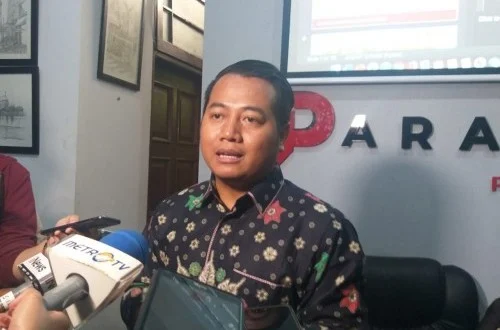
JAKARTA – A recent survey conducted by Parameter Politik Indonesia has identified Taj Yasin Maimoen, the former Deputy Governor of Central Java for the 2018-2023 term, as the most popular figure among potential candidates for the upcoming Central Java gubernatorial election (Pilkada Jateng). The data collection for this pivotal survey was conducted between May 15 and May 21, 2024, offering an early glimpse into the public’s awareness of key political figures vying for the province’s top leadership position. The findings were officially released online on Wednesday, May 29, 2024, drawing significant attention from political observers and stakeholders across the archipelago.
Initial Survey Findings and Methodology
According to Adi Prayitno, the Executive Director of Parameter Politik Indonesia, Taj Yasin Maimoen registered a significant popularity rating of 52.1 percent. This figure indicates that more than half of the respondents were familiar with his name. Prayitno elaborated on the survey’s methodology, stating, "We asked respondents one by one, ‘Sir, Madam, are you familiar with the following figure?’ So, we asked each respondent individually, and about 52.1 percent of them recognized Taj Yasin’s name." This direct approach to gauging name recognition is a standard practice in political surveys, aiming to measure the breadth of a candidate’s public awareness. The survey targeted a representative sample of eligible voters across Central Java, ensuring its findings offered a comprehensive overview of public sentiment within the province. The results provide an initial benchmark for candidates as they prepare for the rigorous campaigning period ahead, highlighting the importance of name recognition as a foundational element of any successful political campaign.
Following Taj Yasin, Hendrar Prihadi, the current Head of the Government’s Goods/Services Procurement Policy Agency (LKPP) and former Mayor of Semarang, secured the second position with a popularity rating of 40 percent. Bupati Kendal, Dico Ganinduto, rounded out the top three, registering 38.1 percent. Prayitno emphasized that these individuals were chosen for the survey due to their perceived potential and frequent mentions in public discourse concerning the Central Java gubernatorial race. "These are individuals who, in our view, possess potential or are frequently discussed or associated with the possibility of running in the Central Java Pilkada. So, if we calculate them one by one, this is the general portrait of their popularity," he explained. The selection of these candidates reflects an understanding of the current political landscape and the figures who have already begun to capture public imagination or are being actively considered by political parties.
Central Java: A Crucial Political Battleground
Central Java is not merely another province in Indonesia; it is a demographic and political heavyweight, often referred to as a "swing province" despite its historical leanings. With a population exceeding 37 million, it is the third most populous province in the country, making its gubernatorial election a critical event with national implications. The province is known for its strong agricultural base, burgeoning industrial zones, and a rich cultural heritage, including the influential role of Nahdlatul Ulama (NU), Indonesia’s largest Islamic organization. The political landscape of Central Java has traditionally been dominated by the Indonesian Democratic Party of Struggle (PDI-P), which has held the gubernatorial seat for several consecutive terms. However, the 2024 presidential election results and the shifting dynamics of national politics suggest that the upcoming regional elections might present a more fluid and competitive environment. The interplay of traditional political allegiances, religious influence, and emergent youth voters will define the contest.
The significance of Central Java extends beyond its borders, often serving as a barometer for national political trends. A victory in Central Java provides a substantial boost in legitimacy and political capital for any party or coalition. Therefore, the race for the governor’s office is not just about regional leadership but also about consolidating power and influence at the national level. Parties will invest heavily in their chosen candidates, deploying resources and strategic campaigns to sway the diverse electorate. The province’s electoral outcomes can impact future presidential elections, given its large voter base and strategic location in Java, the most densely populated island in the world.
Profiles of Leading Contenders
Taj Yasin Maimoen: His leading popularity is noteworthy. As the son of the revered late K.H. Maimoen Zubair (Mbah Moen), a highly respected cleric and former head of the Sarang Islamic Boarding School in Rembang, Taj Yasin carries significant spiritual and political lineage. Mbah Moen was not only a spiritual leader but also a prominent figure within the United Development Party (PPP) and an influential voice in national politics. This heritage provides Taj Yasin with an inherent advantage, particularly among traditionalist Muslim voters and those affiliated with NU, a dominant force in Central Java. His tenure as Deputy Governor alongside Ganjar Pranowo provided him with direct experience in provincial governance and increased his public exposure. His political affiliation with PPP, a party often aligning with religious-nationalist sentiments, positions him uniquely in the Central Java landscape. His challenge will be to transcend his religious base and appeal to a broader, more diverse electorate, including secular nationalist voters and younger demographics.
Hendrar Prihadi: A seasoned politician from the PDI-P, Hendrar Prihadi brings a strong track record of urban governance. His two terms as Mayor of Semarang, the provincial capital, were marked by significant infrastructure development, improvements in public services, and a reputation for effective administration. This experience gives him a strong claim to leadership, appealing to voters who prioritize development and practical governance. His current role as the Head of LKPP, a national-level agency, further burnishes his credentials, demonstrating his capacity for leadership beyond regional politics. As a PDI-P cadre, he benefits from the party’s extensive organizational network and historical dominance in Central Java. However, his challenge might be to connect with rural voters and those outside the PDI-P’s traditional strongholds, as well as differentiating himself from the legacy of previous PDI-P governors.
Dico Ganinduto: Representing a younger generation of politicians, Dico Ganinduto, the current Bupati of Kendal, offers a fresh face in the gubernatorial race. As a member of the Golkar Party, he represents a different political stream from the PDI-P and PPP. His relative youth and modern approach could appeal to younger voters who are often looking for change and innovation in leadership. Dico has gained national attention for his dynamic leadership in Kendal and his proactive engagement, including collaborations with national public figures. While his popularity is growing, his main challenge will be to expand his recognition beyond Kendal and consolidate support across the entire province, which is considerably larger and more diverse than his current regency. He would need to articulate a compelling vision that resonates with a wide range of demographic groups.
Understanding the Pilkada Mechanism
The Pilkada (Pemilihan Kepala Daerah) system in Indonesia governs the direct election of regional heads, including governors, regents, and mayors. The process typically involves several stages:
- Candidate Registration: Political parties or coalitions of parties nominate candidates. Independent candidates can also run if they gather a sufficient number of voter signatures.
- Campaign Period: Candidates engage in extensive campaigning, holding rallies, debates, and utilizing various media platforms to convey their platforms and visions.
- Election Day: Voters cast their ballots directly for their chosen candidates.
- Vote Count and Certification: The General Elections Commission (KPU) oversees the counting and certification of votes.
- Dispute Resolution: Any electoral disputes are handled by the Constitutional Court.
For gubernatorial elections, a candidate pair (governor and deputy governor) must secure more than 50% of the vote to win outright in the first round. If no pair achieves this, the two pairs with the highest votes proceed to a second round. The upcoming Pilkada for Central Java is scheduled for November 27, 2024, alongside other regional elections across Indonesia. This timeline means that the period from now until November will be crucial for candidates to build momentum, secure party endorsements, and solidify their campaigns.
Popularity Versus Electability: A Crucial Distinction
While the survey highlights initial popularity, Adi Prayitno’s concluding remark that "the popular figures for the Central Java Pilkada are not yet considered ‘stellar’" underscores a critical distinction between popularity (name recognition) and electability (the likelihood of being chosen by voters). A high recognition rate is undoubtedly an asset, as voters cannot choose a candidate they do not know. However, it does not automatically translate into votes.
Several factors contribute to electability beyond mere name recognition:
- Voter Preference: Do voters not only know the candidate but also like them and intend to vote for them? This involves evaluating their platform, leadership style, perceived integrity, and alignment with voter values.
- Party Endorsement: The backing of major political parties provides organizational infrastructure, financial resources, and a loyal voter base. In Indonesia, party endorsements are often critical for securing a place on the ballot.
- Campaign Effectiveness: A well-funded and strategically executed campaign can significantly boost a candidate’s electability by effectively communicating their message and mobilizing supporters.
- Issue Salience: How well does a candidate address the key concerns of the electorate, such as economic development, job creation, education, healthcare, or infrastructure?
- Coalition Building: Given the multi-party system, forming strong coalitions is often necessary to achieve the electoral threshold and garner broader support.
- Debate Performance: Public debates offer a platform for candidates to showcase their command of issues and leadership qualities, which can sway undecided voters.
The "not yet stellar" assessment suggests that even the leading candidates have considerable work to do in converting their name recognition into a strong, committed voter base. This implies that the race remains open, with ample opportunity for candidates to improve their standing through effective campaigning and policy articulation. It also leaves room for other potential dark horse candidates to emerge and gain traction.
The Road Ahead: Party Endorsements and Coalitions
The upcoming months will be dominated by intense negotiations and strategizing among political parties as they decide on their gubernatorial and deputy gubernatorial nominees. Party endorsements are paramount, as only parties or coalitions meeting a certain threshold of seats in the provincial legislature (typically 20% of the total seats) can nominate candidates. Given that no single party in Central Java currently holds 20% of the seats, coalitions will be inevitable.
The PDI-P, despite its dominant position, will still need to form a coalition, likely looking for a partner that can complement its voter base or provide additional electoral weight. The Golkar Party, PPP, PKB (National Awakening Party), Gerindra, and others will all be vying for strategic alliances. The choice of a running mate will also be critical, often selected to balance regional representation, religious background, or appeal to different demographic segments. For instance, a nationalist candidate might pair with a religious figure, or an older, experienced politician with a younger, dynamic one.
The outcome of the 2024 presidential election, where Prabowo Subianto and Gibran Rakabuming Raka emerged victorious, will also influence regional elections. Parties aligned with the winning national coalition may seek to replicate that success at the provincial level, while opposition parties will aim to consolidate their strength. The national political climate can significantly impact voter sentiment and party strategies in the regions.
Expert Perspectives and Implications
Political analysts suggest that the early popularity figures are merely the starting gun for a marathon race. "Early surveys provide a snapshot of public awareness, but the real test comes during the campaign," noted a Jakarta-based political observer. "Candidates need to articulate clear visions, build strong ground game, and secure solid party backing. Without these, popularity can quickly wane." The challenge for Taj Yasin, Hendrar, and Dico will be to transform their current recognition into compelling narratives and policy proposals that resonate with the aspirations of Central Java’s diverse population.
The implications of this election for Central Java are profound. The next governor will inherit the responsibility of steering a large, complex province through significant economic and social challenges, including post-pandemic recovery, job creation for a young workforce, agricultural modernization, and sustainable urban development. The choice of leadership will determine the province’s trajectory for the next five years, impacting millions of lives. The election also serves as a crucial democratic exercise, allowing citizens to directly choose their leaders and hold them accountable.
Pilkada 2024: Key Dates and Anticipation
The 2024 regional elections are set to be a momentous occasion for Indonesian democracy. With simultaneous elections for governors, regents, and mayors across the archipelago, the country will witness a comprehensive renewal of its regional leadership. For Central Java, the key dates leading up to November 27, 2024, will include:
- Candidate Registration: Expected around August to September 2024.
- Campaign Period: Typically spans several weeks leading up to the election day.
- Quiet Period: A short period before election day where campaigning is prohibited.
- Election Day: November 27, 2024.
The coming months will be filled with political maneuvering, public debates, and intense campaigning. As the candidates begin to formally announce their intentions and secure endorsements, the true shape of the Central Java gubernatorial race will become clearer. The Parameter Politik Indonesia survey provides an early, valuable insight, but the journey from initial popularity to electoral victory is long and arduous, demanding strategic brilliance, broad appeal, and effective mobilization. All eyes will be on Central Java as it prepares to choose its next leader, a decision that will reverberate throughout the province and across the nation.