The Tangerang Selatan City Government (Pemkot Tangsel), in a significant collaborative effort with the Ministry of Social Affairs through its Sentra Mulya Jaya Jakarta, successfully organized the Integrated Social Services (Bakti Sosial Terintegrasi) 2026 event. Held on Tuesday, July 21, 2026, at the expansive Plaza Rakyat within the Tangerang Selatan City Government Center, the initiative aimed to provide comprehensive social, health, education, and economic empowerment services to the community under a single roof. This monumental event also strategically coincided with the national observance of Hari Anak Nasional (National Children’s Day), amplifying its focus on the welfare and development of the younger generation. The convergence of these critical services underscored a profound commitment from both central and local governments to enhance public accessibility to vital assistance and to address multifaceted societal challenges effectively.
The Vision Behind Integrated Social Services
The core philosophy driving the Bakti Sosial Terintegrasi is the creation of a "one-stop service" model, designed to streamline access for beneficiaries who often face logistical and bureaucratic hurdles when seeking various forms of aid. Instead of requiring individuals to navigate multiple government offices or agencies for different needs, this integrated approach brings a diverse array of crucial services directly to the people in a single, accessible location. This model is particularly effective in urban settings like Tangerang Selatan, a rapidly developing city experiencing population growth and diverse socioeconomic needs. The convenience offered by such an event minimizes travel burdens, reduces waiting times, and maximizes the number of services an individual or family can access within a single visit, thereby increasing the overall efficiency and impact of social welfare programs.
Chaerudin, Assistant Regional Secretary I of the Tangerang Selatan City Government, articulated the profound significance of this collaborative undertaking. "This activity represents a tangible manifestation of the synergy between the Tangerang Selatan City Government and the Ministry of Social Affairs in delivering more accessible services while simultaneously addressing the diverse needs of our community," he stated. He further emphasized the commitment inherent in such partnerships: "Through this Integrated Social Service, the community can obtain various services in one place. Collaborations like this exemplify the government’s unwavering commitment to continuously provide closer, faster, and more targeted services for those who need them most." This statement highlights the strategic intent to move beyond fragmented service delivery towards a holistic and user-centric approach.
Comprehensive Service Offerings and Their Impact
A total of ten distinct services were meticulously curated and delivered during the event, each designed to address specific vulnerabilities and promote overall well-being. These services reflect a deep understanding of the prevailing social challenges within the community:
-
Peksos Goes to Community (Social Workers Go to the Community): This initiative underscores the proactive role of social workers in identifying and assisting individuals and families facing complex social issues. Rather than waiting for people to seek help, trained social workers actively engage with the community, offering counseling, guidance, and direct referrals to appropriate support systems. This service is crucial for early intervention and ensuring that hidden needs are uncovered and addressed. In a bustling urban environment like Tangsel, where social isolation can be a concern, this direct outreach is invaluable for building trust and facilitating access to help.
-
Layanan Terapi (Therapy Services): This provision offered various forms of therapy, likely including psychological counseling, occupational therapy, or physical therapy, particularly for children and individuals with special needs. Such services are vital for mental health support, rehabilitation, and improving the quality of life for those living with chronic conditions or disabilities. Access to therapy can be cost-prohibitive for many, making this free offering a critical intervention for vulnerable populations.
-
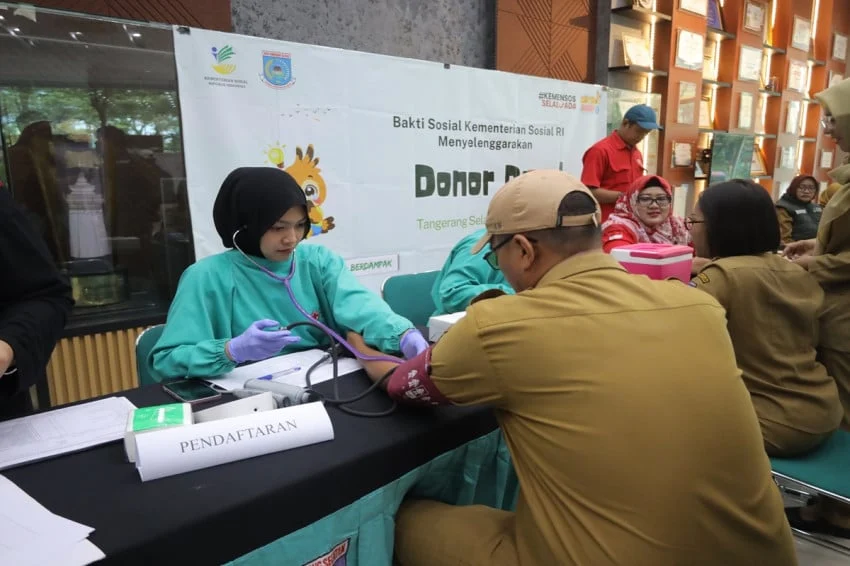
Pemeriksaan Kesehatan (Health Screenings): Basic health checks, including blood pressure monitoring, blood sugar tests, and general consultations, were available. Preventive healthcare and early detection of diseases are cornerstones of public health. For many residents, especially those without regular access to healthcare or health insurance, these free screenings provide an essential opportunity to monitor their health and receive initial medical advice, potentially preventing more serious conditions.
-
Pemberian Alat Bantu Disabilitas (Provision of Assistive Devices for Disabilities): This service directly addressed the needs of individuals with physical disabilities by providing essential assistive devices such as wheelchairs, crutches, hearing aids, or prosthetics. According to the National Socio-Economic Survey (Susenas) by Statistics Indonesia (BPS), a significant percentage of the Indonesian population lives with some form of disability, many of whom lack access to appropriate assistive technology. These devices are transformative, restoring mobility, independence, and dignity, thereby enabling greater participation in education, employment, and social life.
-
Khitan Gratis (Free Circumcision): Offering free circumcisions provides a significant health benefit and addresses a cultural and religious practice for many families. For low-income families, the cost of this procedure can be a barrier. Providing it free of charge ensures health benefits, such as reduced risk of certain infections, are accessible to all children regardless of their family’s economic status.
-
Penebusan Ijazah (Diploma Redemption): This unique and critical service targets individuals whose academic diplomas are held by schools due to unpaid fees, a common issue for economically disadvantaged students in Indonesia. Without their official diplomas, individuals are severely hampered in their ability to pursue higher education or secure formal employment, trapping them in a cycle of poverty. By facilitating the redemption of these diplomas, the program directly unlocks educational and economic opportunities, providing a pathway to a better future. This addresses a systemic barrier to upward mobility.
-
Donor Darah (Blood Donation): This component of the event encouraged community participation in a life-saving cause. Blood banks across Indonesia frequently face shortages, and community-based donation drives are crucial for maintaining adequate supplies for medical emergencies and ongoing treatments. It also fosters a sense of civic responsibility and solidarity among residents.
-
Bantuan Kewirausahaan (Entrepreneurial Assistance): Recognizing the importance of economic empowerment, this service likely offered guidance, training, and potentially seed capital or micro-loans to aspiring entrepreneurs from vulnerable backgrounds. Supporting small and micro-enterprises (MSMEs) is vital for local economic development and job creation. It provides individuals with the tools and resources to become self-sufficient and contribute to the local economy, moving them from dependency to productivity.
-
Permainan Anak (Children’s Games): Aligned with the spirit of Hari Anak Nasional, this service provided a space for children to engage in recreational activities. Play is fundamental for child development, fostering creativity, social skills, and emotional well-being. This inclusion underscored the holistic approach of the event, acknowledging that child welfare extends beyond basic needs to include opportunities for joy and healthy development.
-
Penyaluran Bantuan Asistensi Rehabilitasi Sosial (Atensi) (Distribution of Social Rehabilitation Assistance – Atensi): Atensi is a flagship program of the Ministry of Social Affairs aimed at providing comprehensive social rehabilitation, including basic needs assistance, family support, therapy, and social reintegration for various vulnerable groups, such as children, the elderly, persons with disabilities, and victims of violence or natural disasters. The direct distribution of Atensi benefits at the event ensured that critical aid reached those most in need efficiently.
Hari Anak Nasional: A Fitting Backdrop
The decision to host the Integrated Social Services on Hari Anak Nasional (July 23, though the event was on July 21, it aligns with the celebration period) was a deliberate and poignant choice. Hari Anak Nasional, typically celebrated on July 23rd, is a national observance in Indonesia dedicated to promoting the rights, welfare, and development of children. By organizing an event with a strong focus on family and child-centric services, Pemkot Tangsel and the Ministry of Social Affairs effectively underscored the government’s commitment to nurturing the next generation. The inclusion of services like therapy for children, free circumcision, diploma redemption (which significantly impacts youth’s future), and dedicated children’s games directly reinforced the themes of protection, participation, and development for Indonesian children. This strategic timing not only raised awareness for children’s issues but also ensured that the benefits of the social services reached a significant number of young beneficiaries and their families.
Chronology and Preparatory Efforts
The success of an event of this magnitude is not accidental but rather the culmination of extensive planning and inter-agency coordination. Preparations for the Bakti Sosial Terintegrasi 2026 likely commenced several months prior to the event date. This would have involved:
- Initial Consultations: Meetings between Pemkot Tangsel officials and representatives from Sentra Mulya Jaya Jakarta to outline objectives, identify target beneficiaries, and define the scope of services.
- Resource Mapping and Allocation: Identifying the human resources (social workers, medical personnel, volunteers), financial resources, and material aid required for each service. This includes sourcing assistive devices, medical supplies, and entrepreneurial aid packages.
- Logistical Planning: Securing the Plaza Rakyat venue, arranging for tents, service booths, power supply, sanitation facilities, and crowd management strategies. Given the anticipated large turnout, detailed logistical arrangements were paramount.
- Stakeholder Engagement: Coordinating with various local government departments (Health, Education, Social Affairs, Economic Development), NGOs, and private sector partners to ensure smooth service delivery and maximum impact. For instance, local hospitals might have provided medical staff for health screenings and circumcisions, while educational institutions might have assisted with diploma redemption verification.
- Publicity and Outreach: Disseminating information about the event to the community through various channels (local media, social media, community leaders, neighborhood associations) to ensure that those who needed the services were aware and could attend.
- Pre-registration and Data Collection: For certain services like assistive devices or entrepreneurial aid, a pre-registration process might have been implemented to assess needs, verify eligibility, and manage expectations, ensuring that the right aid reached the right people.
On the day of the event, July 21, 2026, the Plaza Rakyat transformed into a bustling hub of activity. Thousands of residents from across Tangerang Selatan were expected to converge, guided by volunteers and officials to the various service stations. The integrated nature meant that a family could, for example, have their child receive a health check, redeem an old diploma, and inquire about entrepreneurial support all within a few hours.
Following the event, a post-event evaluation would likely be conducted to assess the reach, impact, and efficiency of the services provided. This would involve collecting feedback from beneficiaries and service providers, analyzing the number of individuals served by each program, and identifying areas for improvement for future initiatives. For services like Atensi or entrepreneurial aid, follow-up mechanisms would be in place to monitor the long-term impact on beneficiaries.
Broader Impact and Policy Implications
The Integrated Social Services event in Tangerang Selatan carries significant implications for social welfare policy and public service delivery in Indonesia:
-
Model for Inter-Agency Collaboration: This event serves as an exemplary model for effective collaboration between central government ministries and local authorities. It demonstrates that by pooling resources, expertise, and mandates, more comprehensive and impactful social interventions can be achieved. This integrated approach minimizes duplication of efforts and maximizes the efficient use of public funds.
-
Strengthening Social Safety Nets: By addressing a wide spectrum of needs—from health and education to economic empowerment and disability support—the event significantly strengthens the social safety net for vulnerable populations in Tangerang Selatan. It contributes to the national goal of reducing poverty and inequality, aligning with broader national development agendas.
-
Enhancing Public Trust and Engagement: Events that directly address community needs in an accessible and efficient manner build greater public trust in government institutions. When citizens see tangible benefits and feel that their government is responsive, it fosters a stronger sense of community and civic engagement. The positive experiences of beneficiaries can encourage greater participation in future government programs.
-
Data-Driven Policy Making: The data collected from such integrated events—on the types of services most utilized, the demographics of beneficiaries, and the specific challenges identified—can provide invaluable insights for future policy formulation. This allows governments to tailor programs more precisely to the actual needs of the population, leading to more effective and targeted interventions.
-
Replicability and Sustainability: The success of the Tangerang Selatan model could inspire other cities and regions across Indonesia to adopt similar integrated approaches. The challenge, however, lies in ensuring the sustainability of such programs beyond one-off events. This would require institutionalizing cross-sectoral collaboration, allocating consistent funding, and building robust referral systems for ongoing support. The Ministry of Social Affairs, through its various Sentra (centers for social rehabilitation), plays a crucial role in advocating for and supporting the replication of such initiatives nationwide.
-
Focus on Child Welfare: The strategic timing with Hari Anak Nasional underscores a sustained focus on child welfare as a national priority. By offering services that directly benefit children and their families, the government reaffirms its commitment to upholding children’s rights to health, education, protection, and development, ensuring a brighter future for the younger generation.
In conclusion, the Bakti Sosial Terintegrasi Tahun 2026 in Tangerang Selatan represents more than just a single day of service provision. It embodies a forward-thinking approach to social welfare, characterized by integration, accessibility, and a deep commitment to empowering the most vulnerable members of society. As urban centers continue to grow and face complex social challenges, collaborative and comprehensive initiatives like this will be increasingly vital in fostering inclusive development and ensuring that no citizen is left behind. The event stands as a testament to the power of synergy between different levels of government in making a tangible difference in the lives of thousands.