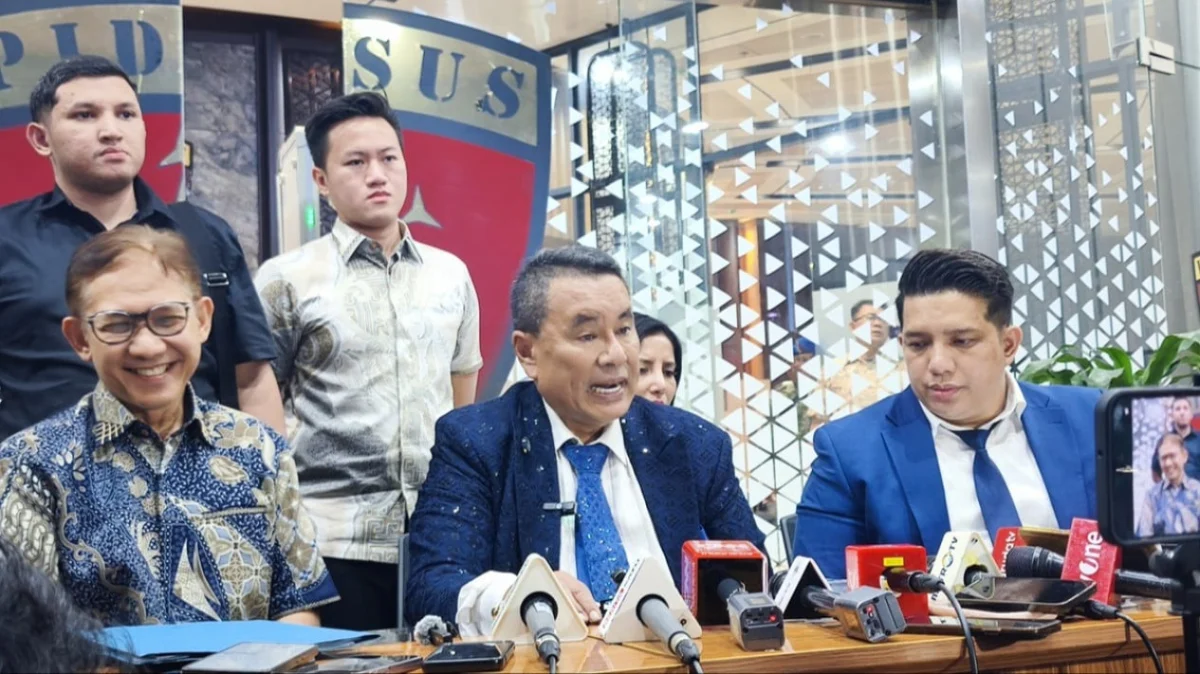
Jakarta, VIVA – The Jakarta Metropolitan Police (Polda Metro Jaya) has officially confirmed its intent to summon prominent lawyer Hotman Paris Hutapea for questioning in connection with two separate defamation complaints filed against him by leading journalist organizations. The confirmation, issued on Wednesday, July 22, 2026, signals a significant development in a case that has sparked considerable debate regarding freedom of expression, journalistic integrity, and the legal recourse available to professional bodies. Investigators are currently in the preliminary stages of reviewing the complaints and gathering initial evidence before proceeding with the formal summons.
Komisaris Besar Polisi Budi Hermanto, Head of Public Relations for Polda Metro Jaya, stated that while a summons for the reported party is indeed planned, it will not occur immediately. "Yes, the reported party will be summoned," Hermanto affirmed on Wednesday, July 22, 2026. He elaborated that the investigative team is meticulously undertaking the initial phase, which involves a thorough examination of the received reports, verification of the complainants’ statements, and an in-depth assessment of the evidence submitted. This methodical approach underscores the police’s commitment to a fair and comprehensive investigation, ensuring all procedural steps are diligently followed before escalating to the direct involvement of Hotman Paris.
Chronology of Events and Escalation of Complaints
The genesis of this legal entanglement traces back to a public statement made by Hotman Paris, which was widely perceived by the journalistic community as derogatory and insulting to their profession. While the exact context and date of the initial statement remain a subject of discussion, its impact was immediate and profound, leading to a strong backlash from various media associations. Hotman Paris reportedly issued an apology following the initial uproar, a gesture that, while noted, ultimately failed to appease the aggrieved journalist organizations, who felt the damage to their professional dignity necessitated a more decisive response.
The first formal complaint was lodged by the Persatuan Wartawan Indonesia (PWI) – the Indonesian Journalists Association – on Monday, July 20, 2026. The report, registered under LP/B/5291/VII/2026/SPKT/POLDA METRO JAYA, cited Article 242 of Law Number 1 Year 2023, which pertains to criminal acts against honor or reputation. Anrico Pasaribu, Chairman of the Legal Defense and Development Division of PWI Central, acted as the complainant. Edison Siahaan, Director of Anti-Violence Against Journalists at PWI Central, articulated the organization’s rationale for pursuing legal action, emphasizing that Hotman’s apology was insufficient to address the gravity of his remarks. "The Central Indonesian Journalists Association wants to report the person who said that journalists ‘don’t have brains’ or something similar. As we know, journalists are very smart," Siahaan asserted, highlighting the core of the perceived insult. He further elaborated that the PWI found Hotman’s comments to be a direct assault on the integrity and intelligence of the journalistic profession, necessitating legal redress to uphold the dignity of its members.
Just one day later, on Tuesday, July 21, 2026, another significant journalist organization, Media Independen Online (MIO) Indonesia, followed suit, filing a separate report against Hotman Paris at Polda Metro Jaya. This complaint, registered with LP/B/5298/VII/2026/SPKT/POLDA METRO JAYA, carried even broader legal implications, citing multiple articles from both the new Criminal Code (Law No. 1 Year 2023) and the Press Law (Law No. 40 Year 1999). Specifically, MIO Indonesia invoked Articles 433, 436, and 441 of the new Criminal Code, which deal with defamation, insult, and public humiliation. Crucially, they also cited Article 18 Paragraph (1) in conjunction with Article 4 Paragraph (2) and Paragraph (3) of Law No. 40 Year 1999 concerning the Press, a move that places the dispute firmly within the framework of press freedom and journalistic rights. Asep Yusuf Setyabudi Prayogie, Chairman of MIO Indonesia, stated that the organization viewed Hotman’s public statements as having "exceeded the boundaries of criticism against journalistic work," thereby infringing upon the protected space of the press. He stressed that while constructive criticism is welcome, remarks that undermine the fundamental intelligence and professionalism of journalists cross a red line, warranting legal intervention.
Key Players and Their Mandates
The case involves several prominent entities, each with a distinct role and mandate within Indonesia’s legal and media landscape.
Hotman Paris Hutapea: A flamboyant and highly successful lawyer, Hotman Paris is a household name in Indonesia. Known for his extravagant lifestyle, frequent media appearances, and handling of numerous high-profile celebrity and corporate cases, he often courts public attention. His legal career spans decades, marked by a reputation for aggressive advocacy and a keen ability to navigate complex legal terrain. While his public persona is often characterized by directness and sometimes provocative statements, this particular incident has drawn the ire of a powerful professional body, testing the boundaries of his public discourse. His apology, though issued, demonstrates an awareness of the controversy his words generated, but it also highlights the differing interpretations of what constitutes acceptable public criticism versus professional defamation.
Persatuan Wartawan Indonesia (PWI): As the oldest and one of the largest professional organizations for journalists in Indonesia, PWI holds significant moral and institutional authority. Established in 1946, its primary mission includes upholding journalistic ethics, promoting press freedom, and protecting the welfare and rights of its members. PWI plays a crucial role in shaping media policy, advocating for journalists’ interests, and providing legal assistance when members face threats or defamation. Its decision to pursue legal action against a figure as prominent as Hotman Paris underscores its commitment to safeguarding the dignity of the profession and setting a precedent against unwarranted attacks on journalists. The PWI’s robust stance reflects a broader dedication to ensuring that the media can operate without fear of undue intimidation or professional disparagement.
Media Independen Online (MIO) Indonesia: Representing the growing segment of independent online media practitioners, MIO Indonesia is a relatively newer but increasingly influential organization. It focuses on advocating for the rights and professional standards of journalists working in the digital space, an area that has seen rapid expansion and unique challenges. MIO Indonesia’s involvement signifies the collective concern across different media platforms regarding the protection of journalistic integrity. Their specific invocation of the Press Law alongside the new Criminal Code demonstrates a strategic approach to reinforce the unique protections afforded to the press, highlighting that attacks on journalists are not merely individual slights but potential infringements on press freedom itself.
Legal Framework and the Battle for Professional Dignity
The legal arguments in this case are poised to delve into the intricate interplay between freedom of expression, defamation laws, and the special protections afforded to the press in Indonesia.
Law No. 1 Year 2023 (New Criminal Code): The PWI’s initial complaint cites Article 242, which generally covers acts against honor or reputation. MIO Indonesia’s complaint broadens this by including Articles 433, 436, and 441. These articles, part of the recently enacted Criminal Code, are designed to address various forms of defamation and insult, both public and private. The transition to this new code, which replaced the colonial-era KUHP, has been a subject of extensive public debate, particularly regarding its provisions on freedom of speech and expression. The application of these articles in a high-profile case involving a public figure and journalist organizations will be closely watched as it could help shape the interpretation and enforcement of these new legal provisions, especially concerning their impact on public discourse and media scrutiny.
Law No. 40 Year 1999 (Press Law): MIO Indonesia’s decision to invoke Article 18 Paragraph (1) in conjunction with Article 4 Paragraph (2) and (3) of the Press Law is particularly significant. Article 4 of the Press Law guarantees press freedom as a fundamental right of citizens, emphasizing that the national press is not subject to censorship, banning, or broadcasting prohibition. Article 18 outlines penalties for those who obstruct or interfere with the exercise of journalistic freedom. By citing these articles, MIO Indonesia asserts that Hotman Paris’s comments not only defamed individual journalists but also potentially undermined the broader principle of press freedom by creating an intimidating environment for media professionals. This approach elevates the case beyond a mere personal dispute, framing it as a matter of public interest and the protection of democratic values. The Press Law often provides a unique legal shield for journalists, stipulating that disputes related to journalistic work should ideally be resolved through the Press Council mechanism first, though direct police reports are still possible, especially when criminal elements are perceived.
Broader Implications and Future Outlook
This unfolding legal battle carries substantial implications for the relationship between public figures and the media in Indonesia. It highlights the persistent tension between the right to freedom of expression – which allows public figures to voice their opinions, including criticism – and the need to protect professional groups, such as journalists, from unwarranted and demeaning attacks. The outcome of this case could establish a significant legal precedent regarding the boundaries of public criticism, particularly when directed at professional bodies.
For the journalistic community, the unified front presented by PWI and MIO Indonesia underscores a collective determination to defend the dignity and integrity of their profession. It sends a clear message that apologies alone may not suffice when remarks are perceived as deeply offensive and damaging to professional standing. This case serves as a powerful reminder of the importance of responsible communication, even for those accustomed to the public spotlight.
Looking ahead, the investigation will proceed with a detailed examination of the evidence and testimonies. Hotman Paris’s eventual summoning will mark a critical juncture, where he will have the opportunity to provide his defense and context for his statements. His legal team is expected to argue that his comments were either taken out of context, constituted legitimate criticism, or that his subsequent apology sufficiently mitigated any perceived harm. The police will then weigh all evidence and statements, consulting with legal experts and potentially the Press Council, to determine whether there is sufficient grounds to elevate the case to prosecution.
The resolution of this case will undoubtedly be closely watched by legal professionals, media organizations, and the general public alike, as it will contribute to defining the parameters of public discourse and the protection of professional honor in a rapidly evolving media landscape. It reinforces the critical role of legal institutions in mediating disputes that touch upon fundamental rights and professional responsibilities, shaping how public figures and the press interact in the pursuit of information and accountability.