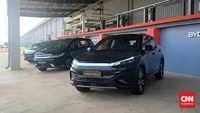
BANGKOK — In a strategic pivot designed to safeguard its domestic manufacturing sector and recalibrate its booming automotive market, the government of Thailand is actively advancing a new three-tier excise duty structure for electric vehicles (EVs). According to senior finance ministry officials, the proposed policy framework has already received in-principle approval from the National EV Policy Board. The structural overhaul is explicitly engineered to penalize completely built-up (CBU) vehicle imports while extending the most favorable, lowest tax brackets exclusively to localized assembly operations.
While final tax rates and the precise duration of potential transition periods remain under active governmental review, the overarching objective is unmistakable. Thailand, long heralded as the Detroit of Southeast Asia, is moving aggressively to address structural vulnerabilities exposed by an unprecedented influx of subsidized foreign imports, particularly from Chinese manufacturers who have rapidly come to dominate the regional landscape.
The Impetus Behind the Policy Shift
For years, Thailand has positioned itself as the premier hub for automotive production and export within the Association of Southeast Asian Nations (ASEAN). However, the rapid global transition toward electrification has altered competitive dynamics across the region. Bangkok now finds itself locked in a high-stakes, multi-lateral race with neighbors Indonesia and Vietnam. Both nations have deployed aggressive fiscal and non-fiscal incentives designed to capture lucrative investments from major Chinese automotive conglomerates looking to establish manufacturing footprints outside their home market.
This intensifying regional competition threatens to dilute Thailand’s status as the undisputed singular export base for the region. Instead of channeling all investments into a single country, major Chinese automakers are increasingly diversifying their operational footprints across multiple Southeast Asian markets. In response, Thai policymakers are utilizing tax policy as a regulatory lever to compel foreign manufacturers to deepen their local supply chain integration, transfer technological expertise, and transition from mere importers to genuine domestic producers.
Despite these emerging protective measures, the scale of Chinese investment already anchored in Thailand remains formidable. At least eight major Chinese automotive giants—including BYD, Great Wall Motor, Changan Automobile, SAIC Motor, Chery Automobile, Hozon Auto, GAC Group, and Wuling—have formally committed to establishing or utilizing local assembly plants in the country. Industry projections indicate that the vast majority of these facilities will be fully operational by the second quarter of 2026.
This wave of capital deployment has elevated Thailand to the position of the third-largest destination for Chinese EV manufacturing investments globally, trailing only Hungary and Brazil in terms of investment value while capturing the highest volume of individual production facilities worldwide. Because many of these manufacturing plants are scheduled to come online concurrently with or shortly after the implementation of the new regulatory framework, several Chinese brands will automatically qualify for the lowest tier of the new excise duty structure. Consequently, industry analysts suggest that the immediate protective impact of the policy may not severely disrupt the established market dominance of these deeply entrenched players.
Chronology of the Thai EV Boom: Free Trade, Incentives, and Market Capture
The roots of the current market landscape trace back over two decades, shaped by strategic trade agreements and aggressive government industrial policies. The foundational turning point occurred in 2003 with the implementation of the bilateral Free Trade Agreement (FTA) between Thailand and China. This agreement eliminated tariffs on a wide array of goods, creating a frictionless pathway for automotive trade.
While baseline import tariffs for automobiles from most non-FTA nations historically hovered around a prohibitive 80 percent—with Japan enjoying a separate negotiated rate of 20 percent—vehicles originating from China entered the Thai market completely tariff-free. This structural advantage laid the groundwork for the subsequent wave of dominance.
To accelerate green adoption, the Thai government launched its ambitious EV 3.0 incentive scheme in 2022. The program offered a potent combination of consumer subsidies and steep import duty reductions, paired with a mandatory local content requirement. However, implementation delays pushed the enforcement of the domestic production obligations back to 2024.
This regulatory grace period unintentionally granted Chinese automakers nearly two years of unfettered, subsidized market access before they were legally required to build local assembly infrastructure. Capitalizing on this window, Chinese brands flooded the market with competitively priced models. By the close of 2025, Chinese EV manufacturers commanded an astonishing 89 percent share of the entire Thai electric vehicle market.
Aggressive Pricing Strategies and Market Dynamics
The influx of foreign capital was accompanied by a relentless pricing war that fundamentally altered consumer expectations in the kingdom. According to comprehensive market data compiled by the Krungsi Research institute, Chinese EV brands systematically drove down retail prices. Between the automotive exhibition seasons of 2023 and 2024, average selling prices were slashed by 10.2 percent. This downward trajectory accelerated in early 2025 with an additional 13.1 percent price reduction, before moderating to a modest 2.7 percent adjustment during the remainder of that year.
Independent analyses underscore the profound divergence in pricing structures resulting from this competition. Data from the Rhodium Group revealed a staggering price gap of up to 50 percent between electric vehicles manufactured by Chinese firms and those produced by non-Chinese competitors as of May 2026.
This aggressive pricing strategy generated artificial demand spikes, most notably in December 2025, when sales surged dramatically just before the expiration of specific subsidy phases in January 2026. Although sales experienced a temporary contraction following the subsidy reset, volumes rebounded swiftly toward late-2025 baselines within a matter of months, demonstrating that consumer appetite for affordable electrification remained resilient and that the market share of dominant Chinese players stayed largely insulated.
Broader Implications and Regional Outlook
The introduction of the three-tier excise duty structure marks a mature phase in Thailand’s industrial policy. Rather than rolling out the red carpet indiscriminately, Bangkok is seeking to balance openness to foreign direct investment with the long-term viability of its domestic supplier ecosystem.
For international automakers, the message is clear: navigating the Thai market will increasingly require localized capital expenditure, job creation, and integration with local component manufacturers. While CBU importers will face heavy fiscal disincentives, brands that have invested in domestic assembly lines are poised to weather the regulatory shift with minimal friction.
As Southeast Asia continues to emerge as a critical global battleground for the electric vehicle revolution, Thailand’s evolving policy framework will serve as a bellwether for other emerging economies. The delicate equilibrium between attracting foreign capital to drive green transition goals and protecting domestic manufacturing capabilities will dictate the economic contours of the region’s automotive sector for decades to come.