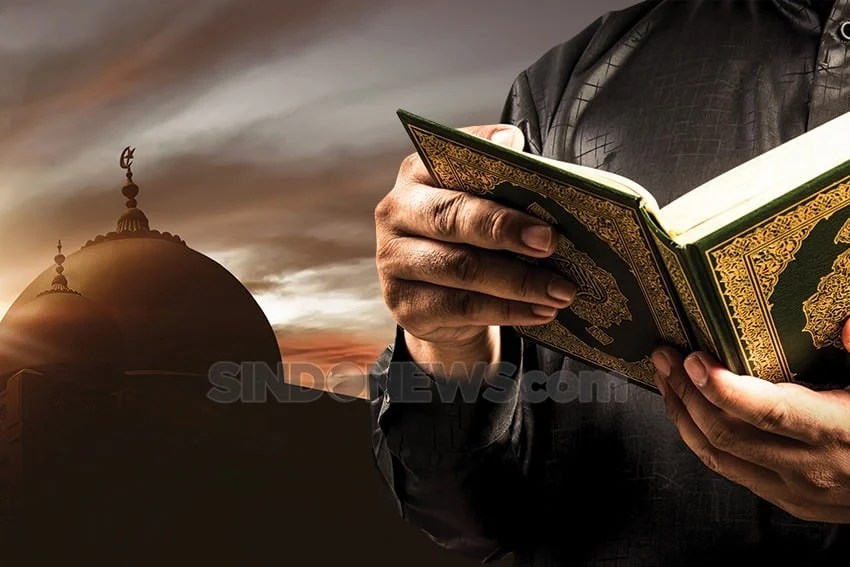
Beyond the customary practice of reciting salawat upon the Prophet Muhammad (peace be upon him), a profoundly encouraged act of worship on the blessed day of Friday is the recitation of Surah Al-Kahf, the eighteenth chapter of the Holy Quran. This significant chapter, comprising 110 verses, is a tapestry of profound narratives and divine wisdom, recounting pivotal stories such as those of the Ashabul Kahfi (Companions of the Cave), the parable of the owner of two gardens, the extraordinary encounter between Prophet Musa and Prophet Khidr (peace be upon them), and the epic journey of King Dzulqarnain, culminating in the construction of the barrier against Ya’juj and Ma’juj (Gog and Magog). The emphasis on this particular Surah on Friday is deeply rooted in Islamic tradition, underscored by numerous authentic prophetic narrations, collectively known as Hadith, which highlight its immense spiritual benefits and the divine light it bestows upon its devoted reciters.
The profound virtues associated with reciting Surah Al-Kahf on Friday are eloquently articulated in the Hadith, which serves as a cornerstone for this widely observed practice. One prominent narration states: "Indeed, whoever recites Surah Al-Kahf on Friday, a light will illuminate him between the two Fridays." (Narrated by Al-Hakim 3392, Al-Baihaqi 5996). This Hadith, accepted as sahih (authentic) by the vast majority of Islamic scholars, firmly establishes the spiritual reward awaiting those who adhere to this sunnah (prophetic tradition). Another narration further elaborates on this blessing, stating: "Whoever recites Surah Al-Kahf on the night of Friday, a light will be radiated for him as far as his location and Baitul ‘Atiq (the Kaaba)." (Sunan Ad-Darimi 3273). These narrations collectively paint a vivid picture of the spiritual illumination and divine protection granted to the faithful who engage with this particular chapter of the Quran during the sacred period surrounding Friday.
The day of Friday, known as Yawm al-Jum’ah in Arabic, holds a unique and elevated status in Islam, often referred to as the "master of days." It is the day when congregational prayers (Salat al-Jum’ah) are obligatory for Muslim men, serving as a weekly spiritual gathering and a moment for collective reflection and devotion. Beyond the prayers, Friday is replete with recommended acts of worship, including making abundant supplications (dua), sending blessings upon the Prophet Muhammad (salawat), performing ritual purification (ghusl), donning clean clothes, and arriving early at the mosque. The inclusion of Surah Al-Kahf recitation within this array of Friday practices elevates its significance, positioning it as a fundamental component of the weekly spiritual rejuvenation for Muslims worldwide. The historical context of Surah Al-Kahf’s revelation dates back to the Meccan period of Prophet Muhammad’s prophethood, a time characterized by intense persecution and trials for the nascent Muslim community. It was revealed in response to questions posed by the Quraysh polytheists, instigated by Jewish scholars, regarding three specific subjects: the story of the Companions of the Cave, the truth about the soul, and the story of Dzulqarnain. These questions were designed to test the Prophet’s claim to prophethood, and the comprehensive answers provided in Surah Al-Kahf not only addressed these queries but also offered profound lessons on faith, perseverance, divine justice, and the transient nature of worldly life.
The four central narratives within Surah Al-Kahf are not merely historical accounts but allegories brimming with timeless lessons, providing guidance for believers navigating the complexities of life and faith. The first story, that of the Ashabul Kahfi, or the Companions of the Cave, recounts the miraculous tale of a group of pious youths who fled the persecution of a tyrannical pagan king, seeking refuge in a cave where they were put into a deep sleep by divine decree for over 300 years. Upon awakening, they found the world transformed, their faith vindicated, and their story serving as a testament to God’s power over life and death, and His protection of those who steadfastly adhere to His path. This narrative underscores the importance of holding firm to one’s beliefs in the face of adversity, seeking refuge in divine protection, and the ultimate triumph of truth. It offers solace to those undergoing trials, reminding them that God’s plan is beyond human comprehension and His aid is ever-present for the righteous.
The second narrative introduces the parable of the owner of two gardens, a story that starkly contrasts worldly arrogance with spiritual humility. It tells of a man who was blessed with abundant wealth and lush gardens but became boastful, denying the possibility of a Hereafter and attributing his success solely to his own efforts. His humble companion warned him against ingratitude, reminding him of God’s power. Ultimately, the arrogant man’s gardens were destroyed by divine decree, serving as a powerful reminder of the ephemeral nature of material possessions and the dire consequences of pride and disbelief. This story teaches the crucial lesson of gratitude, the impermanence of worldly life, and the importance of investing in the Hereafter rather than becoming enslaved by transient material gains. It encourages believers to recognize that all blessings originate from God and should be used in His obedience.
The third profound encounter detailed in the Surah is that of Prophet Musa (Moses) and Prophet Khidr (Al-Khidr). This narrative highlights the limitations of human knowledge and the existence of a higher, divine wisdom that often operates beyond our immediate understanding. Prophet Musa, eager to acquire deeper knowledge, embarks on a journey with Khidr, a mysterious figure endowed with special divine knowledge. During their journey, Khidr performs seemingly unjustifiable acts – scuttling a boat, killing a young boy, and repairing a collapsing wall for an ungrateful village. Musa, driven by his human understanding of justice, repeatedly questions Khidr’s actions. Only at the end does Khidr reveal the hidden wisdom behind each act: the boat was saved from a tyrannical king, the boy was killed to prevent him from leading his pious parents astray, and the wall was repaired to protect the treasure of two orphans. This story is a cornerstone for understanding divine providence, the importance of patience, and submission to God’s ultimate plan, even when it appears contradictory to our limited perception. It emphasizes that true wisdom often lies in acknowledging the boundaries of one’s own knowledge and trusting in the greater divine scheme.
Finally, the Surah concludes with the epic account of King Dzulqarnain, a just and powerful ruler who journeyed to the ends of the earth. His travels take him to the setting and rising places of the sun, encountering various peoples. In one such journey, he is approached by a community suffering from the depredations of Ya’juj and Ma’juj (Gog and Magog), a destructive force. Dzulqarnain, using his divinely bestowed strength and knowledge, constructs a massive iron and copper barrier to contain them, promising that it will stand until the appointed time just before the Day of Judgment. This narrative speaks to themes of righteous leadership, the judicious use of power, and the transient nature of even the strongest earthly barriers in the face of God’s ultimate decree. It also serves as a significant sign of the end times, reminding believers of the approaching Hour and the need to prepare spiritually. The story encapsulates the lessons of justice, humility in power, and the ultimate sovereignty of God over all creation.
The collective understanding and scholarly consensus regarding the authenticity and importance of the Hadith pertaining to Surah Al-Kahf are unwavering. Renowned Islamic scholars across centuries and schools of thought have affirmed the validity of these narrations, reinforcing the widespread practice among Muslims. Ustazah Halimah Alaydrus, a contemporary Islamic scholar, provides an insightful interpretation of the "light" mentioned in the Hadith. She explains that while all caves are typically dark, the cave of Al-Kahf is uniquely illuminated. This metaphorical light is not merely physical but a spiritual radiance that permeates the heart and mind of the reciter. "Its light is enough for you when you read that Surah until the next Friday," she explains. This spiritual illumination guides the believer, providing clarity, wisdom, and discernment. It helps individuals navigate the moral ambiguities and challenges of life, enabling them to distinguish right from wrong, and to recognize what actions are pleasing to God. This inner light empowers them to make sound decisions and to remain steadfast on the path of righteousness, effectively becoming "people who know what needs to be done" in their daily lives.
Beyond this guiding light, an even more profound implication of reciting Surah Al-Kahf, particularly its first or last ten verses, is the widely held belief in its protective power against the trials and tribulations of the Dajjal (Antichrist). The Dajjal represents the ultimate fitna (trial) before the Day of Judgment, embodying deception, materialism, and false claims to divinity. The themes within Surah Al-Kahf directly counter the essence of the Dajjal’s temptations. The story of the Companions of the Cave teaches steadfastness in faith against persecution; the parable of the two gardens warns against materialism and arrogance; the narrative of Musa and Khidr emphasizes the limitations of human intellect and the need for divine guidance; and the account of Dzulqarnain highlights justice and the ultimate power of God. By regularly engaging with these narratives, a believer’s heart is fortified against the allure of worldly temptations and false ideologies, providing a spiritual shield against the Dajjal’s deception. This aspect adds another layer of profound significance to the Friday recitation, linking it to eschatological protection and the preservation of one’s faith in the face of ultimate spiritual warfare.
The practice of reciting Surah Al-Kahf on Fridays is a vibrant and enduring tradition observed by Muslims across the globe. From bustling cities to remote villages, the verses of Al-Kahf resonate from mosques and homes, fostering a sense of shared spiritual discipline and community. This global adherence to the Sunnah not only strengthens individual faith but also reinforces the collective identity of the Ummah (Muslim community), uniting them in a common act of devotion. In an increasingly complex and challenging world, the lessons embedded within Surah Al-Kahf remain remarkably relevant. The trials of faith, the dangers of materialism, the pursuit of knowledge, and the ultimate reality of divine judgment are timeless concerns that resonate deeply with contemporary Muslims. The Surah offers a moral compass, providing guidance and solace, and reminding believers of their ultimate purpose and destiny. Thus, the recitation of Surah Al-Kahf on Friday is more than a mere ritual; it is a profound spiritual exercise that illuminates the heart, guides the actions, and fortifies the soul against the myriad trials of existence, offering a continuous source of divine light and protection from one blessed Friday to the next.