The Communist Party of Indonesia (Partai Komunis Indonesia, or PKI) remains one of the most polarizing and heavily studied political entities in modern Southeast Asian history, having evolved from a nascent anti-colonial movement into a dominant political force before its violent dismantling in the mid-1960s. The trajectory of the PKI encapsulates the tumultuous socio-political evolution of Indonesia across multiple critical eras: the twilight of Dutch colonial rule, the chaotic birth of the republic during the National Revolution, the parliamentary democracy of the 1950s, President Sukarno’s Guided Democracy, and the seismic political realignment that birthed the New Order under General Suharto. Decades after its official proscription, the legacy of the PKI continues to invite rigorous academic scrutiny, archival research, and ongoing debates surrounding historiography, political violence, and human rights.
The Genesis of the Left: From Colonial Resistance to the 1926 Rebellion
The roots of communist ideology in the Indonesian archipelago trace back to the early 20th century, a period characterized by rising nationalist consciousness and anti-colonial agitation. In May 1914, a group of Dutch socialists led by Henk Sneevliet established the Indische Sociaal-Democratische Vereeniging (ISDV) in the Dutch East Indies. Initially operating as a small intellectual circle, the organization sought to introduce Marxist principles to the local populace, particularly among railway workers and urban laborers.
As the organization matured and absorbed indigenous anti-colonial cadres—most notably through an infiltration strategy known as Blok Omslag within the mass nationalist organization Sarekat Islam—its ideological alignment shifted. By 1920, the ISDV officially transformed into the Perserikatan Komunis di Hindia (PKH), which soon adopted the name Partai Komunis Indonesia (PKI). This transition marked the formal birth of the first communist party in Asia outside of the Soviet Union.
Throughout the early 1920s, the PKI sought to mobilize the agrarian peasantry and urban proletariat against Dutch colonial exploitation. However, ideological friction and tactical disagreements within the nationalist movement led to a decisive split with Sarekat Islam. Pressured by radical elements within its ranks and emboldened by widespread labor unrest, the PKI leadership launched a premature and ill-prepared regional uprising against the Dutch colonial administration in November 1926, spreading to West Java and later West Sumatra in early 1927.
The colonial government responded swiftly and ruthlessly. The insurrection was crushed, resulting in the arrest, imprisonment, or internal exile of thousands of PKI members and sympathizers, notably to the notorious Boven Digoel concentration camp in remote Papua. Consequently, the party was driven underground, rendering it largely dormant and legally suppressed throughout the remainder of the Dutch colonial era and the subsequent Japanese occupation (1942–1945).
The Madiun Affair of 1948: A Fractured Republic
Following Indonesia’s declaration of independence on August 17, 1945, the PKI reemerged onto the political landscape, eager to reclaim its position as a vanguard of the working class. As the young republic fought to defend its sovereignty against returning Dutch military forces, ideological fractures within the republican camp widened.
By 1948, leftist organizations, including the PKI, the Socialist Party, and labor unions, coalesced into the Front Demokrasi Rakyat (FDR) under the leadership of figures like Amir Sjarifuddin, who had previously served as prime minister. Tensions between the leftist opposition and the government led by President Sukarno and Vice President Mohammad Hatta reached a boiling point amid economic distress, military rationalization policies, and diplomatic concessions to the Dutch.
On September 18, 1948, a radical faction of the FDR proclaimed the establishment of the Soviet Republic of Indonesia in Madiun, East Java, sparking a brief but intense armed conflict with the Republican military forces loyal to the central government. The uprising, commonly referred to as the Madiun Affair, was decisively suppressed by the Indonesian National Army (TNI) within months.
Historical records, including documents preserved by the National Archives of the Republic of Indonesia (ANRI) and the Ministry of Culture’s Historical Encyclopedia, indicate that the conflict resulted in the deaths of numerous fighters, the execution of top-tier leaders including Musso and Amir Sjarifuddin, and the imprisonment of thousands of cadres. The Madiun Affair left a profound psychological scar on the young republic, cementing a deep-seated distrust of communism within the military establishment and among nationalist and religious factions.
Resurgence and Parliamentary Success in the 1950s
Despite the catastrophic setback of 1948, the PKI displayed remarkable organizational resilience. In the early 1950s, under a new generation of dynamic leadership spearheaded by Dipa Nusantara (D.N.) Aidit, Njoto, Lukman, and Mohammed Yusuf Sungkar, the party initiated a strategic overhaul. Abandoning immediate revolutionary adventurism, the new leadership anchored its strategy in legal, parliamentary politics and mass mobilization.
The PKI successfully rebranded itself as a defender of the common people, peasants (tani), workers, youth, and women, establishing sprawling mass organizations such as the Central All-Indonesian Workers Organization (SOBSI) and the Peasant Front of Indonesia (BTI). This meticulous grassroots organizing bore fruit in the landmark 1955 legislative elections—Indonesia’s first democratic national elections.
According to official data from the General Elections Commission (KPU), the PKI secured an astonishing 6,179,914 votes, translating to 16.36 percent of the national vote share and 39 seats in the People’s Representative Council (DPR). This placed the party fourth nationally, trailing only the Indonesian National Party (PNI), Masyumi, and Nahdlatul Ulama (NU). Furthermore, in the elections for the Constituent Assembly (Konstituante), the PKI garnered approximately 6.23 million votes, securing 80 seats. These electoral results incontrovertibly established the PKI as a major player in Indonesia’s parliamentary democracy, commanding the loyalty of millions of citizens.
The Guided Democracy Era and the Rise of Nasakom
Following President Sukarno’s issuance of the Presidential Decree on July 5, 1959, which dissolved the Constituent Assembly and ushered in the era of Guided Democracy, the political landscape underwent a fundamental transformation. Power became heavily centralized around President Sukarno, who sought to balance the competing forces of the military (Angkatan Darat), religious groups, and the rapidly expanding communist movement.
To maintain national unity, Sukarno championed the political concept of Nasakom—an acronym fusing Nasionalisme (Nationalism), Agama (Religion), and Komunisme (Communism). The PKI enthusiastically embraced Nasakom, leveraging the presidential endorsement to expand its institutional footprint, cultural influence, and political legitimacy.
By the early 1960s, the PKI boasted millions of registered members and sympathizers, making it arguably the largest communist party outside of the Soviet Union and China. The party wielded substantial influence within government advisory bodies, cultural associations, and labor unions. However, this meteoric rise exacerbated deep anxieties among conservative and anti-communist segments of society, most notably the Indonesian Army leadership, Islamic organizations like NU and Muhammadiyah, and various anti-communist student groups. Friction escalated over agrarian reform policies (Aksi Sepihak), ideological disputes, and PKI proposals for the formation of a "Fifth Force" of armed peasants and workers, which the military viewed as a direct challenge to its monopoly on state violence.
The 1965 Turning Point: The G30S Crisis and Historiographical Debates
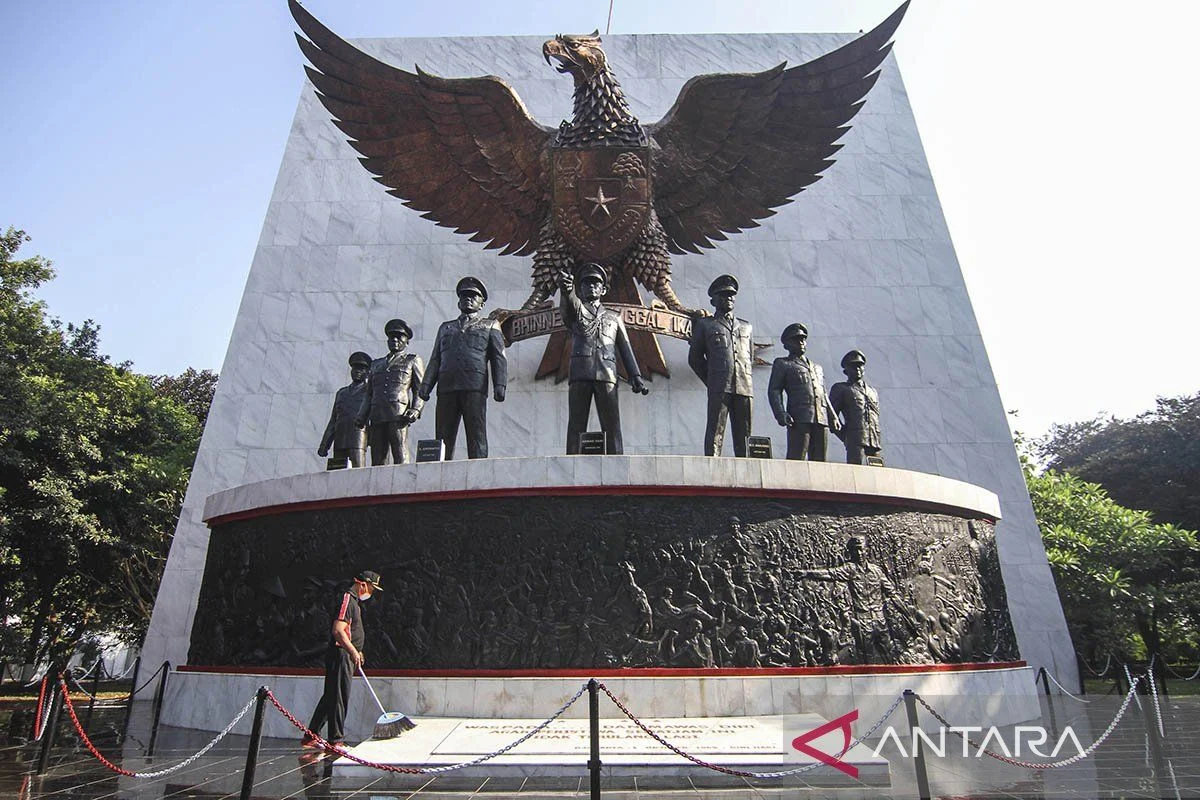
The volatile political equilibrium shattered overnight between September 30 and October 1, 1965, during a coordinated series of kidnappings and assassinations targeting senior generals of the Indonesian Army. Six general officers and one first lieutenant were abducted by members of a military faction led by Lieutenant Colonel Untung Syamsuri, commander of a battalion of the Presidential Guard (Tjakrabirawa). The victims’ bodies were subsequently dumped in a well in the Lubang Buaya area on the southern outskirts of Jakarta.
This watershed event, designated as the Movement of September 30 (Gerakan 30 September or G30S), fundamentally altered the trajectory of Indonesian history. The immediate aftermath witnessed a rapid consolidation of power by Major General Suharto, who stepped in to restore order and decisively suppress the movement.
The question of ultimate responsibility and the precise nature of the PKI’s institutional involvement in G30S remains a subject of extensive historical debate and divergent historiographical interpretations. The official narrative promulgated during the 32-year authoritarian New Order regime under President Suharto explicitly blamed the PKI as the sole mastermind behind a treasonous coup attempt designed to overthrow the state ideology, Pancasila.
Conversely, independent historians, international researchers, and archival analysts have proposed multiple competing hypotheses, examining the complex interplay of internal military factions, intelligence agency manipulations involving foreign powers, and the rogue actions of individual communist leaders acting independently of official party policy. In recent years, institutions such as the National Archives of the Republic of Indonesia (ANRI) have emphasized the necessity of examining a diverse array of declassified documentary sources—spanning Indonesian, American, and Japanese archives—to construct a nuanced, evidence-based understanding of the events surrounding 1965, distinguishing between verified archival facts, official state pronouncements, and ongoing historical debates.
Mass Violence and Human Rights Implications
The political vacuum and anti-communist fervor following the failure of G30S triggered one of the worst episodes of mass violence of the 20th century. Supported by military leadership, civilian vigilante groups, religious militias, and anti-communist youth organizations engaged in a systematic campaign of mass arrests, extrajudicial killings, internment, and widespread human rights violations directed against actual and suspected members, sympathizers, and affiliates of the PKI, as well as ethnic minorities and left-leaning intellectuals.
According to findings by the National Commission on Human Rights (Komnas HAM), the nationwide violence spanning from late 1965 through 1966 involved gross human rights violations. These included mass killings, forced displacement, enslavement, torture, sexual violence, persecution, and enforced disappearances. The ripple effects of this trauma extended deeply into Indonesian society, impacting millions of family members who faced decades of state-sponsored discrimination, social stigmatization, and civil disenfranchisement.
Legal Proscription and the Birth of the New Order
The political collapse of the PKI was formalized through swift legal and administrative measures. On March 12, 1966, Major General Suharto, exercising emergency executive powers derived from the March 11 Presidential Order (Supersemar), issued a decree officially dissolving the PKI and all of its associated mass organizations, declaring them illegal entities.
This executive decision was subsequently codified and elevated to constitutional status through the Provisional People’s Consultative Assembly (MPRS) Decree Number XXV/MPRS/1966, enacted on July 5, 1966. The decree explicitly banned the PKI throughout the entire territory of the Republic of Indonesia and prohibited the dissemination or propagation of Marxist, Leninist, and communist teachings. To this day, the legal framework surrounding the prohibition of communist ideology remains intact within Indonesian positive law, though contemporary legal discourse emphasizes the harmonization of these regulations with democratic principles, constitutional law, and international human rights standards.
The destruction of the PKI and its support base marked the definitive end of the Guided Democracy era. It facilitated the gradual transition of executive power to General Suharto, who was officially inaugurated as the second President of Indonesia in 1968, initiating the highly centralized and anti-communist New Order administration that would govern the archipelago until its collapse in 1998.
Conclusion: History, Archives, and Memory
More than half a century after the cataclysmic events of 1965–1966, the history of the PKI continues to command profound academic, political, and cultural relevance in contemporary Indonesia. Far from being a localized footnote, the narrative of the Indonesian communist movement represents a sweeping historical arc: from its pioneering anti-colonial agitation in the early 20th century, its catastrophic fracture during the Madiun Affair, its remarkable electoral resurgence within the framework of parliamentary democracy, its integration into Sukarno’s high-stakes political architecture, and its catastrophic collapse amid the violence of the mid-1960s.
Modern historiographical efforts, supported by institutional repositories such as ANRI’s ongoing release of historical source manuscripts, underline the critical importance of rigorous archival research, multi-source verification, and open scholarly discourse. By separating documented historical evidence from political mythology, contemporary observers and historians strive to comprehend the complex lessons of the past, ensuring that Indonesia’s turbulent political history continues to inform its democratic present and future.