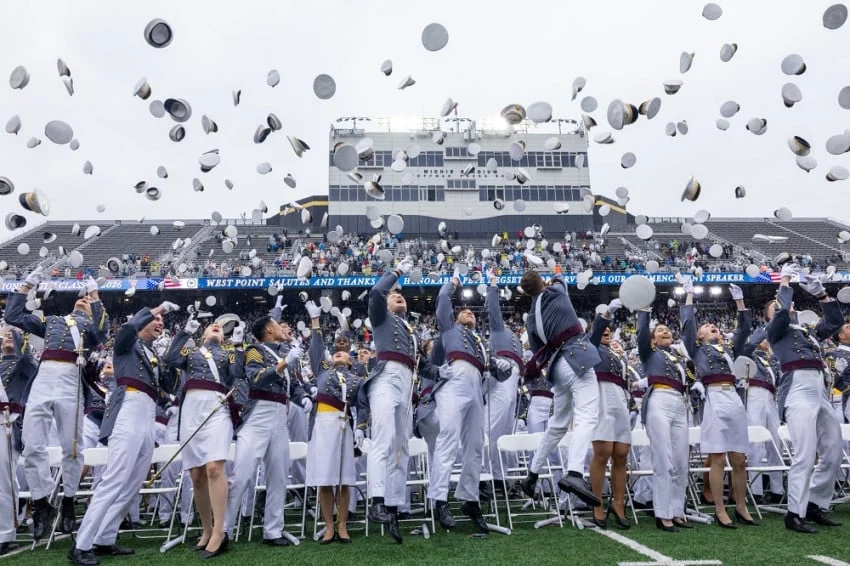
A robust military is akin to a finely tuned machine, a complex orchestration of moving parts that must function in seamless harmony. At the core of any effective armed force lies its leadership – the officers who strategically guide and direct their troops with precision and foresight. These crucial figures often emerge from the hallowed halls of the world’s most elite military academies. These institutions are meticulously designed to impart the knowledge, skills, and ethical grounding necessary to transform cadets into officers capable of making a profound impact on the battlefield and beyond. Among the most renowned institutions shaping military leadership are the United States Military Academy at West Point, the Royal Air Force College Cranwell in the United Kingdom, and the École Spéciale Militaire de Saint-Cyr in France. This comprehensive examination delves into the legacy, curriculum, and significance of these and other leading military academies, highlighting their pivotal role in global defense and international relations.
The Enduring Prestige of West Point
Established in 1802, the United States Military Academy at West Point stands as one of the most prestigious and revered military institutions globally. Nestled on the banks of the Hudson River in New York, West Point has been the crucible for generations of American military leaders, producing an unparalleled roster of renowned generals and strategists. Its rigorous academic and physical training programs are designed to foster discipline, character, and a profound understanding of military science and leadership.
The academy’s influence extends far beyond the battlefield. West Point’s alumni have also achieved remarkable success in the political arena, most notably including two United States Presidents: Ulysses S. Grant and Dwight D. Eisenhower. Grant, a distinguished general during the American Civil War, later served as the 18th U.S. President from 1869 to 1877. Eisenhower, a five-star general who commanded the Allied forces in Europe during World War II, went on to become the 34th U.S. President, serving from 1953 to 1961. Their presidencies underscored the profound impact that a West Point education could have on national and international affairs.
The curriculum at West Point is comprehensive, blending liberal arts, science, engineering, and military studies. Cadets are required to major in one of 35 academic programs, ranging from engineering and computer science to international relations and history. Simultaneously, they undergo intensive military training, leadership development, and physical conditioning. The academy’s motto, "Duty, Honor, Country," encapsulates the core values instilled in every cadet. This holistic approach ensures graduates are not only proficient in military strategy and tactics but also possess strong ethical foundations and a deep commitment to public service.
The Dawn of Air Power: RAF College Cranwell
The Royal Air Force (RAF) College Cranwell, established in 1919 and commencing operations in early 1920, holds the distinction of being the world’s first military aviation academy. The profound lessons learned from the unprecedented aerial combat of World War I underscored the pivotal role that aircraft would play in modern warfare. Recognizing this paradigm shift, Britain moved swiftly to establish an institution dedicated to training the next generation of air force officers.
Cranwell’s primary mission is to train Royal Air Force personnel aspiring to become officers, while also managing recruitment for the service. Admission to the RAF is a highly competitive process, demanding sharp intellect, exceptional aptitude, and unwavering dedication. The college provides a comprehensive education that encompasses aeronautical engineering, aviation law, leadership, and strategic studies, alongside rigorous physical and military training. Graduates are equipped to lead aircrews, manage complex aviation operations, and contribute to the strategic planning of air defense and offense. The legacy of Cranwell is intertwined with the evolution of air power, shaping the careers of many who have played crucial roles in aerial defense and technological advancements within aviation.
Napoleon’s Legacy: École Spéciale Militaire de Saint-Cyr
Founded in 1802 by Napoleon Bonaparte, then First Consul of France, the École Spéciale Militaire de Saint-Cyr (often referred to as "Saint-Cyr") has a storied history deeply embedded in French military tradition. The academy was conceived as a means to professionalize the officer corps and ensure a steady supply of well-trained leaders for Napoleon’s ambitious campaigns that swept across much of Europe.
Saint-Cyr’s curriculum is designed to produce officers with a strong foundation in military strategy, tactics, history, and leadership. Cadets undergo rigorous physical training and are immersed in the principles of French military doctrine. The academy places a significant emphasis on developing character, resilience, and a sense of national duty. Graduates are prepared to serve in various branches of the French armed forces, contributing to national defense and international peacekeeping operations. The academy’s motto, "They preferred the impossible to the unlawful," reflects its commitment to valor and ethical conduct in challenging circumstances. Saint-Cyr has consistently supplied France with highly capable military leaders who have influenced both domestic and international military thought.
Beyond the Top Three: A Global Network of Excellence
While West Point, Cranwell, and Saint-Cyr are undeniably prominent, a global network of military academies consistently produces highly capable officers. These institutions, each with its unique history and focus, contribute significantly to the professionalization of armed forces worldwide.
The Russian Federation’s Military Leadership Pipeline
Russia maintains a robust system of military academies, with institutions like the Combined Arms Academy of the Armed Forces of the Russian Federation in Moscow playing a central role. These academies train officers for all branches of the Russian military, covering a wide spectrum of specialties from ground combat and artillery to logistics and electronic warfare. The curriculum typically includes advanced tactical and strategic studies, as well as a strong emphasis on historical military doctrine and operational planning. The academies often draw upon the rich military history of Russia and the Soviet Union, integrating lessons learned from past conflicts into their modern training programs. Graduates are expected to possess a deep understanding of Russian military objectives and the operational environment in which they will serve.
China’s Growing Military Might
As China’s military power continues to expand, its military academies have seen significant investment and modernization. The PLA National Defense University (NDU) in Beijing is the country’s highest institution for advanced military education and research, serving as a vital center for training senior officers and developing military strategy. The NDU focuses on joint operations, strategic decision-making, and the integration of technology into warfare. Additionally, numerous service-specific academies, such as those for the Army, Navy, and Air Force, provide specialized training for officers in their respective domains. The emphasis in Chinese military education is increasingly on technological superiority, joint operations, and the strategic projection of power.
India’s Commitment to Professionalism
The National Defence Academy (NDA) in Khadakwasla, India, is a prestigious joint services academy that trains cadets for all three branches of the Indian Armed Forces – the Army, Navy, and Air Force. Established in 1954, the NDA offers a unique tri-service training environment, fostering inter-service cooperation and understanding from the outset of an officer’s career. Cadets receive a comprehensive education covering academic subjects, physical fitness, and military training, culminating in a bachelor’s degree. The NDA’s rigorous selection process and demanding curriculum ensure that only the most capable individuals are admitted, preparing them to become future leaders of India’s defense forces.
Other Notable Institutions
Several other academies warrant mention for their significant contributions:
- Sandhurst (Royal Military Academy Sandhurst), United Kingdom: While RAF Cranwell focuses on air power, Sandhurst is the British Army’s primary training institution for new officers. It has a long and distinguished history, producing leaders for the British Army and many Commonwealth nations. Its emphasis on leadership development and character building is renowned globally.
- The Australian Defence Force Academy (ADFA): Located in Canberra, ADFA combines military training with university education for officers of the Australian Defence Force. It offers undergraduate degrees in a range of disciplines, ensuring graduates are not only competent military leaders but also well-educated individuals.
- The Korean Military Academy (KMA), South Korea: Established to train officers for the Republic of Korea Army, KMA plays a crucial role in maintaining South Korea’s defense capabilities in a strategically volatile region. It emphasizes rigorous training and instills a strong sense of patriotism and duty.
The Enduring Significance of Military Academies
The importance of these military academies extends far beyond the technical skills they impart. They serve as crucial institutions for fostering a shared ethos, a sense of camaraderie, and a deep understanding of the responsibilities that come with military command.
Chronology of Establishment:
- 1802: United States Military Academy at West Point, USA
- 1802: École Spéciale Militaire de Saint-Cyr, France
- 1919/1920: Royal Air Force College Cranwell, UK
- 1949: National Defence Academy (NDA), India
- 1950s-1970s: Significant expansion and modernization of military academies in Russia/Soviet Union, China, and other emerging global powers.
- 1980s onwards: Increased focus on joint operations, technological integration, and international cooperation in military education globally.
Supporting Data and Trends:
The caliber of graduates from these academies often correlates with a nation’s military effectiveness and its ability to project influence. Data from military history consistently shows that well-trained and ethically grounded leadership is a critical determinant of battlefield success and long-term strategic advantage. For instance, the post-World War II era saw a deliberate focus on professionalizing military leadership through institutions like West Point and its international counterparts, contributing to the stability and strategic calculations of major powers during the Cold War.
Furthermore, the increasing complexity of modern warfare, characterized by cyber threats, asymmetric warfare, and sophisticated technological advancements, necessitates highly educated and adaptable leaders. Military academies are constantly evolving their curricula to address these challenges, incorporating fields like artificial intelligence, data analytics, and international law. The investment in these institutions is a direct reflection of a nation’s commitment to its defense capabilities and its strategic objectives.
Broader Impact and Implications:
The graduates of these academies do not merely serve in military capacities; they often transition into leadership roles in government, diplomacy, and international organizations. Their disciplined approach, strategic thinking, and understanding of global dynamics make them valuable assets in a wide range of fields. The international networks fostered through military exchanges and joint training exercises involving alumni from these academies can also play a significant role in promoting diplomatic ties and fostering mutual understanding between nations.
In conclusion, military academies like West Point, Cranwell, and Saint-Cyr are more than just educational institutions; they are the foundational pillars upon which national defense and global security are built. They are incubators of leadership, shaping individuals who are not only skilled in the art of war but are also committed to upholding the highest standards of duty, honor, and country. Their enduring legacy is a testament to the critical importance of investing in the development of capable, ethical, and visionary military leaders for the challenges of today and tomorrow.