The maritime safety landscape in Indonesia faces renewed scrutiny following a devastating incident involving the KM Virgo Transport 8, which capsized while navigating toward Banjarmasin, South Kalimantan, on Sunday, September 13, 2026. The disaster has claimed the lives of at least six passengers, while a massive search and rescue operation is currently underway to locate 130 individuals who remain missing. This catastrophic event marks one of the most significant maritime accidents in the region in recent years, prompting an immediate mobilization of federal resources to address the unfolding crisis.
Chronology of the Disaster
The sequence of events leading to the tragedy began in the early hours of Sunday morning. According to official reports provided by the National Search and Rescue Agency (Basarnas), the vessel’s captain initiated contact with maritime authorities at approximately 04:10 WIB (Western Indonesian Time). In this distress call, the captain reported that the KM Virgo Transport 8 had begun to list significantly, suggesting an immediate threat to the vessel’s stability.
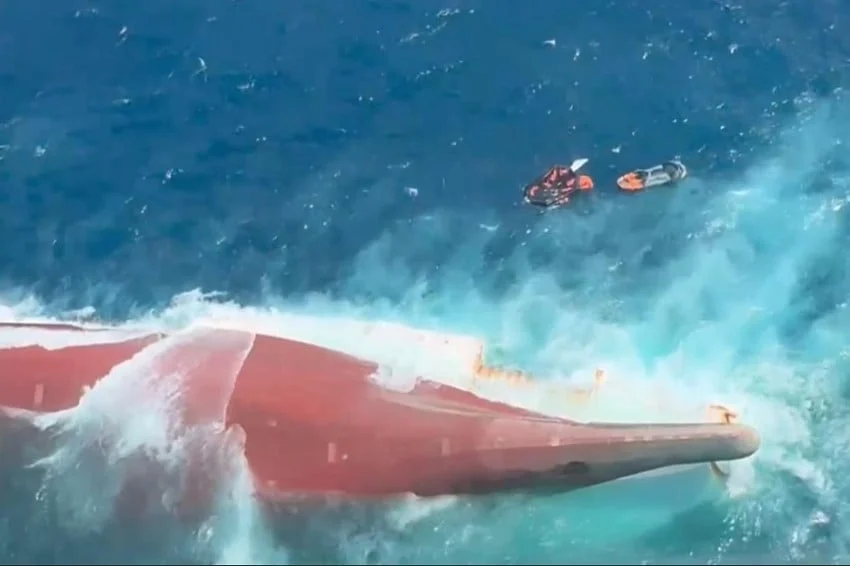
Following this initial communication, authorities attempted to maintain contact with the ship to assess the situation and coordinate evacuation protocols. However, communications were abruptly severed shortly thereafter. Aerial surveillance conducted by the joint Search and Rescue (SAR) team later confirmed the worst: the vessel had completely capsized. Footage obtained from the site shows the ship’s hull exposed above the surface of the Java Sea, while the passenger decks remained submerged, highlighting the severity of the tilt that preceded the final submersion.
Scope of the Search and Rescue Operation
The rescue effort, led by Basarnas and supported by the Indonesian Navy and local maritime police, has been characterized as a high-intensity operation. As of the latest update, 113 passengers have been successfully evacuated from the waters. These survivors are currently receiving medical attention at designated facilities in the nearest port cities, where they are being treated for shock, hypothermia, and various trauma-related injuries.
The search radius for the 130 missing persons has been expanded to account for strong ocean currents and unpredictable weather patterns prevalent in the Java Sea during this season. Divers and underwater remote-operated vehicles (ROVs) are being deployed to inspect the submerged sections of the hull, as there is a significant possibility that many passengers remain trapped within the interior compartments of the vessel.
Official Statements and Institutional Response
The gravity of the situation has drawn immediate attention from the highest levels of government. Mayjen TNI (Mar) Edy Prakoso, the Deputy for Operations and Preparedness at Basarnas, provided a grim assessment of the logistical challenges facing the recovery teams. "The priority remains the preservation of life," Edy stated during a press briefing. "We are working against time and the elements to locate the missing passengers. Every available resource, including naval assets and aerial reconnaissance, has been committed to this search."
The Ministry of Transportation has launched an immediate investigation into the cause of the capsizing. While early reports suggest that the vessel suffered a sudden loss of stability, investigators are looking into a variety of contributing factors, including cargo distribution, mechanical failure, and prevailing meteorological conditions at the time of the distress signal. A team of marine accident investigators has been dispatched to the site to recover the vessel’s black box and data logs, which are expected to provide critical insights into the moments before the communication blackout.
Maritime Safety Context in Indonesia
The KM Virgo Transport 8 incident occurs against a backdrop of ongoing efforts by the Indonesian government to modernize its maritime safety protocols. As an archipelago nation, Indonesia relies heavily on sea transport for both the movement of goods and the transit of millions of passengers annually. Despite significant investments in infrastructure and safety regulations over the past decade, maritime accidents remain a recurring concern.
Historically, the Java Sea has been a corridor for both commercial shipping and passenger transit. The frequency of incidents in this area is often attributed to a combination of aging vessel fleets, overloading, and the challenges of monitoring safety compliance across thousands of miles of coastline. Industry analysts point out that while the National Transportation Safety Committee (KNKT) has tightened its oversight, the sheer volume of passenger vessels navigating the Indonesian waters necessitates a more robust integration of real-time monitoring technology, such as Automated Identification Systems (AIS), to ensure faster emergency response times.
Socio-Economic Implications
The human cost of this tragedy extends far beyond the immediate statistics of the missing and the deceased. For the families of the victims, the uncertainty surrounding the missing passengers creates a state of profound distress. Local authorities in Banjarmasin have established a family crisis center to provide counseling and real-time updates to relatives.
From an economic standpoint, the sinking of the KM Virgo Transport 8 is expected to have ripple effects on local commerce. The vessel was a key component of the logistics chain connecting major industrial hubs with the resource-rich regions of South Kalimantan. The disruption caused by this accident will likely lead to temporary delays in cargo movement and potential supply chain bottlenecks. Furthermore, the incident is expected to trigger a comprehensive review of safety certification standards for vessels operating similar routes, which may lead to temporary groundings of older ships for mandatory inspections, further impacting regional shipping schedules.
Analysis of Maritime Stability and Failure
While the formal investigation is still in its nascent stages, naval architects often highlight "free surface effect" as a primary culprit in capsizing incidents. This occurs when liquids or shifting cargo inside a vessel move, causing the center of gravity to shift and the ship to list. Once a vessel reaches a certain degree of inclination, it often loses its ability to self-right, leading to a rapid roll-over.
The report that the vessel was tilting before it capsized is consistent with a sudden shift in weight. Whether this was caused by an internal structural failure, a breach in the hull, or the improper securing of cargo remains to be determined. The fact that the vessel remained floating, albeit in a capsized state, indicates that it did not immediately sink to the seabed, providing a slight window of opportunity for rescuers to attempt hull breaches or internal access.
Looking Ahead: Regulatory Reform
As the search and rescue operation continues, the focus of the public and the government is shifting toward accountability. The Indonesian public has become increasingly vocal regarding the need for stricter enforcement of maritime laws. Calls for a "zero-tolerance" policy regarding passenger manifests and cargo weight limits are gaining traction on social media and in legislative circles.
The Minister of Transportation is expected to face a series of inquiries from the House of Representatives regarding the safety record of the KM Virgo Transport 8 and the oversight mechanisms that allowed the vessel to operate. This incident will likely serve as a catalyst for a broader policy review, potentially leading to the mandate of new safety technology requirements for all inter-island passenger vessels.
Conclusion
The tragedy of the KM Virgo Transport 8 is a somber reminder of the inherent risks of maritime travel. As the nation mourns the loss of the six confirmed victims and continues to hope for the discovery of the 130 missing, the focus must remain on the success of the rescue operation. Once the emergency phase concludes, the subsequent investigation will be tasked with providing answers to the families affected and ensuring that systemic failures—if they exist—are rectified to prevent a repeat of this maritime catastrophe. For now, the focus is entirely on the cold, churning waters of the Java Sea, where teams continue their relentless search for the missing.