Jakarta (ANTARA) – Purchasing a pre-owned vehicle in Indonesia has long involved navigating a complex and often costly labyrinth of administrative fees, taxes, and bureaucratic hurdles. Among the most significant financial burdens for buyers of used cars has historically been the Motor Vehicle Title Transfer Fee, commonly known as Bea Balik Nama Kendaraan Bermotor (BBNKB). However, under current regulations in 2026, a major policy shift has fundamentally altered the economics of buying second-hand automobiles. The BBNKB for used vehicles has been completely eliminated, bringing welcome relief to consumers across the nation. Despite this progressive change, a common point of confusion persists among motorists: the misconception that the entire vehicle ownership transfer process is now completely free of charge.
To prevent financial miscalculations and administrative oversights, vehicle owners must understand the precise mechanics of this policy. While the state has forgone the collection of the BBNKB second-tier tax (BBNKB II), mandatory administrative fees, state non-tax revenues, and active regional taxes remain firmly in place. This comprehensive guide details the legal foundations of the exemption, outlines the step-by-step procedure for transferring ownership, examines the remaining costs, and highlights why prompt administrative compliance remains critical for both buyers and sellers in 2026.
Legal Foundations: The Shift Under Law Number 1 of 2022
The legal bedrock for the elimination of the used vehicle transfer fee stems from Law Number 1 of 2022 concerning Financial Relations Between the Central Government and Regional Governments (Undang-Undang Hubungan Keuangan antara Pemerintah Pusat dan Pemerintahan Daerah or UU HKPD). Enacted to streamline the national tax structure, eliminate double taxation, and foster greater economic efficiency, the statute fundamentally redefines how vehicle taxes are applied.
Under the framework of the UU HKPD, BBNKB is explicitly designated as a tax applicable solely to the first delivery or initial registration of a motor vehicle. Consequently, when a vehicle changes hands from its first owner to a second, third, or subsequent owner, it ceases to be an eligible object for BBNKB taxation. By legally restricting the fee to brand-new vehicle registrations, the central government and regional administrations have effectively abolished BBNKB II nationwide.
Regional bodies have steadily aligned their local ordinances with the federal mandate. For instance, the Regional Revenue Agency (Bapenda) of Jakarta and the regional Samsat offices in East Java have repeatedly emphasized that used vehicles are exempt from BBNKB. Nevertheless, because regional governments retain the authority to manage vehicle registration administration and local tax collection under the decentralized governance model, the exact implementation details and procedural timelines must always be verified with local Samsat jurisdictions.
BBNKB Free Does Not Mean Total Cost Erasure
The core distinction that vehicle buyers often overlook is the difference between a regional tax exemption and total administrative deregulation. While the BBNKB burden has been lifted, the state continues to collect fees associated with the physical processing, security verification, and documentation of a motor vehicle.
Vehicle owners must still settle Non-Tax State Revenue (Penerimaan Negara Bukan Pajak or PNBP) fees. As outlined by the Indonesian National Police’s Traffic Corps (Korlantas Polri) and verified by regional Samsat centers, PNBP charges are strictly required for the issuance of essential vehicle documents. These include the Vehicle Registration Certificate (Surat Tanda Nomor Kendaraan or STNK), the Vehicle Ownership Book (Bukti Pemilik Kendaraan Bermotor or BPKB), and the Vehicle Number Plates (Tanda Nomor Kendaraan Bermotor or TNKB).
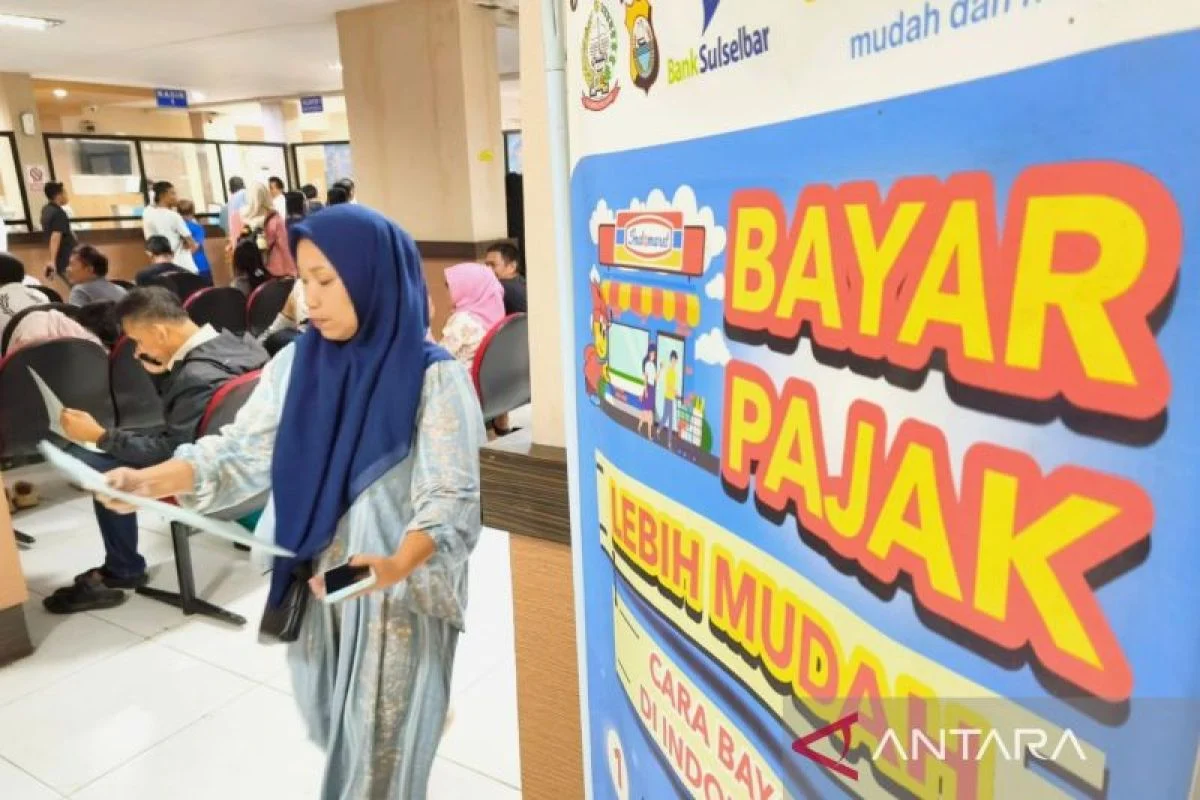
Furthermore, the Motor Vehicle Tax (Pajak Kendaraan Bermotor or PKB)—an annual regional obligation—must be fully up to date. If a used vehicle carries unpaid tax arrears from previous years, the new owner must clear these outstanding balances before the ownership transfer can be processed. Therefore, while the removal of BBNKB significantly reduces the initial capital outlay required to legalize a second-hand car purchase, buyers must still budget for PNBP and PKB obligations.
Required Documentation for Vehicle Ownership Transfer
To ensure a smooth administrative process at the local Samsat office, applicants must compile a precise set of documents. According to standard operating procedures established by Korlantas Polri and regional directorates, the required documentation includes:
- The original BPKB (Vehicle Ownership Book) belonging to the vehicle.
- The original STNK (Vehicle Registration Certificate) along with copies.
- The original purchase receipt or bill of sale (kuitansi pembelian), ideally stamped with official duty (materai) to authenticate the transaction value.
- The original and photocopies of the new owner’s National Identity Card (KTP).
- The official physical inspection result sheet (hasil cek fisik) issued directly by the Samsat testing facility.
- Additional authorization letters if the transfer process is delegated to a third party.
Authorities strongly advise applicants to bring both original documents and multiple clear photocopies to prevent verification delays during administrative processing.
Step-by-Step Procedure for Used Car Ownership Transfer
Executing a vehicle ownership transfer requires adherence to a structured sequence of checks and registrations at the designated regional Samsat office. The standard chronology of the process involves several critical phases:
First, the applicant must bring the vehicle directly to the Samsat physical inspection station. Here, trained personnel inspect the chassis and engine numbers to verify that they match the data recorded in the vehicle documents, preventing issues related to vehicle cloning or identity fraud.
Second, once the physical inspection is successfully completed and validated, the owner proceeds to the administrative counter to submit the required documentation. Officers verify the authenticity of the KTP, bill of sale, BPKB, STNK, and the physical check sheet.
Third, the system updates the vehicle registry database to reflect the new ownership identity. For vehicles originally registered in a different province or regency, an additional regional clearance process known as vehicle mutation (mutasi kendaraan) must be completed before the final registration in the new jurisdiction can take place.
Finally, upon completion of data verification and the settlement of all applicable PNBP and PKB fees, the newly issued STNK and BPKB bearing the new owner’s identity are printed and handed over. This entire administrative framework is regulated under Indonesian National Police Regulation (Peraturan Kepolisian) Number 7 of 2021 concerning Vehicle Registration and Identification.
Why Immediate Ownership Transfer is Essential
Industry experts and traffic authorities continually urge the public to execute ownership transfers immediately following a used car transaction. Delaying this process exposes both buyers and sellers to significant legal, financial, and administrative vulnerabilities.
For the buyer, holding a vehicle with mismatched identification data complicates annual tax payments, document renewals, and emergency verifications. Furthermore, in the event of traffic infractions captured by Electronic Traffic Law Enforcement (ETLE) cameras, ticketing notifications will incorrectly target the previous owner if the database has not been updated.
For the seller, failing to update ownership records poses severe financial risks. If a sold vehicle remains registered under the original owner’s name, the seller can become inadvertently entangled in progressive motor vehicle tax rates (pajak progresif) when purchasing subsequent vehicles. More critically, if the vehicle is involved in legal disputes, accidents, or criminal activities, the registered owner may face unnecessary police investigations. Consequently, Korlantas Polri strongly recommends that sellers immediately file an STNK block (blokir STNK) with Samsat the moment a vehicle is sold.
Economic Implications and Market Outlook for 2026
The elimination of BBNKB for used vehicles represents a pro-consumer adjustment within Indonesia’s broader fiscal landscape. By lowering the entry barriers for secondary vehicle transactions, the policy stimulates liquidity in the domestic automotive market. Lower bureaucratic overhead encourages informal transactions to move into the formal, tax-compliant sector, ensuring that vehicle databases remain accurate and up to date.
However, the continued reliance on PNBP and regional PKB underscores that vehicle administration remains a vital revenue stream for both central and local governments. As regional administrations adapt to the stipulations of the UU HKPD, motorists are encouraged to remain vigilant against misinformation—such as false rumors regarding digital device registrations or exaggerated transfer fees—and rely solely on official communications from local Samsat offices and regional revenue agencies.
Ultimately, while the 2026 framework makes acquiring a pre-owned car more affordable by stripping away the punitive second-tier transfer tax, responsible vehicle ownership still demands diligence, timely tax compliance, and adherence to established legal procedures.