The Mediterranean Sea, often romanticized for its tranquil blue waters and historic coastal civilizations, is increasingly being viewed through a more sobering lens by geophysicists and disaster management experts. As of mid-2026, the narrative surrounding the region has shifted from theoretical geological risk to tangible, proactive mitigation. The official designation of Nice, France, as a "Tsunami Ready" community by UNESCO serves as a critical inflection point in a broader, regional effort to fortify the Mediterranean basin against the persistent, albeit unpredictable, threat of seismic-induced waves.
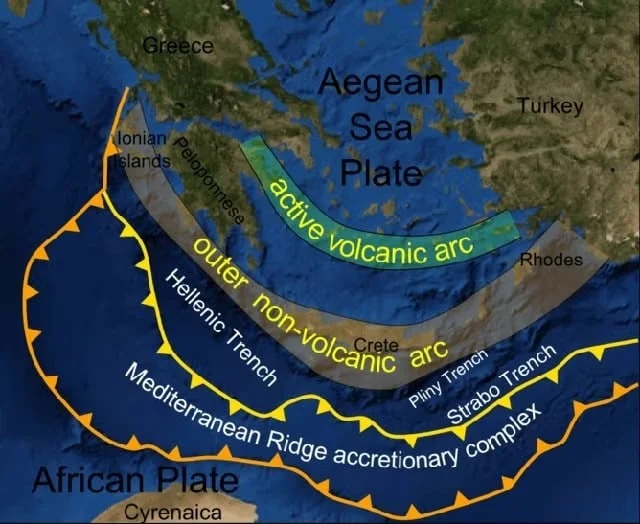
The Mediterranean is far from seismically dormant. While public perception often associates tsunamis with the Pacific "Ring of Fire," the Mediterranean’s complex tectonic landscape—defined by the convergence of the African and Eurasian plates—harbors significant potential for underwater landslides and seismic activity capable of triggering devastating tsunamis.
The Milestone in Nice: Moving Beyond Theoretical Risk
On June 12, 2026, the Intergovernmental Oceanographic Commission (IOC) of UNESCO officially recognized the Nice Côte d’Azur metropolitan area as "Tsunami Ready." This recognition is not a mere badge of honor; it is a rigorous certification that validates the region’s technical and logistical readiness to handle a maritime disaster.
To achieve this status, the Nice metropolitan government underwent a stringent assessment process, meeting 12 comprehensive criteria established by UNESCO. These benchmarks include, but are not limited to, the mapping of high-risk inundation zones, the quantification of vulnerable populations, the development and communication of clear evacuation routes, the installation of permanent signage, and the establishment of a 24/7 emergency response infrastructure capable of receiving and disseminating alerts from the Tsunami Service Provider (TSP) network.
Local officials in Nice have emphasized that this certification represents a transition in regional policy. By moving the tsunami threat from the realm of abstract geological phenomena to a manageable public safety challenge, the city has created a blueprint for other Mediterranean urban centers. The integration of advanced early-warning systems into the existing civil defense framework ensures that in the event of an earthquake-induced tsunami, the response will be instantaneous and data-driven.
A Growing Network of Preparedness
Nice is not an isolated case. The region has been steadily building a defensive perimeter against potential sea-level emergencies. Cannes, a neighboring French municipality, earned its "Tsunami Ready" status in January 2024, setting a precedent for the French Riviera. The strategy is to create a chain of resilient coastal hubs that can support one another during a crisis.
The expansion of this network is critical. UNESCO-IOC has been actively encouraging coastal communities across the North Atlantic, the Mediterranean, and connected seas to adhere to these international standards. The objective is to create a seamless, interoperable web of protection that ignores political borders in favor of shared safety protocols. As of June 2026, several other municipalities in Greece, Italy, and Turkey are reportedly in various stages of the evaluation process, indicating a regional shift toward a "culture of preparedness."
Recent Seismic Activity: The Reality Check
The urgency of these efforts was underscored on June 20, 2026, when a magnitude 5.8 earthquake struck southwest of the island of Crete, Greece. The epicenter was recorded at a depth of approximately 13 kilometers, located 69 kilometers south-southwest of the city of Rethymno.
While this specific event did not result in a catastrophic tsunami, it served as a stark reminder of the Mediterranean’s volatile geology. Earthquakes of this magnitude in the Mediterranean basin are capable of displacing significant volumes of water, particularly if the seismic rupture occurs near the seafloor or triggers submarine slope failures. The proximity of the June 20 event to major population centers in Crete highlights why the UNESCO-backed monitoring systems are essential. Had the earthquake occurred under different geological conditions, the timeline for warning coastal residents would have been measured in minutes, making the "Tsunami Ready" infrastructure—which focuses on rapid evacuation and clear communication—the difference between life and death.
Geological Context: Why the Mediterranean is Vulnerable
The Mediterranean is a unique tectonic environment. Unlike the subduction zones of the Pacific, the Mediterranean features a mosaic of microplates squeezed between the massive African and Eurasian plates. This results in complex fault lines that are capable of producing both earthquakes and secondary tsunamis through submarine landslides.
Historical data provides a sobering perspective. The 1908 Messina earthquake and subsequent tsunami in Italy, which claimed tens of thousands of lives, remains the most catastrophic example of the region’s potential for disaster. Scientists have noted that while the frequency of large-scale tsunamis in the Mediterranean is lower than in the Pacific, the high density of coastal development and the short distances between fault lines and shorelines mean that a tsunami can strike with very little warning—sometimes in under 30 minutes.
The Technical Infrastructure of Warning Systems
The backbone of this resilience is the Tsunami Warning System (TWS). The IOC-UNESCO system relies on a combination of deep-ocean assessment and reporting of tsunamis (DART) buoys, coastal sea-level gauges, and seismic stations that feed real-time data into national monitoring centers.
For a city like Nice, being "Tsunami Ready" means that this technical data is not just stored in a research facility; it is integrated into the city’s emergency operations center. When an alert is triggered, local authorities have pre-scripted, automated plans to activate sirens, broadcast warnings via mobile networks, and guide residents toward predetermined high-ground evacuation zones. The 12-criteria requirement ensures that there is no "information silo"—the data flows directly from the seismograph to the public.
Socio-Economic Implications of Preparedness
The decision to invest in tsunami preparedness has significant economic and social implications. Coastal tourism is a multi-billion-dollar industry for the Mediterranean. While some feared that highlighting the tsunami risk might deter visitors, the consensus among municipal leaders in Nice and Cannes has been that transparency and preparedness actually enhance the long-term viability of these destinations.
Modern travelers are increasingly sensitive to safety protocols. By demonstrating that a city is "Tsunami Ready," municipalities are signaling a high level of governance and care for public welfare. Furthermore, the infrastructure required for tsunami readiness—such as improved coastal warning signage, better evacuation routes, and updated disaster management training for civil servants—often yields secondary benefits in managing other types of natural disasters, such as flash floods or severe storm surges.
Challenges and Future Outlook
Despite the progress made by 2026, challenges remain. The primary obstacle is the vast diversity of administrative, legal, and financial structures across the Mediterranean nations. Implementing a unified warning protocol requires sustained political will and long-term funding. While the UNESCO-IOC provides the framework and the scientific guidance, the responsibility for implementation lies with individual nations and local governments.
Furthermore, there is the ongoing challenge of public awareness. In regions where a major tsunami has not occurred for generations, there is a tendency toward complacency. The "Tsunami Ready" program combats this through mandatory community drills and public education campaigns. These exercises are vital, as they transform abstract data into muscle memory for local populations.
Looking toward the remainder of the decade, the goal is for the Mediterranean to reach a level of maturity in disaster management comparable to that of Japan or Chile, where tsunami preparedness is deeply embedded in the social and physical landscape. As urban centers continue to expand along the Mediterranean coastline, the necessity of these measures only increases.
Conclusion: A Proactive Stance
The developments of June 2026 confirm that the Mediterranean is no longer content to react to disaster; it is actively working to mitigate it. Through the expansion of the UNESCO-IOC "Tsunami Ready" program and the integration of real-time seismic monitoring, the region is building a buffer against the inherent unpredictability of the earth.
The earthquake off the coast of Crete serves as a permanent, periodic reminder of the risks involved. While the geological threat remains, the capacity for human response has reached a new height. By formalizing the relationship between scientific monitoring and community response, the Mediterranean is creating a blueprint for coastal safety that may serve as a global standard for years to come. The message is clear: the threat is real, the clock is ticking, but for the first time in history, the region is prepared to meet the challenge head-on.