The escalating global challenge of electronic waste has prompted telecommunications provider XLSmart to take decisive action within the domestic market. Driven by the rapid consumption cycles of modern technology and the tendency of consumers to hoard obsolete devices, the company has officially introduced the ByeByeBox initiative. Unveiled at the Institut Teknologi Bandung (ITB) on Monday, September 14, 2026, this strategic campaign aims to address the accumulation of dormant electronics in Indonesian households by deploying smart collection kiosks capable of processing discarded gadgets, accessories, and appliances through advanced artificial intelligence and automated weighing systems.
The launch event served as the initial rollout for a broader environmental strategy designed to integrate sustainable waste management practices into the telecommunications sector. By partnering with environmental management platform REMIND, XLSmart is seeking to bridge the gap between consumer technology habits and ecological responsibility. The initiative not only focuses on physical waste collection but also introduces an incentive mechanism that rewards citizens with data quotas and digital connectivity benefits for responsibly disposing of their electronic remnants.
Rapid Device Turnover and the Hidden E-Waste Phenomenon
Modern consumer behavior heavily dictates the lifecycle of personal electronics. According to data highlighted by XLSmart Director and Chief Regulatory Officer Merza Fachys during the ITB launch, the average consumer in Indonesia replaces their mobile telephone every two to three years. This frequent upgrade cycle results in a continuous influx of newly purchased hardware, while older devices are routinely relegated to household drawers, closets, and storage boxes.
While a significant portion of retired smartphones eventually enters the secondary market—finding new life through resale, trade-ins, or hand-me-downs—a substantial volume of electronics remains trapped in domestic limbo. These include outdated models with negligible market value, broken accessories, obsolete tablets, redundant chargers, computer keyboards, and various peripheral devices. Because these items hold little to no monetary value for individual resale, they accumulate over time, taking up physical space while posing long-term environmental hazards if disposed of improperly through standard household waste streams.
The presence of heavy metals, toxic components, and non-biodegradable plastics within these neglected items makes ordinary disposal methods deeply problematic. When electronics are discarded alongside general refuse, hazardous substances such as lead, mercury, cadmium, and lithium-ion battery components can leach into soil and water systems. Recognizing this latent environmental threat, XLSmart sought to develop an accessible infrastructure that encourages citizens to clear out their electronic clutter safely and constructively.
The Mechanics of ByeByeBox: AI-Powered Collection and Verification
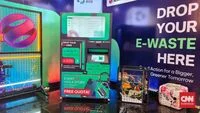
At the core of the XLSmart initiative is the ByeByeBox, a specialized, interactive collection kiosk engineered to streamline the e-waste deposition process. The initial pilot deployment of the ByeByeBox commenced at the ITB campus in Bandung, scheduled to remain operational from September 14 through September 28, 2026. Following this initial two-week testing phase, the collection machines are slated to embark on a nationwide tour, appearing at various public events, community centers, and university campuses across Indonesia to maximize public participation.
The operational workflow of the ByeByeBox is designed to be user-friendly while maintaining strict tracking standards. When an individual deposits an unused electronic device or accessory into the kiosk, the machine initiates an automated verification sequence. High-resolution optical cameras powered by artificial intelligence scan the deposited item to identify its category, structural composition, and condition. Immediately following visual validation, an integrated scale automatically weighs the item, logging the precise data directly into the REMIND management system.
This technological integration ensures transparency and accuracy throughout the collection process. Rather than functioning as a simple drop-off bin, the ByeByeBox serves as an intelligent sorting node that categorizes incoming materials before they reach downstream processing facilities. By leveraging AI and automated weighing, XLSmart and REMIND can maintain meticulous records of the total tonnage and specific types of e-waste successfully diverted from landfills.
Strategic Deployment Timeline and Ambitious Collection Targets
The rollout of the ByeByeBox follows a carefully structured timeline aimed at building momentum within academic and urban communities before expanding nationwide. The schedule for the initial phases of the campaign includes:
- September 14, 2026: Official launch of the #ByeByeBox initiative at Institut Teknologi Bandung (ITB), marking the commencement of the public awareness campaign.
- September 14 – September 28, 2026: The inaugural pilot deployment period at the ITB campus, allowing students, faculty, and local residents to test the kiosks and deposit accumulated e-waste.
- Late September through November 2026: Transition phase involving mobile deployments across selected public events, corporate partner locations, and additional higher-education institutions in major Indonesian cities.
- End of November 2026: Completion of the initial campaign milestone, targeting a cumulative collection volume of approximately 600 kilograms of electronic waste.
Achieving the targeted collection milestone of 600 kilograms by late November requires robust public engagement. To incentivize participation, XLSmart has structured a reward system tailored to its subscriber base as well as the general public. Customers utilizing XL, AXIS, and Smartfren networks who deposit e-waste into the ByeByeBox are eligible to receive bonus data quotas determined by the weight of their contribution.
Under this incentive scheme, individuals who deposit electronic waste weighing less than 1 kilogram receive a primary data bonus of 500 megabytes. Contributions falling between 1 and 2 kilograms qualify the subscriber for a 1-gigabyte data bonus, while deposits exceeding 2 kilograms yield a 1.5-gigabyte allocation. To encourage broad community participation regardless of carrier affiliation, non-subscribers who contribute to the collection boxes are rewarded with complimentary starter packs, subject to availability. All issued data bonuses carry a one-day validity period, designed to offer immediate digital value while reinforcing the habit of sustainable disposal.
Embracing the Circular Economy: Beyond Recycling to Refurbishment
A critical distinction emphasized by XLSmart leadership is that the ByeByeBox initiative is not solely focused on destructive recycling or raw material extraction. Instead, the project is anchored in the broader principles of the circular economy, which prioritizes resource efficiency, product longevity, and waste minimization.
Merza Fachys pointed out that treating all collected electronics as scrap metal would overlook significant opportunities for functional recovery. Collaborating engineering students and technical experts from ITB will play a vital role in inspecting the collected hardware. These technical teams will evaluate incoming devices to determine whether individual units or components can undergo refurbishment, technological upgrades, or aesthetic restoration to restore full operational capability.
"Not everything will be crushed or stripped for raw materials," Merza explained during the launch presentation. "Our colleagues from the ITB engineering departments will examine whether devices can still be refurbished, repaired, upgraded, polished, and restored to full working order."
This tiered approach ensures that functional or easily repairable hardware is diverted away from material smelting processes and reintroduced into practical use. Devices that are beyond repair, however, will be routed to specialized recycling facilities where valuable metals—including gold, silver, copper, palladium, and rare earth elements—can be safely extracted and reintegrated into manufacturing supply chains. By recovering these valuable materials locally and regionally, the initiative helps reduce the dependency on virgin mining, thereby lowering the carbon footprint associated with electronic manufacturing.
Broader Implications for Corporate Responsibility and National Sustainability
The launch of the ByeByeBox arrives at a crucial juncture for Indonesia’s digital landscape. As telecommunication infrastructure expands and smartphone adoption rates continue to climb across the archipelago, the volume of generated e-waste is projected to escalate correspondingly. Telecommunications operators, traditionally focused on network expansion and service delivery, face growing societal and regulatory expectations to assume responsibility for the entire lifecycle of the technology their services rely upon.
By spearheading this initiative, XLSmart sets a precedent for corporate environmental stewardship within the telecommunications sector. Integrating sustainability directly into customer touchpoints—such as offering data bonuses in exchange for environmental compliance—demonstrates a viable model for behavioral change. When consumers are presented with tangible, immediate incentives coupled with frictionless drop-off infrastructure, participation rates in environmental programs rise significantly.
Furthermore, the academic collaboration between a major telecommunications corporation and a premier technical institution like ITB highlights the importance of cross-sector partnerships in solving complex ecological challenges. By involving engineering students and researchers in the evaluation and refurbishment process, the initiative fosters practical education in sustainable design, circular manufacturing, and resource management.
As the ByeByeBox kiosks prepare to transition from their initial academic testing grounds to broader public venues across Indonesia, the success of the 600-kilogram pilot target will serve as a foundational metric for future iterations. If proven effective on a national scale, models of AI-assisted e-waste collection combined with direct consumer incentives could become an industry standard, transforming how the nation manages the hidden inventory of its technological past while paving the way for a more sustainable digital future.