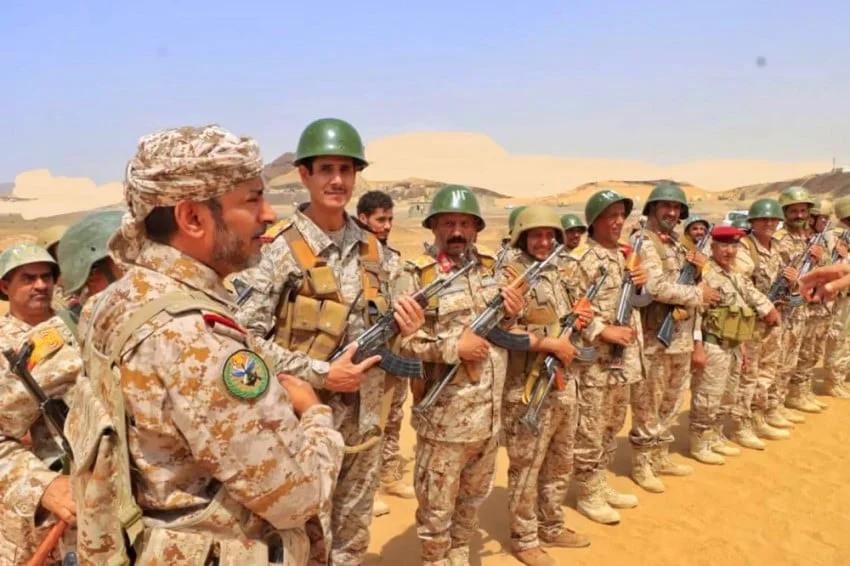
The rapid territorial advances made by the Houthi movement across Yemen have fundamentally altered the strategic calculus of the ongoing Middle Eastern conflict, transforming a localized civil war into a sprawling, multi-front regional crisis. According to international security analysts, the group’s recent military expansions, combined with asymmetric attacks extending far beyond Yemen’s borders, highlight the volatile and interconnected nature of contemporary geopolitics in the Middle East.
Adam Baron, a research fellow at the Future Security Program at the New America think tank, points out that recent escalations—such as drone strikes originating from Iraq targeting critical infrastructure inside Saudi Arabia—illustrate a broader, more dangerous reality. The convergence of multiple proxy conflicts, direct state confrontations, and maritime disruptions has created an environment where regional stability hangs by a thread. Since the intensification of hostilities involving regional and international actors over the past six months, analysts note that the Middle East has entered a phase of protracted instability characterized by fluctuating yet consistently high tensions across various fronts.
Within this broader theater of war, the resurgence and territorial consolidation of the Houthi movement, formally known as Ansar Allah, stand out as pivotal developments. Military strategists have identified four primary reasons why the rapid advancement of Houthi forces in Yemen constitutes a definitive turning point for the entire region.
Strategic Control of the Bab al-Mandeb Strait
The most critical dimension of the Houthi advance lies in geography. The group’s rapid seizure of key urban centers and strategic terrain along Yemen’s western coastline—ousting forces backed by the Saudi-led coalition—represents a monumental tactical victory. Baron describes this shift as a definitive turning point in the Yemeni theater, noting that the lost territory is arguably the most strategically significant real estate in the entire country.
To understand the global implications of this territorial gain, one must look at maritime trade routes. The western coast of Yemen borders the Bab al-Mandeb Strait, a vital maritime chokepoint connecting the Red Sea to the Gulf of Aden and the Indian Ocean. Every year, trillions of dollars in global commerce and a significant percentage of the world’s petroleum supplies transit through this narrow waterway to reach the Suez Canal.
For any military or political organization, holding terrain adjacent to the Bab al-Mandeb Strait translates into unprecedented leverage. By consolidating power along the Red Sea coast, the Houthi movement has effectively institutionalized its capacity to disrupt international shipping lanes, project power beyond Yemen’s borders, and complicate naval operations for Western and regional powers alike. This geographical chokehold transforms the group from a domestic insurgent faction into a non-state actor capable of exerting direct pressure on the global economy.
The Limitations of Air Power and the Need for Ground Forces
The rapid retreat of internationally recognized Yemeni government forces from key positions without substantial resistance has puzzled military observers. While some analysts suggest this may be a tactical consolidation in preparation for future counter-offensives, the immediate consequence is an unhindered Houthi expansion. However, military experts emphasize that air campaigns alone will not suffice to reverse these territorial losses.
The Saudi-led coalition has launched numerous airstrikes targeting advancing Houthi columns, particularly around contested northern frontiers such as Marib, the Yemeni government’s last major stronghold in the north. Reports indicate that over 130 airstrikes have battered areas recently captured or targeted by Ansar Allah. Despite this intense aerial bombardment, the Houthis continue to push forward.
Military doctrine dictates that air power, while effective at disrupting logistics and slowing enemy advances, cannot hold territory. To successfully dislodge an entrenched and highly motivated force like the Houthis, coalition partners and local allies would require a unified, highly coordinated ground campaign. Historically, the disparate factions opposing the Houthis have struggled with internal divisions, command-and-control issues, and competing political agendas. Without a cohesive ground strategy, reliance on airstrikes risks becoming a protracted exercise in containment rather than a decisive mechanism for rollback.
Entrenchment and Unyielding Resolve
A third major factor defining this turning point is the unwavering operational momentum of the Houthi movement. Unlike conventional armies that may halt advances due to supply line strains or political negotiations, Ansar Allah has demonstrated a high degree of resilience and ideological commitment that defies conventional deterrence.
Despite facing sustained aerial bombardments, economic blockades, and international sanctions, the group has continued its offensive operations. The push toward Marib exemplifies this determination. Marib is not only a political and military redoubt for the government; it is also the heart of Yemen’s energy sector, controlling vital gas and oil fields. Capturing Marib would deliver a near-fatal blow to the legitimacy and economic viability of the internationally recognized government.
The Houthi leadership views the current regional climate—marked by broader confrontations involving Iran, regional proxies, and Western powers—as a window of strategic opportunity. Consequently, diplomatic overtures and international pressure have done little to dampen their military ambitions. Their refusal to yield, combined with their ability to absorb coalition strikes and immediately reinforce captured positions, signals that they are prepared for a long-haul conflict.
Broader Regional Interconnectedness and Spillover Effects
The fourth and perhaps most alarming aspect of the Houthi advance is its direct linkage to the wider Middle Eastern conflict matrix. The Yemeni civil war is no longer an isolated internal dispute; it functions as an integrated theater within a broader regional confrontation involving a network of allied armed groups stretching from the Levant to the Persian Gulf.
Recent incidents, such as drone attacks launched from Iraq targeting critical oil infrastructure in Saudi Arabia, underscore the trans-national nature of the threat landscape. These developments demonstrate that actors aligned with a shared strategic orbit are increasingly capable of coordinating multi-front pressures against their adversaries. When energy pipelines, international shipping lanes, and regional capitals are simultaneously subjected to asymmetric threats, the distinction between local insurgencies and regional war blurs entirely.
For Arab Saudi and its Gulf allies, this interconnected threat environment complicates national security calculations. Riyadh now faces the dual challenge of securing its extensive southern border against well-armed Houthi forces while simultaneously guarding against long-range drone and missile attacks originating from other regional flashpoints.
Implications for International Security and Diplomacy
The transformation of the Houthi movement into a formidable regional player carries profound implications for international diplomacy and global trade security. Western nations, which have historically viewed the Yemen conflict through the lens of humanitarian crisis and localized counter-terrorism, are now forced to confront the direct strategic fallout of Red Sea instability.
Efforts by the United Nations and various international mediators to broker a sustainable peace agreement face unprecedented hurdles. As the balance of power on the ground shifts decisively in favor of Ansar Allah, the group’s incentives to negotiate from a position of compromise diminish. Conversely, the Saudi-led coalition and the Yemeni government find themselves backed into a corner, raising the stakes for any future diplomatic engagement.
Ultimately, the rapid advances of the Houthi forces in Yemen serve as a microcosm of a shifting Middle East—one where traditional state borders are porous to asymmetric influence, where geographic chokepoints dictate global economic health, and where localized conflicts can rapidly cascade into systemic regional crises. As military campaigns grind on and strategic alignments harden, the developments in Yemen will likely remain a central pivot upon which the future security architecture of the entire region turns.