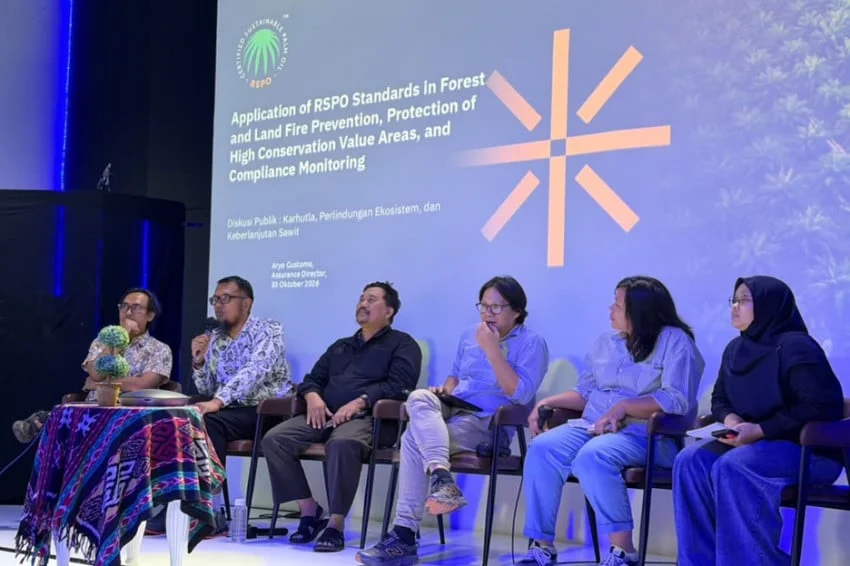
The Roundtable on Sustainable Palm Oil (RSPO) has officially reinforced its unwavering zero-tolerance policy regarding the use of fire in plantation management, underscoring the organization’s commitment to mitigating the environmental and health impacts of forest and land fires (karhutla) that frequently plague Southeast Asia. During a high-level side meeting titled "Karhutla, Ecosystem Protection, and Palm Oil Sustainability," held in Jakarta on Friday, October 30, 2026, RSPO representatives emphasized that the prohibition of fire is a non-negotiable cornerstone of their certification standards. The event, which convened a diverse group of stakeholders including civil society organizations, academics, and media representatives, served as a platform to address the recurring crisis of transboundary haze and the evolving regulatory landscape of the palm oil sector.
The Stance on Non-Negotiable Standards
At the core of the RSPO’s mission is the maintenance of a robust certification system designed to ensure that sustainable palm oil is produced without ecological degradation. Aryo Gustomo, the RSPO Director of Assurance, delivered a definitive message during the panel discussions alongside prominent environmental groups such as Sawit Watch, Greenpeace Indonesia, the Yayasan Ekosistem Lestari (YEL), Satya Bumi, and researchers from IPB University.
Gustomo asserted that the RSPO’s framework is built upon strict, evidence-based accountability. "Kebakaran hutan dan lahan (forest and land fires) constitute a grave threat to ecosystems, biodiversity, and the well-being of local communities. The RSPO addresses every fire risk with the utmost seriousness," Gustomo stated. He further explained that the RSPO’s mechanism for handling allegations of fire use is designed to be structured and transparent, ensuring that when breaches of the Principles and Criteria (P&C) occur, the organization can hold member companies accountable through rigorous, fact-based investigation processes.
Data-Driven Perspectives on Fire Drivers
A significant portion of the discourse in Jakarta centered on the empirical evidence regarding the origins of forest fires in Indonesia. For years, the palm oil industry has been frequently identified by international observers as the primary driver of deforestation and fire-related haze. However, current data suggests a more complex reality.
Citing verified data from Nusantara Atlas, Gustomo highlighted that between January and September 2026, approximately 1.9 million hectares of land were affected by fires across Indonesia. Critically, nearly 90% of these fire hotspots occurred outside of registered palm oil concessions. This finding is significant, as it shifts the narrative from a sector-specific problem to a broader landscape management challenge. Industry experts argue that this data indicates that while palm oil companies are often the most visible targets due to international scrutiny and supply chain requirements, the root causes of fires—which include land clearing for small-scale subsistence farming, land tenure conflicts, and peatland drainage—are far more systemic and widespread.
Chronology of Regional Haze and Regulatory Response
The issue of forest fires in Southeast Asia is not new, and the regional response has intensified over the past decade.
- 2015-2016: The region experienced record-breaking haze events, prompting the ASEAN Agreement on Transboundary Haze Pollution to take a more central role in diplomatic discourse.
- 2019: Significant fire seasons led to increased pressure from neighboring nations, particularly Singapore and Malaysia, on Indonesian companies to prove their supply chains were free from fire.
- 2023-2024: Heightened awareness of climate change and the "El Niño" phenomenon exacerbated fire conditions, leading to increased government crackdowns and stricter implementation of the Omnibus Law on Job Creation concerning environmental protection.
- October 2026: The Jakarta meeting occurs in the shadow of recent diplomatic friction, notably the summoning of ten corporate leaders by the Deputy Prime Minister of Singapore, emphasizing that regional governments are no longer satisfied with mere rhetoric and are seeking direct accountability from corporate entities operating within the landscape.
Implications of the RSPO Zero-Tolerance Policy
The RSPO’s insistence on a zero-tolerance policy is not merely symbolic; it has profound economic and legal implications for the industry. Companies that fail to adhere to these standards risk losing their RSPO certification, which essentially locks them out of the premium European and North American markets that demand strict environmental compliance.
The policy requires member companies to:
- Monitor Hotspots: Utilize satellite technology and ground-level patrols to detect and extinguish fires immediately.
- Reportage: Maintain transparent records of fire incidents and engage with local communities to prevent fire-based land clearing.
- Accountability: Accept independent third-party audits that verify the absence of fire in all concession areas.
By aligning with the RSPO, companies are theoretically insulating themselves from both legal prosecution by the Indonesian state and the reputational damage that accompanies being linked to regional haze. However, the challenge remains in the "leakage" of fire use into the informal or non-certified sector, which falls outside the regulatory reach of the RSPO.
Stakeholder Dynamics: A Balancing Act
The inclusion of organizations like Greenpeace Indonesia and Sawit Watch in the discussion highlights the ongoing tension between industrial expansion and conservation. While the RSPO provides a framework for improvement, critics often point to the limitations of private sector certification, noting that certification alone cannot solve structural issues like land tenure disputes or the economic desperation of rural communities that may resort to slash-and-burn practices.
Universities such as IPB have contributed valuable scientific research to these discussions, advocating for a "Landscape Approach." This approach suggests that preventing fires requires cooperation beyond the boundaries of individual concessions, involving regional governments, local farmers, and large-scale plantations in a unified fire-management zone.
Broader Impact on the Palm Oil Industry
The current geopolitical climate, characterized by the Singaporean government’s recent intervention, indicates that the tolerance for transboundary pollution is at an all-time low. When high-level government officials call for accountability, the palm oil industry finds itself at a crossroads. The industry must prove that it is not merely a "scapegoat," as some advocates have claimed, but a proactive partner in climate mitigation.
For the RSPO, the road ahead involves strengthening its assurance systems to be more responsive to real-time data. If the RSPO can prove that its certified members are significantly less likely to experience fires than non-certified entities, it will solidify the value proposition of sustainable palm oil. However, as the 90% statistic for non-concession fires suggests, the industry’s greatest challenge may be its inability to control the environmental behavior of actors outside its direct sphere of influence.
Conclusion: Moving Toward a Haze-Free Future
The Jakarta "Road to RT" meeting serves as a crucial reminder that the fight against forest fires is an ongoing, multi-dimensional effort. While the RSPO continues to hold its members to the highest standards, the broader resolution of the haze crisis in Southeast Asia will require a more comprehensive, multi-sectoral approach.
The data presented by Nusantara Atlas—that the vast majority of fires occur outside of palm oil concessions—provides a compelling argument for a more nuanced understanding of the problem. It suggests that while strict enforcement of zero-tolerance policies within the industry is necessary, it is insufficient to address the entirety of the regional fire crisis. The path forward requires a fusion of rigorous certification, improved regional policy coordination, and support for sustainable livelihoods that do not rely on fire as a tool for agricultural development. As the international community watches, the ability of Indonesian stakeholders to harmonize these efforts will determine whether the region can finally move past the recurring cycle of smoke and crisis that has defined the last several decades.