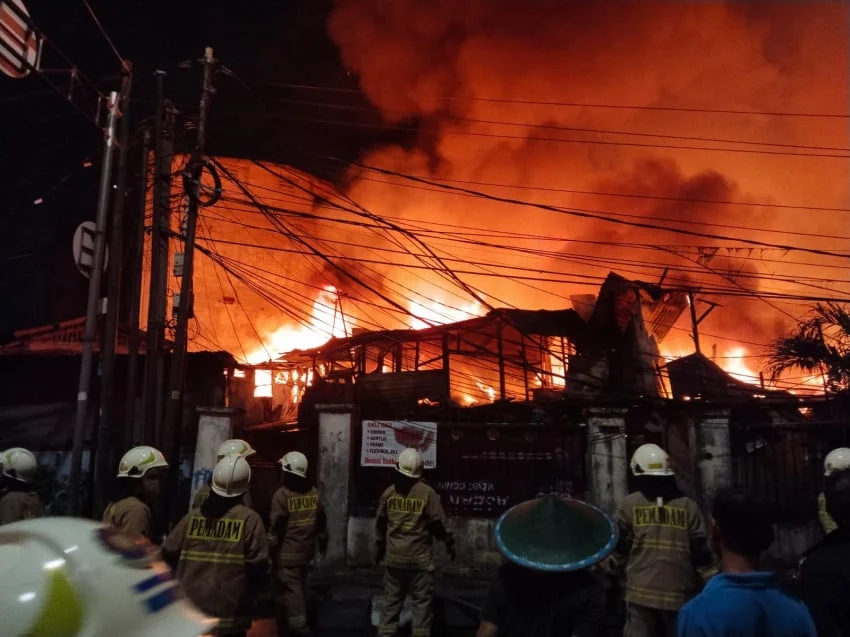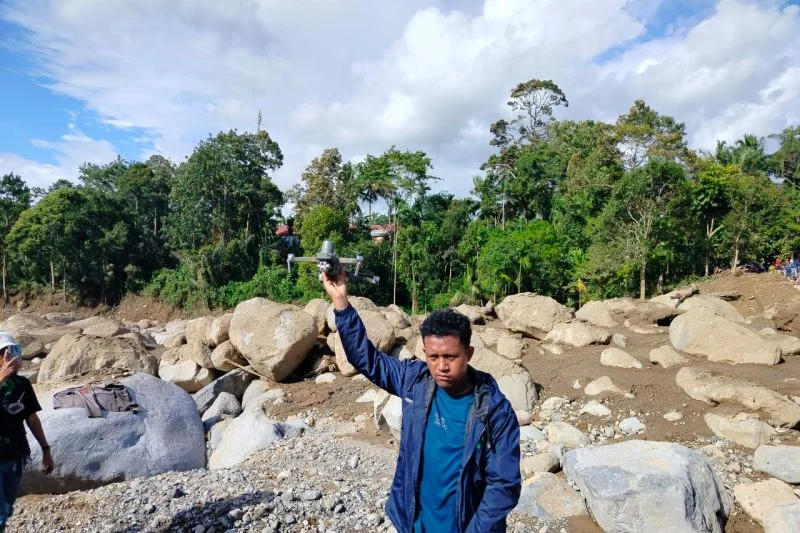
Indonesian law enforcement authorities have officially confirmed the involvement of foreign entities in the ongoing investigations surrounding the catastrophic forest and land fires (karhutla) that have plagued Kalimantan Selatan in recent weeks. As the nation grapples with the environmental and economic fallout of these blazes, the revelation that international stakeholders—acting as capital providers, major shareholders, or corporate owners—are linked to the affected plantations has added a complex geopolitical and legal dimension to the domestic crackdown.
Dirkrimsus Polda Kalsel, Kombes Pol Sigit Haryono, disclosed that a portion of the 13 corporations currently under intense scrutiny for their role in the fires are either foreign-owned or feature significant foreign investment. This discovery follows an exhaustive probe into the corporate governance and operational compliance of agricultural firms operating within the regencies of Banjar, Barito Kuala, Tapin, and Tanah Laut.
The Scope of Corporate Negligence
The investigation into these corporations is primarily centered on the allegation of negligence regarding fire prevention and suppression infrastructure. According to the regional police, the current focus is not necessarily on the intentional ignition of fires, but rather on a systemic failure to implement adequate safety measures.
"From our deep-dive analysis, out of the 13 corporations we are investigating, several have clear ties to foreign parties," Sigit Haryono explained. "These foreign entities are not mere suppliers; they are active shareholders or owners of these companies, which are registered in Indonesia and employ local staff. Our findings indicate a failure to provide essential firefighting equipment, a lack of rigid Standard Operating Procedures (SOPs), and an absence of properly trained personnel to manage fire risks on their concessions."
The sector most heavily implicated in these findings is the palm oil industry, a cornerstone of the regional economy but also a frequent target of environmental regulations. The police emphasize that while intentional arson by these specific companies has not yet been proven, the legal culpability stems from their inability to maintain the landscape in a way that prevents minor land clearing incidents from spiraling into uncontrollable wildfires. Beyond the 13 corporations, authorities have also processed 16 individual suspects in Kalimantan Selatan, signaling a multi-pronged approach to holding both corporate entities and private actors accountable for the ecological disaster.
National Context and the Polri Data Report
The situation in Kalimantan Selatan is reflective of a much larger national crisis. During a recent Cabinet Plenary Session at the Presidential Palace in Jakarta, National Police Chief Suyudi Ario Seto provided a comprehensive briefing to President Prabowo Subianto, outlining the scale of the enforcement operations.
As of October 20, 2026, the Indonesian National Police (Polri) reported that they are handling 100 formal police reports (Laporan Polisi) specifically targeting corporate entities involved in land fires. These cases are being managed across 10 different regional police departments (Polda) and the Directorate of Specific Crimes (Tipiter) of the Bareskrim Polri. The total area of land incinerated under the management of these corporations is estimated at 29,534.99 hectares.
The legal process is currently segmented by the severity of the findings. Of the 100 reports, 94 have successfully transitioned from the investigation (penyelidikan) stage to the formal prosecution (penyidikan) stage. A critical component of this legal action is the recommendation to revoke the business licenses of 23 of these corporations. Of those 23, 11 have already been officially named as suspects, while the remaining 12 are undergoing further evidentiary review.
The Foreign Investment Nexus
The presence of foreign capital in these cases has drawn attention to the role of international investment in Indonesian agricultural land. According to police data, there are at least 22 corporations currently under the spotlight that are classified as being affiliated with foreign direct investment (FMA).
The data provided by the National Police reveals a stark correlation between the size of concessions and the extent of the fire damage. The 11 foreign-affiliated corporations already named as suspects hold a combined total concession area of 209,933 hectares, with approximately 11,105 hectares lost to fire. Another 12 corporations, currently under investigation but not yet named as suspects, manage 166,756 hectares, of which 8,849 hectares have been destroyed.
Geographically, the spread of these cases is concentrated in the Kalimantan islands, with eight suspect corporations in Kalimantan Barat, two in Kalimantan Tengah, and one in Kalimantan Selatan. This data underscores that the problem is not isolated but represents a systemic vulnerability in how large-scale plantations manage their environmental footprints.
Broader Implications for Industry and Environment
The crackdown represents a hardening stance from the Indonesian government toward environmental sustainability. By targeting the legal status of corporations—and suggesting the revocation of licenses—the government is signaling that foreign ownership does not grant immunity from national environmental laws.
Economic Impact and Global Supply Chains
The involvement of international shareholders in these companies poses a significant risk to the companies’ global standing. International palm oil buyers, many of whom have adopted strict "No Deforestation, No Peat, No Exploitation" (NDPE) policies, may face pressure to divest from or suspend contracts with firms identified in these police reports. The reputational damage to foreign investors involved in the mismanagement of Indonesian land could lead to increased scrutiny from ESG (Environmental, Social, and Governance) investors in global financial markets.
Legal and Operational Challenges
For the legal system, the primary challenge lies in the "corporate veil." Determining the liability of foreign shareholders when the negligence occurred on the ground in a local Indonesian subsidiary requires complex legal maneuvering. Authorities are currently examining the flow of capital and the decision-making structures within these firms to determine if the lack of firefighting equipment was a direct result of budget cuts dictated by the parent companies or a failure of local management.
Environmental Recovery
While the legal proceedings move forward, the immediate ecological impact remains severe. The loss of nearly 30,000 hectares of land in a short period contributes significantly to haze, carbon emissions, and the destruction of local biodiversity. Analysts suggest that until there is a standardized, mandatory investment in high-tech fire suppression infrastructure for all concession holders, the recurring cycle of forest fires will remain a threat.
Chronology of Enforcement Actions
- Mid-October 2026: Reports of increased wildfire activity across the Kalimantan region trigger emergency responses and the deployment of joint task forces.
- October 20, 2026: The National Police finalize a comprehensive data report covering 100 corporate cases and 286 individual cases nationwide.
- October 21, 2026: National Police Chief Suyudi Ario Seto presents the findings to President Prabowo Subianto during a Cabinet Plenary Session, highlighting the 13 corporations already established as suspects.
- October 23, 2026: Dirkrimsus Polda Kalsel, Kombes Pol Sigit Haryono, confirms that foreign parties are among those being investigated for their roles as shareholders in the implicated companies, marking a pivot in the local investigation.
Moving Toward Accountability
The ongoing investigations by the Polda Kalsel and the National Police are part of a larger, long-term strategy to curtail the "slash-and-burn" culture that has historically been associated with land clearing in Indonesia. By moving the focus from individual farmers to the corporate boardrooms, the state is attempting to address the root causes of the fires.
The inclusion of foreign-affiliated firms in the list of suspects is a watershed moment for environmental enforcement in the region. It reinforces the principle that foreign entities operating in Indonesia are subject to the same regulatory requirements as local firms. As the investigations continue, the public and the international community await further details on the specific penalties that will be imposed, including potential heavy fines, criminal charges for corporate executives, and the permanent revocation of land permits for the most egregious offenders.
Ultimately, the resolution of these cases will serve as a bellwether for the future of Indonesian agriculture, testing whether the government’s commitment to environmental protection can withstand the economic pressure of international corporate interests. The success of these prosecutions will not only determine the fate of the involved companies but will likely influence future investment patterns in the Indonesian plantation sector, forcing a shift toward more responsible and sustainable land management practices.