The plantation sector in Indonesia continues to serve as a cornerstone of the national economy, acting as a vital foreign exchange earner, a major contributor to national revenue, and a primary engine for employment generation across the entire supply chain from upstream to downstream. Commodities such as palm oil, coconut, and cocoa not only dominate domestic agricultural production but also yield a diverse array of derivative products that offer extensive utility across the food, renewable energy, and manufacturing industries. Historically, the processing of these raw commodities into high-value goods was the exclusive domain of large-scale industrial conglomerates equipped with capital-intensive machinery and advanced processing facilities.
However, a structural shift is actively transforming the landscape of the Indonesian agricultural economy. Through the adoption of accessible technologies, local creativity, and innovative product development, Micro, Small, and Medium Enterprises (MSMEs) are increasingly proving capable of transforming raw materials and agricultural waste into high-value creative derivative goods. This grassroots downstream integration elevates rural incomes, fosters localized industrialization, and strengthens the economic resilience of rural communities. Recognizing both the immense potential of Indonesia’s plantation commodities and the distinct operational challenges faced by small-scale producers in scaling their businesses, the Estate Crop Fund Agency, commonly known as Badan Pengelola Dana Perkebunan (BPDP), has intensified its strategic interventions to bolster the capacity, market access, and overall competitiveness of plantation-based MSMEs.
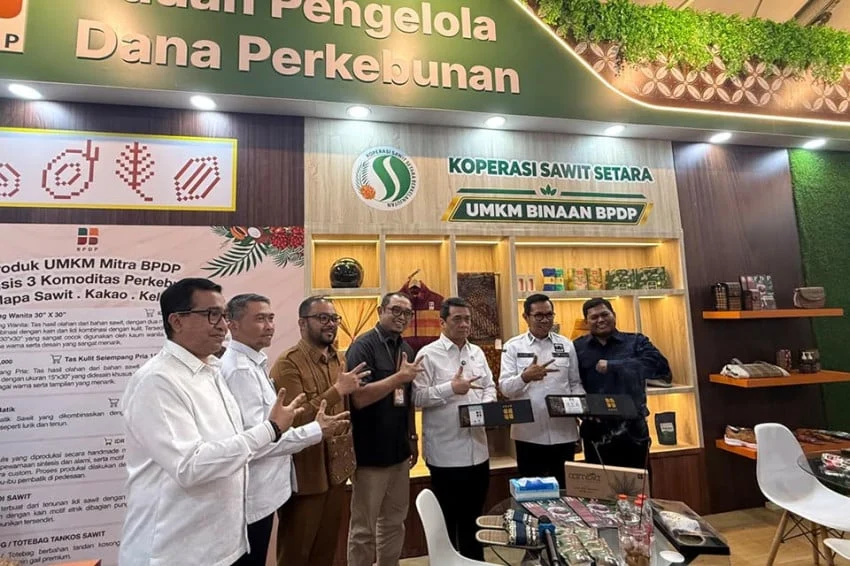
As part of this ongoing mandate, BPDP participated in the Indonesia Development and Exposition (INDOVEX) 2026, held in the highland city of Batu, East Java, from November 2 to November 4, 2026. The high-profile exhibition served as a vital platform to introduce the untapped potential and superior quality of Indonesian plantation MSME products to a broader domestic and international audience.
Strategic Role of Plantation Commodities in Indonesia
To understand the gravity of BPDP’s developmental initiatives, one must examine the macro-economic weight of Indonesia’s plantation sector. Agriculture and plantations remain foundational to the nation’s Gross Domestic Product (GDP), absorbing millions of smallholder farmers who cultivate millions of hectares of land across the archipelago. Palm oil, often referred to as the king of vegetable oils, positions Indonesia as the world’s leading producer and exporter, generating billions of dollars in foreign exchange annually. Similarly, coconut and cocoa represent significant export commodities that support the livelihoods of coastal and agrarian populations alike.
Beyond raw exports, the global demand for sustainable, value-added derivative products has grown exponentially. Consumers and industrial buyers alike are shifting away from raw material dependency toward refined goods, including specialty fats, oleochemicals, organic coconut sugar, virgin coconut oil, artisanal chocolates, and various biomass-derived products. By empowering grassroots enterprises to participate in this value chain, Indonesia can capture a larger share of the global economic value generated by its own natural resources. Downstream processing within the MSME sector ensures that wealth distribution reaches deeper into rural areas, curbing urbanization and fostering regional economic autonomy.
Chronology and Background of INDOVEX 2026
The staging of INDOVEX 2026 in Batu City, East Java, was conceived as a premier nexus for trade promotion, technological exchange, and investment matching, specifically tailored to regional enterprises and creative industries. Preparations for the multi-day event began months in advance, involving regional governments, trade associations, and federal agencies seeking to stimulate post-pandemic economic recovery and accelerate regional industrial transformation.
Batu City, renowned for its agricultural tourism and strategic geographical position in East Java, provided an ideal backdrop for the exhibition. The event officially commenced on November 2, 2026, drawing thousands of visitors, ranging from institutional buyers and investors to academic researchers and the general public. The exhibition layout was meticulously organized to spotlight various industrial sectors, with a dedicated pavilion highlighting the transformation of agricultural and plantation commodities.
Throughout the three-day itinerary, running from November 2 to November 4, 2026, participants engaged in business matching sessions, technology transfer workshops, and policy dialogues aimed at streamlining export procedures for small businesses. BPDP’s pavilion emerged as one of the focal points of the exhibition, drawing substantial interest due to its dynamic display of innovative derivative products crafted entirely by smallholders and local artisans under the guidance of national development programs.
BPDP’s Comprehensive Intervention Framework
The involvement of BPDP in INDOVEX 2026 is not an isolated promotional exercise, but rather a continuation of a systematic institutional policy designed to elevate the standing of Indonesian plantation MSMEs. As an agency tasked with managing funds dedicated to the development of strategic plantation commodities, BPDP utilizes its resources to bridge the gap between traditional farming and modern commercial markets.
Small-scale producers frequently encounter structural hurdles, including limited access to working capital, a lack of standardization and certification, outdated production techniques, and restricted market linkages. To counteract these challenges, BPDP implements targeted capacity-building programs. These initiatives encompass technical training on quality control, assistance with product packaging and labeling to meet modern retail standards, facilitation of business licenses and halal certifications, and direct exposure to high-profile trade exhibitions such as INDOVEX.
By bringing these MSMEs to Batu City, BPDP effectively bypassed traditional distribution bottlenecks, allowing small-scale entrepreneurs to pitch their products directly to regional distributors, institutional buyers, and retail chains. This direct market exposure helps producers gauge consumer preferences firsthand, enabling them to refine their product offerings and scale their operations sustainably.
Economic Implications and Downstream Integration
The push toward downstream processing at the MSME level carries profound implications for the structural stability of the Indonesian economy. Historically, fluctuations in global raw commodity prices have left smallholder farmers vulnerable to severe income shocks. When raw palm oil, cocoa beans, or copra experience price downturns on international exchanges, primary producers absorb the immediate financial blow.
However, when smallholders and local cooperatives are equipped to process these raw materials into consumer-ready goods—such as refined cooking oils, specialized cosmetics, artisanal foods, and eco-friendly handicrafts made from plantation waste—they diversify their revenue streams. Value-added goods command higher profit margins, insulating local producers from the volatility of raw commodity spot markets.
Furthermore, the integration of technology and sustainable practices into rural production aligns with global environmental standards. Many of the MSMEs featured under the BPDP umbrella emphasize circular economy principles, utilizing agricultural waste streams—such as palm kernel shells, coconut husks, and cocoa pod husks—to create renewable energy briquettes, organic fertilizers, and biodegradable packaging materials. This sustainable approach not only minimizes environmental degradation but also opens doors to lucrative eco-conscious export markets in Europe, North America, and East Asia.
Stakeholder Perspectives and Institutional Objectives
While specific direct quotations from executive leadership during the INDOVEX 2026 event remain closely aligned with broader institutional communications, economic analysts and trade experts have lauded the strategic alignment between regional trade expositions and national commodity funds. Observers note that events like INDOVEX serve as vital testing grounds for policy implementation, demonstrating how state-backed financial mechanisms can successfully trickle down to the grassroots level.
Representatives from regional trade associations in East Java expressed optimism regarding the long-term impacts of the exhibition. Local business leaders emphasized that collaboration between federal agencies like BPDP and municipal entities creates a supportive ecosystem where small enterprises can transition from informal local vendors into structured, export-ready corporations. The availability of structured mentorship, financial literacy training, and logistical support addresses the foundational vulnerabilities that have traditionally constrained small business growth in rural sectors.
Future Outlook and Scalability
Looking beyond the conclusion of INDOVEX 2026 on November 4, the true measure of success for BPDP’s participation will lie in the sustained growth and export conversion rates of the participating MSMEs. The post-event phase typically involves monitoring business matching agreements signed during the exhibition, evaluating sales volumes, and providing continuous mentoring to ensure that small businesses can fulfill larger procurement orders reliably.
As global markets increasingly demand transparency, ethical sourcing, and product innovation, the empowerment of Indonesian plantation MSMEs represents a vital national strategy. By continuing to leverage trade platforms across the archipelago, BPDP aims to institutionalize a culture of quality and competitiveness within the domestic agricultural sector. The successful showcase in Batu City underscores the undeniable reality that the future of Indonesia’s plantation wealth extends far beyond the raw harvest; it is anchored in the ingenuity, resilience, and creative downstream capacity of its people.