
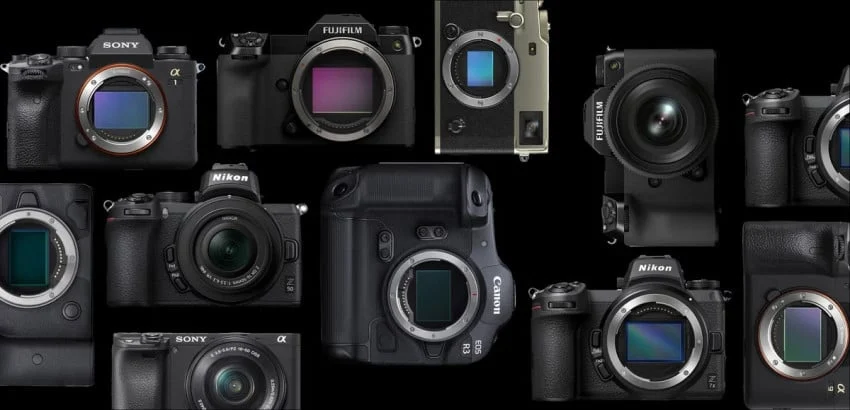
The global photography and imaging sector is facing an unprecedented structural challenge as the explosive expansion of artificial intelligence infrastructure creates severe component shortages across the electronics supply chain. Industry analysts and major manufacturing executives warn that the relentless demand for high-performance memory chips and electronic components from the AI sector will likely trigger a wave of digital camera price increases by 2027. This impending market shift highlights the vulnerability of traditional consumer electronics industries when competing for semiconductor foundry capacity against multi-billion-dollar enterprise AI data center deployments.
Main Facts of the Component Crisis
At the core of the issue is a systemic supply-demand imbalance driven primarily by the generative AI boom. Data centers operated by hyperscale cloud providers are absorbing massive allocations of dynamic random-access memory (DRAM), NAND flash storage, and specialized integrated circuits. Consequently, traditional consumer hardware sectors—including digital single-lens reflex (DSLR) cameras, mirrorless systems, and printing equipment—are experiencing tightening supply chains and escalating procurement costs.
According to reports originating from industry analysis by Petapixel, major imaging manufacturers are struggling to absorb the compounding expenses associated with raw materials and specialized circuit boards. Canon Inc., one of the world’s leading optical and imaging conglomerates, formally addressed these macroeconomic pressures during its financial briefings following the announcement of its third-quarter business results for fiscal year 2026. The multinational corporation confirmed that both its printing equipment and digital imaging segments are directly affected by the scarcity of electronic components and printed circuit boards (PCBs).
While initial internal forecasts projected a cooling-off period for memory pricing by the latter half of 2026, revised economic models indicate that component costs will remain stubbornly high throughout the foreseeable future. This persistent inflation has forced camera manufacturers to reevaluate their operational strategies, leaving consumer-facing price adjustments as an increasingly probable outcome for product lineups slated for release in 2027.
Chronology and Escalation of Supply Chain Pressures
The trajectory leading to the current state of component scarcity developed incrementally over several years, marked by a convergence of post-pandemic recovery shifts and the sudden ascension of commercial artificial intelligence technologies.
In 2023, the global semiconductor market began recovering from pandemic-era shortages, with memory manufacturers scaling back production to stabilize cratering chip prices. However, the unexpected mainstream breakthrough of large language models and generative AI applications in late 2022 and 2023 dramatically reoriented demand patterns. Enterprise technology firms began aggressively acquiring high-bandwidth memory (HBM) and advanced server-grade DRAM to power complex machine-learning clusters.
By 2024 and 2025, this enterprise demand saturated fabrication facilities (fabs), forcing semiconductor foundries to prioritize high-margin AI hardware over legacy or consumer-grade memory nodes. Major memory producers, including Samsung Electronics, SK Hynix, and Micron Technology, reallocated substantial wafer capacity toward enterprise AI solutions.
By mid-2026, the ripple effects of this capacity reallocation reached the consumer electronics ecosystem. During its third-quarter financial results announcement in late 2026, Canon publicly acknowledged that component acquisition had transformed from a routine supply-chain operation into a high-stakes challenge. The company disclosed that it was actively exploring all available procurement channels to secure sufficient component inventories for upcoming production cycles, despite the necessity of absorbing significantly higher acquisition costs. Furthermore, executive leadership confirmed that passing a portion of these inflated input costs onto end consumers via strategic retail price adjustments was under active consideration for 2027 product portfolios.
The Role of Memory in Modern Digital Imaging Systems
To understand why the digital camera market is acutely susceptible to memory pricing fluctuations, one must examine the hardware architecture of modern photographic equipment.
Contemporary mirrorless and DSLR cameras function essentially as specialized high-performance computers. Advanced image sensors generate enormous quantities of raw data at speeds exceeding dozens of frames per second. Processing this data requires sophisticated image processors working in tandem with high-speed buffer memory.
Whether a camera is marketed explicitly with AI-driven autofocus algorithms, subject-tracking neural networks, or relies strictly on traditional computational photography, memory remains a foundational bottleneck. High-speed burst shooting, buffering for uncompressed RAW files, and internal recording of high-bitrate 4K and 8K video depend directly on advanced DRAM and flash storage components. Therefore, even entry-level and mid-range camera models that lack advanced artificial intelligence features are entirely exposed to the broader macroeconomic pressures dictating the price of silicon components.
Official Responses and Manufacturer Strategies
Faced with these persistent headwinds, leading imaging manufacturers are deploying various strategies to protect profit margins without entirely alienating their consumer base.
Canon’s executive board has signaled a pragmatic approach to the 2027 market environment. Rather than attempting to absorb the entirety of rising production costs—which would severely erode corporate profitability—the company is evaluating a tiered pricing strategy. This approach involves securing long-term supply contracts with component vendors, albeit at premium rates, while simultaneously passing calculated cost increases down to the retail market.
Industry competitors, including Sony, Nikon, and Fujifilm, have faced similar operational dilemmas. While official statements across the broader industry have varied in degrees of transparency, supply chain analysts note that component lead times for optical and electronic assemblies have lengthened significantly. Manufacturers are increasingly hesitant to commit to aggressive promotional discounting or long-term price freezes for upcoming camera bodies and high-end RF/Z-mount lenses.
Broader Market Implications and Economic Analysis
The impending price adjustments across the camera industry serve as a micro-case study for the broader macroeconomic disruption caused by the artificial intelligence transition. When a single technological vertical commands disproportionate manufacturing resources, adjacent industries inevitably experience collateral economic pressure.
For consumers and professional creators, the implications of a 2027 price surge are multifaceted. Entry-level and enthusiast-tier cameras, which traditionally act as gateways for new photographers, may see elevated retail prices, potentially slowing market adoption rates. Meanwhile, professional-grade systems, which already command significant capital investment, may experience incremental price inflation that pushes high-end gear further out of reach for independent creators and hobbyists.
Furthermore, the secondary and used camera markets may experience a surge in demand as buyers seek alternatives to newly manufactured hardware. If brand-new camera bodies appreciate or hold their value more stubbornly due to underlying component inflation, well-maintained older mirrorless and DSLR models could retain higher residual value.
Ultimately, the situation underscores the interconnected nature of modern global manufacturing. As long as enterprise demand for artificial intelligence infrastructure remains unabated, consumers across seemingly unrelated technological sectors—from automotive to digital imaging—will continue to bear the indirect costs of the silicon revolution. The coming months leading into 2027 will be critical as manufacturers finalize their pricing architectures and navigate a constrained global supply chain.