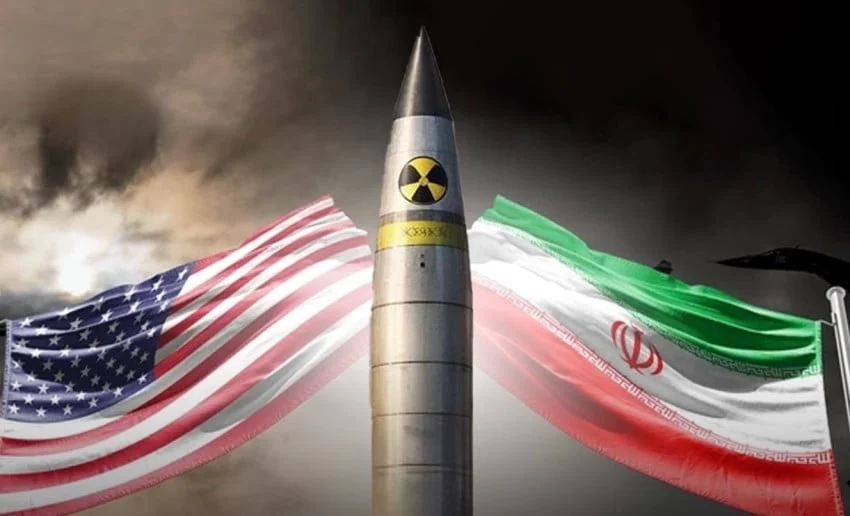
The Islamic Revolutionary Guard Corps (IRGC) has signaled a significant potential shift in Iran’s long-standing nuclear posture, suggesting that the nation is prepared to reconsider its strategic military doctrine in response to evolving security threats. Brigadir Jenderal Hossein Mohebbi, a spokesperson for the IRGC, confirmed that while no definitive decision has been finalized, the infrastructure and necessary preparations for a fundamental shift in nuclear policy are being actively evaluated. This development follows recent comments from high-ranking security officials, including Mohsen Rezaei, who noted that Iran is currently weighing the geopolitical implications of such a transition. The discourse surrounding Iran’s nuclear capabilities arrives at a critical juncture in Middle Eastern diplomacy, characterized by heightened regional instability and a deepening rift between Tehran and Western powers.
The Evolution of Iran’s Nuclear Stance: A Historical Context
For decades, Iran’s official stance on nuclear technology has been rooted in the 2003 fatwa issued by Supreme Leader Ayatollah Ali Khamenei, which formally prohibits the development and use of nuclear weapons. This religious decree has been the cornerstone of Iran’s international legal defense, asserting that its nuclear program is strictly intended for peaceful, civilian purposes, such as energy production and medical research. However, the international community, led by the International Atomic Energy Agency (IAEA) and various Western intelligence agencies, has frequently expressed concern over the enrichment levels achieved by Iranian facilities.
The escalation in rhetoric from IRGC leadership reflects a departure from the restraint previously dictated by the Joint Comprehensive Plan of Action (JCPOA), which was severely undermined following the United States’ withdrawal from the agreement in 2018. Since then, the breakdown of diplomatic channels and the imposition of extensive economic sanctions have pushed Tehran to expand its nuclear enrichment capacity. The current deliberations regarding a doctrinal shift appear to be a strategic response to the perceived existential threats posed by both the United States and its regional allies.
Chronology of Escalating Tensions
The timeline of Iran’s recent military and nuclear trajectory reveals a consistent pattern of defiance and rapid technological advancement. The following chronology outlines the key events leading to the current discourse on nuclear policy:
- 2015: Iran signs the JCPOA with the P5+1 nations, agreeing to limit nuclear enrichment in exchange for the lifting of economic sanctions.
- May 2018: The United States unilaterally withdraws from the JCPOA, prompting Iran to gradually scale back its compliance with the agreement’s limitations.
- 2020–2022: Iran begins enriching uranium to 60% purity, a level significantly higher than the 3.67% limit set by the JCPOA, raising alarms in Washington and Brussels.
- October 2023: Following the outbreak of the conflict in Gaza, regional tensions spike, leading to increased IRGC activity and rhetoric regarding "deterrence."
- April 2024: Iran launches a massive drone and missile strike against Israel in direct retaliation for an attack on its consulate in Damascus, demonstrating advanced offensive capabilities.
- October 2024: IRGC officials publicly acknowledge that the military is prepared to re-evaluate its nuclear doctrine, framing it as a necessary measure for national security.
Technological Self-Sufficiency and Global Arms Exports
Beyond the discourse on nuclear policy, the IRGC has emphasized its success in achieving total independence in advanced defense technology. Brigadir Jenderal Mohebbi highlighted that Iran has evolved from a nation reliant on foreign imports to a significant player in the global arms market. This transition is largely attributed to the rapid development of its indigenous unmanned aerial vehicle (UAV) program and ballistic missile infrastructure.
The Iranian government claims that its domestic defense industry has reached a state of maturity that rivals that of major military powers. This includes the production of sophisticated air defense systems, precision-guided missiles, and radar technology. The IRGC’s assertion that it has successfully neutralized or downed over 260 American aircraft—including advanced platforms such as the F-16, F-35, and F-18—is a provocative claim that serves as a cornerstone of its narrative of military deterrence. While these claims are frequently disputed or categorized as propaganda by Western military analysts, they underscore the psychological warfare tactics employed by Tehran to project strength.
Strategic Implications and International Reactions
The potential shift in Iran’s nuclear doctrine carries profound implications for the global non-proliferation regime. If Iran were to formally abandon its commitment to non-weaponization, it would likely trigger a nuclear arms race in the Middle East, with neighboring states feeling compelled to pursue their own deterrent capabilities.
The international response to these declarations has been one of heightened caution. The IAEA has repeatedly called for transparency, urging Iran to grant inspectors full access to its nuclear facilities. Western powers, including the United States, the United Kingdom, and France, maintain that any move toward weaponization would be met with severe diplomatic consequences and potentially further economic isolation.
Military analysts suggest that the IRGC’s rhetoric is as much about domestic consolidation and regional posturing as it is about actual military intent. By signaling that the "nuclear taboo" is being reconsidered, Iran aims to increase its leverage in any future negotiations and deter potential military strikes against its infrastructure. The "deterrence through uncertainty" strategy allows Tehran to keep its adversaries guessing while continuing to push the boundaries of its technological capabilities.
Economic and Diplomatic Consequences
The economic reality of Iran remains a significant constraint. Years of sanctions have strained the national budget, and any move toward an explicit nuclear weapon program would likely invite further crippling sanctions, potentially destabilizing the domestic political landscape. However, the IRGC maintains that the cost of inaction—viewed as vulnerability to foreign aggression—is far higher than the economic burden of sanctions.
Furthermore, the relationship between Tehran and global powers like Russia and China complicates the geopolitical landscape. While both nations have historically called for the preservation of the non-proliferation treaty, their growing military and economic ties with Iran suggest that the international coalition against Iranian nuclear development is not as unified as it once was.
Analysis: The Path Forward
The situation remains fluid. Whether the IRGC’s statements represent a genuine shift in policy or a strategic bluff depends on several factors: the outcome of upcoming international summits, the stability of regional security alliances, and the internal political dynamics within the Iranian government.
For the international community, the focus remains on the implementation of monitoring protocols. The argument presented by Iranian officials—that their defense technology is a product of necessity—clashes with the global mandate to prevent nuclear proliferation. As the IRGC continues to refine its missile ranges and defense capabilities, the window for diplomatic resolution appears to be narrowing.
In conclusion, the discourse surrounding Iran’s nuclear doctrine is a clear indicator that the status quo is no longer viewed as sufficient by Tehran. By linking its indigenous defense achievements with a potential nuclear pivot, the IRGC is attempting to redefine the terms of engagement. As the global community monitors these developments, the primary challenge remains to ensure that regional security concerns are addressed without triggering a permanent shift toward nuclear proliferation, which would irrevocably alter the balance of power in the 21st century. The world now waits to see if Iran will take the final, irreversible step of changing its doctrine, or if this rhetoric will remain a tool of psychological and geopolitical negotiation.