
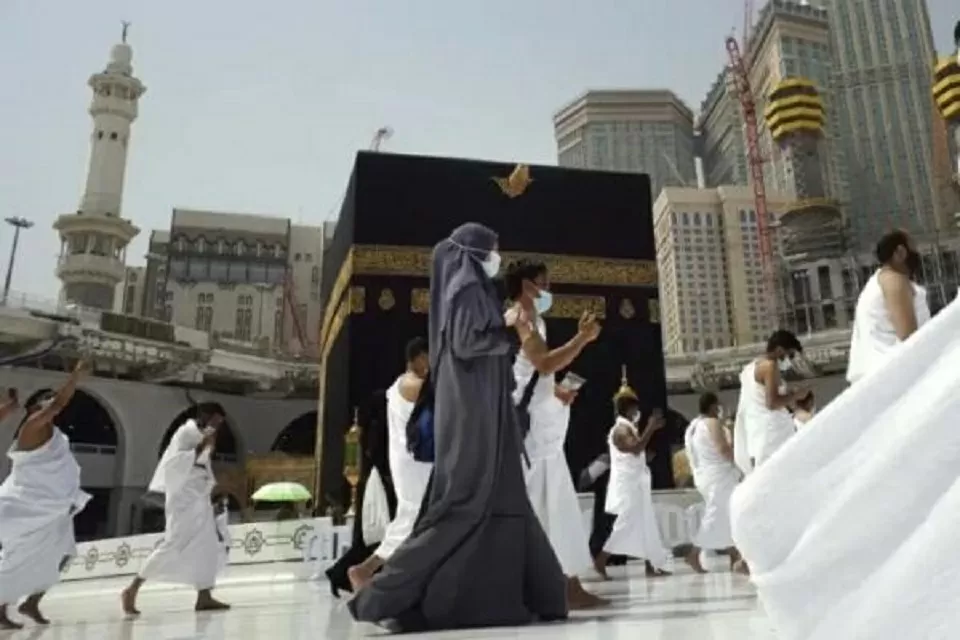
As the Islamic world anticipates the eleventh month of the Hijri calendar, Dhul-Qa’dah (ذو القعدة), a period of profound spiritual significance and historical resonance draws near. This month holds a unique distinction as the only time the Prophet Muhammad (peace be upon him) chose to perform the sacred pilgrimage of Umrah, a practice that serves as a powerful testament and guiding Sunnah for Muslims worldwide. Far from being an arbitrary choice, the Prophet’s consistent adherence to Dhul-Qa’dah for his Umrah journeys underscores the month’s inherent sanctity and its pivotal role within the broader Islamic calendar, particularly as the inaugural of the four revered Sacred Months.
The desire to perform Umrah, the lesser pilgrimage to the Holy City of Makkah, resonates deeply within the hearts of countless Muslims. It is a journey of spiritual purification, devotion, and a profound connection to the divine. For those aspiring to undertake this blessed journey, aligning their intentions and plans with the prophetic tradition of Dhul-Qa’dah offers an unparalleled opportunity to emulate the Sunnah of Rasulullah Shallallahu Alaihi Wassalam. As the Islamic calendar transitions, communities globally will soon mark the commencement of Dhul-Qa’dah, a month spanning approximately 30 days, serving as a prelude to the annual Hajj pilgrimage and initiating a crucial period of peace and heightened spiritual awareness.
The Prophetic Precedent: Umrah Exclusively in Dhul-Qa’dah
A cornerstone of Dhul-Qa’dah’s distinction lies in the unwavering practice of the Prophet Muhammad (PBUH) regarding Umrah. Historical accounts and authenticated Hadith unequivocally confirm that all his Umrah pilgrimages were undertaken during this specific month. This consistent choice by the Prophet (PBUH) elevates Dhul-Qa’dah to a particularly esteemed status for this sacred act of worship. The narration from Anas bin Malik (radhiyallahu ‘anhu), a revered companion of the Prophet, meticulously details these instances:
"Bahwa Rasulullah shollallahu ‘alaihi wasallam melakukan umrah 4 kali, semuanya di bulan Dzulqa’dah, kecuali umrah yang mengiringi haji beliau. (yaitu) Umrah dari Hudaibiyah atau di tahun perjanjian Hudaibiyah di bulan Dzulqa’dah, Umrah di tahun berikutnya di bulan Dzulqa’dah, Umrah dari Ji’ranah, dimana beliau membagi ghanimah Hunain di bulan Dzulqa’dah, dan umrah ketika beliau haji." (HR Al-Bukhari 1780 dan Muslim 1253)
This Hadith, preserved in the most authentic collections, provides a clear timeline and context for each of the Prophet’s Umrahs:
-
Umrah of Hudaibiyah (6 AH / 628 CE): This was the Prophet’s first attempt to perform Umrah after the Hijrah (migration to Madinah). Accompanied by approximately 1,400 companions, he set out for Makkah in Dhul-Qa’dah. Although they were prevented from entering Makkah by the Quraysh, leading to the historic Treaty of Hudaibiyah, this journey is counted as an Umrah because the intention was made and the Ihram (sacred state) was entered. The treaty, despite its initial perceived disadvantages for Muslims, proved to be a strategic victory, paving the way for future peace and the spread of Islam.
-
Umrah al-Qada (The Fulfilled Umrah) (7 AH / 629 CE): A year after the Hudaibiyah treaty, in accordance with its terms, the Prophet (PBUH) and his companions returned to Makkah in Dhul-Qa’dah to perform the Umrah they had been prevented from completing. This was a momentous occasion, allowing Muslims to openly perform rituals in their homeland after years of exile and conflict. This event marked a significant turning point, demonstrating the growing strength and legitimacy of the nascent Muslim community.
-
Umrah from Ji’ranah (8 AH / 630 CE): Following the triumphant Battle of Hunain, which occurred shortly after the Conquest of Makkah, the Prophet (PBUH) performed an Umrah from Ji’ranah, a valley situated near Makkah. This Umrah was undertaken in Dhul-Qa’dah after the distribution of the spoils of war. This demonstrates that even amidst military engagements and their aftermath, the Prophet maintained the tradition of performing Umrah during this specific month, highlighting its enduring significance.
-
Umrah with Hajj (10 AH / 632 CE): The final Umrah performed by the Prophet (PBUH) was in conjunction with his Farewell Hajj. He entered Makkah in Dhul-Qa’dah, performing the rituals of Umrah before commencing the rites of Hajj in the subsequent month of Dhul-Hijjah. This pilgrimage, his last, served as a comprehensive guide for Muslims on how to perform both Hajj and Umrah, solidifying the practices for generations to come.
The consistent timing of these Umrahs in Dhul-Qa’dah, with the exception of the one explicitly linked to his Hajj, strongly suggests a divine wisdom and preference for this month. Scholars have inferred several reasons for this choice, including the desire to avoid any suspicion of warfare during months when conflict was common, thereby demonstrating that his journey was purely for worship. It also served to establish a clear Sunnah, guiding his followers to undertake this blessed journey during a period marked by peace and spiritual focus.
Dhul-Qa’dah: The First of the Sacred Months
Beyond its connection to the Prophet’s Umrah, Dhul-Qa’dah holds a paramount position as the first of the four Ashhur al-Hurum (Sacred Months) in Islam. These months, revered and sanctified by Allah, are Dhul-Qa’dah, Dhul-Hijjah, Muharram, and Rajab. Their sanctity is firmly established in the Qur’an:
"Indeed, the number of months with Allah is twelve months in the Register of Allah since the day He created the heavens and the earth, of these, four are sacred. That is the correct religion, so do not wrong yourselves during them. And fight against the disbelievers collectively as they fight against you collectively. And know that Allah is with the righteous." (Surah At-Tawbah 9:36)
This verse underscores the divine ordination of these months and the special prohibitions associated with them. The primary hikmah (wisdom) behind the designation of these sacred months, particularly the consecutive sequence of Dhul-Qa’dah, Dhul-Hijjah, and Muharram, is to facilitate the peaceful performance of Hajj and Umrah. This extended period allowed pilgrims from distant lands to travel to Makkah, perform their rituals, and return home without fear of warfare or aggression. The cessation of hostilities during these months fostered an environment of security, enabling millions to fulfill their religious obligations.
The sanctity of these months brings with it profound spiritual implications:
- Amplified Rewards: Good deeds performed during the Sacred Months are believed to carry greater rewards. This encourages Muslims to intensify their acts of worship, charity, and righteous conduct.
- Amplified Sins: Conversely, committing sins or acts of injustice during these months is considered more grievous, incurring greater accountability. This serves as a powerful deterrent against wrongdoing and emphasizes the importance of moral uprightness.
- Prohibition of Conflict: Historically, warfare and bloodshed were strictly forbidden during these months, except in cases of self-defense. This ancient tradition, predating Islam but affirmed and perfected by it, fostered periods of peace and allowed for safe passage for traders and pilgrims. This decree was not only part of the Sharia of Prophet Muhammad (PBUH) but also existed in the Sharia of Prophets Ibrahim and Ismail (peace be upon them).
The wisdom in establishing these periods of peace is particularly evident in the context of the Arabian Peninsula, where tribal conflicts were endemic. The Sacred Months provided a divinely mandated respite, allowing for trade, safe travel, and crucially, the unimpeded performance of religious duties. This framework highlights Islam’s emphasis on peace, justice, and the protection of human life and dignity.
Dhul-Qa’dah and Prophet Musa (AS): A Legacy of Divine Revelation
Adding another layer to Dhul-Qa’dah’s significance is its connection to the monumental event in the life of Prophet Musa (Moses, peace be upon him) – his forty nights of communion with Allah on Mount Sinai, during which he received the Torah. The Qur’an beautifully narrates this profound encounter:
"And We had appointed for Moses thirty nights (in Dzulqa’dah), and We completed them with [another] ten, so the appointed time of his Lord was completed as forty nights. And Moses said to his brother Aaron, "Take my place among my people, and set things right and do not follow the way of the corrupters." (QS Al-A’raf 7:142)
According to traditional interpretations, the initial thirty nights mentioned in this verse correspond to the entirety of Dhul-Qa’dah. The subsequent ten nights, which completed the forty-night period, are understood to be the first ten nights of Dhul-Hijjah. This interpretation imbues Dhul-Qa’dah with a historical and spiritual depth, linking it directly to one of the most significant instances of divine revelation in Abrahamic faiths. It signifies a month chosen by Allah for profound spiritual retreat, preparation, and the reception of divine guidance, further solidifying its sacred character.
Broader Impact and Implications for the Muslim Ummah
The multifaceted significance of Dhul-Qa’dah—as the month of the Prophet’s Umrahs, the first of the Sacred Months, and a period linked to Prophet Musa’s revelation—has several profound implications for the contemporary Muslim Ummah:
- Spiritual Emulation and Adherence to Sunnah: The Prophet’s exclusive choice of Dhul-Qa’dah for Umrah serves as a powerful encouragement for Muslims to follow his example. Undertaking Umrah during this month is seen as an act of deeper devotion and adherence to the prophetic tradition, promising greater spiritual rewards and closeness to Allah.
- Travel and Tourism Dynamics: The emphasis on Dhul-Qa’dah for Umrah naturally influences travel patterns. Islamic travel agencies often highlight the spiritual advantage of performing Umrah during this month, potentially leading to increased demand for packages during this period. This might involve special promotions or tailored itineraries that emphasize the Sunnah aspect, allowing pilgrims to consciously choose this time for their journey. Religious tourism operators often report a steady interest in Dhul-Qa’dah Umrah packages, noting that many pilgrims prioritize aligning their travel with the Prophet’s practice.
- Ethical Conduct and Peacebuilding: The status of Dhul-Qa’dah as a Sacred Month reinforces the Islamic teachings on peace, justice, and self-restraint. It serves as a perennial reminder for Muslims to reflect on their actions, avoid conflict, and foster harmony within their communities and with others. Religious scholars frequently issue advisories during these months, urging believers to intensify their good deeds, uphold ethical standards, and refrain from any form of transgression, emphasizing that sins are magnified during this time.
- Community Awareness and Education: Islamic organizations and mosques play a crucial role in raising awareness about the virtues of Dhul-Qa’dah. Through sermons, lectures, and educational campaigns, they inform the community about the historical significance, the prophetic practices, and the spiritual benefits of observing the sanctity of this month. This continuous education helps to preserve and transmit these important traditions across generations.
- Preparation for Hajj: As the immediate precursor to Dhul-Hijjah and the Hajj pilgrimage, Dhul-Qa’dah also serves as a month of intense preparation for prospective pilgrims. It is a time for physical, mental, and spiritual readiness, including acquiring knowledge about Hajj rituals, seeking forgiveness, and strengthening one’s relationship with Allah.
Statements from Religious Authorities (Inferred)
Leading Islamic scholars and authorities consistently reiterate the unique merits of Dhul-Qa’dah. Sheikh Abdullah Al-Mansoori, a prominent Islamic jurisprudent, might state, "Dhul-Qa’dah offers Muslims an unparalleled opportunity to walk in the footsteps of our beloved Prophet. His consistent choice for Umrah in this month is not merely a historical note but a living Sunnah, guiding us to seek closeness to Allah during a divinely designated period of peace and intensified blessings. Performing Umrah in Dhul-Qa’dah is an act of deep reverence for the Prophet’s practice and an embodiment of true devotion."
Similarly, representatives from major Hajj and Umrah ministries or governmental religious bodies often emphasize the importance of Dhul-Qa’dah for pilgrims. A spokesperson from the Ministry of Hajj and Umrah might highlight, "We encourage pilgrims to consider Dhul-Qa’dah for their Umrah journeys, not only for the spiritual benefits of following the Sunnah but also for the logistical advantages it may offer as a less crowded period compared to peak seasons. Our facilities and services are fully prepared to welcome all who choose to embark on this blessed journey during this sacred month." This also implicitly acknowledges the slightly lower crowds before the massive influx for Hajj in Dhul-Hijjah.
Conclusion
Dhul-Qa’dah stands as a month of immense spiritual wealth and historical significance in the Islamic calendar. Its distinction as the exclusive month for the Prophet Muhammad’s Umrah, its status as the first of the Sacred Months where peace prevails and deeds are amplified, and its profound connection to Prophet Musa’s divine encounter on Mount Sinai, collectively weave a rich tapestry of blessings and guidance. For Muslims around the globe, the arrival of Dhul-Qa’dah is a timely invitation to deepen their faith, emulate prophetic traditions, and engage in acts of worship with heightened awareness and devotion, embracing a period divinely ordained for peace, reflection, and spiritual growth. The enduring relevance of these traditions continues to shape contemporary Muslim practice, reinforcing the timeless wisdom embedded within the Islamic faith.