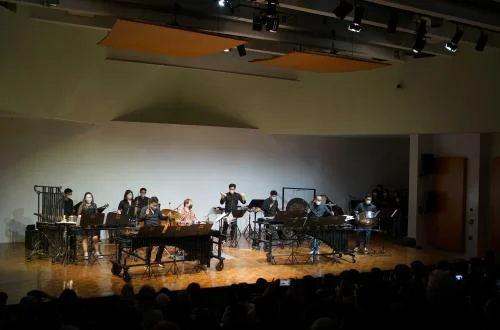
Indonesia, a nation rich in diverse cultural expressions, possesses a profound and deeply ingrained tradition of percussion music. This vibrant heritage, deeply woven into the fabric of its many ethnic groups and ceremonial practices, positions Indonesia as a potential global beacon for the evolution of percussion artistry, influencing both Asian and international musical landscapes. However, this immense potential has, for too long, remained largely untapped and underdeveloped, a sentiment echoed by cultural observers and musical educators alike. Recognizing this critical gap and eager to catalyze a new era for Indonesian percussion, the Yayasan Musik Amadeus Indonesia (YMAI), or Amadeus Music Foundation of Indonesia, has embarked on an ambitious initiative, spearheaded by its landmark event, "Kenopsia."
"Kenopsia," a portmanteau signifying the eerie, yet compelling atmosphere of an empty, once-bustling place, aptly describes the ambition of YMAI to fill a void in the formal development and international recognition of Indonesian percussion. This groundbreaking event marked the first-ever full-scale percussion concert in the illustrious 30-year history of the foundation. At its heart, "Kenopsia" showcased the virtuosity and collaborative spirit of the Amadeus Percussion Ensemble (Ampere), a testament to YMAI’s commitment to fostering dedicated percussion talent. Adding an international dimension and an esteemed benchmark of excellence, the concert featured the acclaimed Austrian percussionist, Adi Schober, as a distinguished guest artist.
The "Kenopsia" initiative was not conceived in isolation. It was the culmination of a broader strategic effort by YMAI to elevate the percussion scene in Indonesia. Prior to the grand concert, the foundation meticulously organized the Indonesia Percussion Composition Competition (IPECC) and the Indonesia Percussion Meeting (IPM). These preceding events served as crucial platforms for nurturing new compositional talent, fostering dialogue among percussionists, educators, and enthusiasts, and laying the groundwork for the spectacular finale. The Goethe-Haus in Jakarta, a venue synonymous with cultural exchange and artistic presentation, played host to the culminating concert during a recent weekend, an occasion that etched itself into the annals of Indonesian music history. A significant highlight of the evening was the exclusive presentation of the world premieres of the winning compositions from the IPECC, offering a vital stage for emerging Indonesian composers to showcase their innovative works to a discerning audience.
The program for the "Kenopsia" concert was thoughtfully curated, offering a diverse and engaging journey through the spectrum of percussion music. The first half commenced with "Novena" by James Swearingen, an arrangement skillfully adapted by I Nyoman Trieswra Minartha, setting a grand tone. This was followed by the eagerly anticipated premieres of the IPECC winners. The audience was captivated by "Dialektika, Dualitas, Kontradiksi" (Dialectics, Duality, Contradiction) by Arya Pugala Kitti and Lucy Freia, a piece that explored complex thematic interplay. Next, "Restrained" by Andre presented a nuanced exploration of controlled energy. "March 16th" by Jeremia Saputra offered a rhythmic and martial drive, while the titular "Kenopsia" by Regina Budiyanto Sutisno provided an evocative soundscape, embodying the spirit of the event.
The second half of the concert transitioned into a vibrant and dynamic showcase of established and contemporary percussion repertoire. The audience was treated to the infectious rhythms of "Blue Samba" by Murray Houllif, a piece renowned for its energetic pulse. Adi Schober then took center stage with his solo composition, demonstrating his individual mastery and interpretive prowess. A popular segment featured "The Music of James Bond," a medley of iconic film themes expertly arranged by James Bocook and further enhanced by I Nyoman Trieswara Minartha’s arrangement. The program continued with the lively "Mambo Africano" by Alice Gomez and Marily Rife, a piece that blended African rhythms with Latin flair. The concert reached its zenith with the ambitious "Suite for Solo Drumset and Percussion Ensemble" by David Mancini, featuring Adi Schober as the distinguished soloist, whose performance was met with thunderous applause.
The Genesis of Amadeus: Nurturing Musical Talent for Three Decades
The Yayasan Musik Amadeus Indonesia, under the visionary leadership of Grace Soedargo, has been a steadfast advocate for music education in Indonesia since its inception. The foundation established the Sekolah Musik Amadeus (SMA), or Amadeus Music School, in 1992. Over the past three decades, SMA has cultivated a nurturing environment for thousands of aspiring musicians, commencing from the tender age of two years old, underscoring a commitment to early childhood music development. This long-standing dedication has fostered a generation of musically literate individuals and proficient performers across various disciplines.
Currently, the Amadeus Music School proudly educates over 200 students who are engaged in the rigorous study of piano, string instruments, wind instruments, and, significantly, percussion. With a dedicated faculty of 25 experienced teachers, SMA remains committed to the advancement of classical music education in Indonesia. This mission is pursued not only through structured classroom instruction but also by actively encouraging collaborative musical experiences through various student orchestras and ensembles. A unique distinction of SMA is its affiliation with the Johann Sebastian Bach Musikschule (JSBM) in Vienna, Austria. This partnership, a rarity in Southeast Asia, provides students with access to an internationally recognized curriculum and pedagogical standards, further enriching their musical journey.
Catalyzing a New Wave in Indonesian Percussion
Grace Soedargo articulated the core objectives behind YMAI’s concerted efforts in percussion. "By organizing the IPECC, IPM, and the ‘Kenopsia’ concert, Amadeus aims to make a significant breakthrough in percussion music in Indonesia," she stated, emphasizing the foundational role these initiatives are intended to play. Her aspirations extend beyond mere performance; she expressed a fervent hope that Indonesian percussionists will be deeply inspired and motivated to elevate their skills and artistic expressions to meet and exceed global standards. This sentiment reflects a broader vision of empowering local talent with the tools and opportunities necessary for international recognition and contribution.
The IPECC, for instance, served as a critical incubator for new compositions, encouraging exploration of contemporary percussion techniques and aesthetics. The IPM fostered a vital community of practice, enabling knowledge exchange and collaborative development. "Kenopsia," as the grand culmination, provided a high-profile platform to showcase this burgeoning talent and to engage with world-class artistry. The engagement of an international artist like Adi Schober was strategically designed to provide Indonesian percussionists with a direct point of reference for global benchmarks and to open avenues for future collaborations.
Adi Schober: A Master Percussionist’s Journey and Contribution
Adi Schober, born in 1967 in Holabrunn, Austria, embodies a lifelong dedication to the art of percussion. His musical journey commenced at the remarkably young age of five, where he not only began his percussion studies but also concurrently explored the piano, organ, and trumpet. This early multi-instrumental foundation undoubtedly contributed to his holistic musical understanding.
His formal percussion studies were pursued at the prestigious Hochschule für Musik und darstellende Kunst Wien under the tutelage of Professor Horst Berger. Further refining his skills, he delved into drumset and percussion techniques with Professor Fritz Ozmec, and then immersed himself in jazz percussion at the Konservatorium der Stadt Wien under Professor Walter Grassmann. His academic pursuits extended to percussion pedagogy, studying under Professor Kurt Prihoda, equipping him with the insights and skills to effectively impart his knowledge to aspiring musicians.
Schober’s career has been marked by extensive teaching experience across various Austrian cities, the formation of his own ensemble, the "Adi Schober Quintett," and significant contributions as a percussionist in orchestras and big bands. He has also served as the music director for numerous festivals in Austria, demonstrating his versatility and leadership within the musical community. A particularly noteworthy aspect of his work is his involvement since 2009 in developing rhythm therapy for individuals with mental health challenges, in collaboration with Dr. Kurt Sindermann and Dr. Barbara Schaffer. This interdisciplinary approach highlights the profound therapeutic potential of music. Schober also maintains a private recording studio, where he captures his improvisational works and contributes to recordings for organizations like the "Internationale Ignaz J Pleyel Gesellschaft" and labels such as "Gramola" and "Apollon," showcasing his multifaceted engagement with the music industry. His participation in "Kenopsia" brought a wealth of international experience and a unique pedagogical perspective to the Indonesian percussion scene.
Amadeus Percussion Ensemble (Ampere): Forging a New Identity
The Amadeus Percussion Ensemble (Ampere) was officially established in August 2017, coinciding with the celebration of the silver jubilee of both the Yayasan Musik Amadeus Indonesia and the Sekolah Musik Amadeus. This formation was a direct response to the establishment of the percussion department within the Sekolah Musik Amadeus earlier that same year. Under the leadership of Ryan Saputro as its head, the percussion department and the subsequent formation of Ampere were driven by a clear mandate: to cultivate and produce percussionists of international caliber. The ensemble’s name itself, a playful yet resonant abbreviation, signifies its connection to the Amadeus legacy while establishing a distinct identity within the percussion world.
The ensemble’s active participation in the "Kenopsia" concert, performing alongside renowned international artists and premiering new works, signifies a critical step in their development. It provides them with invaluable performance experience on a significant stage, exposes them to diverse musical styles and repertoire, and allows them to benchmark their abilities against established professionals. This experience is crucial for their growth as they strive to fulfill their objective of becoming leading percussionists.
Broader Implications: Elevating Indonesia’s Musical Standing
The "Kenopsia" event and the preceding IPECC and IPM represent more than just a series of musical activities; they signify a strategic investment in Indonesia’s cultural capital. By actively fostering composition, performance, and international collaboration in percussion, YMAI is contributing to the diversification and internationalization of Indonesia’s musical output.
The success of such initiatives can have a ripple effect, encouraging other musical organizations and educational institutions to similarly invest in specialized genres and disciplines. It can lead to the creation of more performance opportunities, a greater demand for skilled percussionists in various sectors of the music industry, and ultimately, a more robust and dynamic national music ecosystem. Furthermore, by aligning with international standards and engaging with global artists, Indonesia positions itself as a significant player in the global music dialogue, moving beyond passive reception to active contribution and innovation. The "Kenopsia" event, therefore, serves as a powerful testament to Indonesia’s rich musical heritage and its burgeoning potential to shape the future of percussion music on the world stage. The foundation laid by YMAI promises a vibrant and exciting future for percussion in Indonesia.