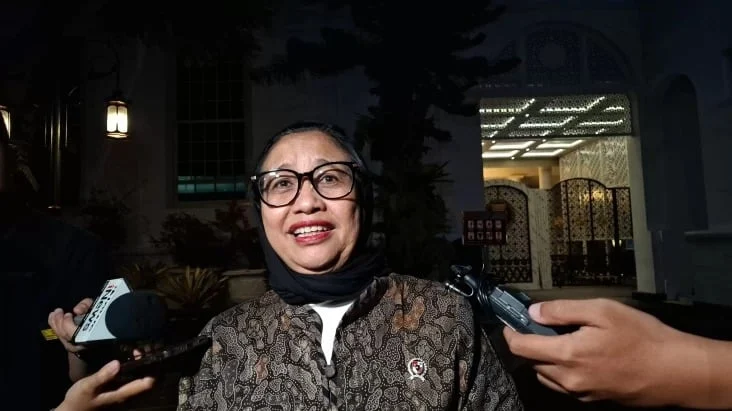
The Attorney General’s Office (Kejagung) announced today, Wednesday, July 22, 2026, that while there are no immediate plans for an examination, it remains open to questioning Nanik Sudaryati Deyang, popularly known as Nanik S Deyang, in connection with the ongoing investigation into alleged corruption surrounding a multi-billion-rupiah government procurement scheme, referred to as the MBG case. This development follows Ms. Deyang’s abrupt resignation earlier today from her prominent position as the head of the National Nutrition Agency (BGN), a move that has sent ripples across the political and administrative landscape.
Anang Supriatna, the Head of the Legal Information Center (Kapuspenkum) at Kejagung, confirmed that investigators are currently prioritizing other witnesses deemed crucial for strengthening the evidentiary basis of the complex MBG case. However, he emphasized that the possibility of summoning Ms. Deyang for clarification or testimony in the future remains a live option, contingent upon the evolving needs of the investigative team. "For this week, there is no schedule for summoning her, but going forward, it is not impossible, as long as investigators deem it necessary for the purpose of proof," Anang stated when contacted for comment. He reiterated that the focus remains on building a robust case through the examination of key witnesses who can provide strong probative value.
The MBG case, which has been under intense scrutiny for several months, involves allegations of widespread corruption, including bid rigging, inflated pricing, and kickbacks, within a significant government procurement project. While the specifics of the project remain partially under wraps due to ongoing investigations, sources suggest it pertains to a large-scale national infrastructure or social welfare initiative designed to enhance public services across multiple provinces. The alleged financial losses to the state are estimated to run into the trillions of rupiah, making it one of the most high-profile corruption probes undertaken by Kejagung in recent years.
Background and Chronology of Events
The investigation into the MBG case began to gather momentum in late 2025, following initial reports and public complaints regarding irregularities in the tender process and execution of a major government contract. By early 2026, the Attorney General’s Office had escalated its inquiry to a full-blown investigation, identifying several initial suspects and initiating a series of witness examinations. The public profile of the case significantly increased as allegations pointed towards potential involvement of high-ranking officials and influential figures within state-owned enterprises and government agencies.
Nanik S Deyang’s name, though not initially among the primary suspects, reportedly emerged in connection with the case through various testimonies and financial transaction analyses conducted by Kejagung. Her role as the head of the National Nutrition Agency (BGN) placed her in a position of significant influence, particularly concerning policies related to food security, public health, and nutritional programs, which are often intertwined with large-scale procurement and distribution initiatives. While the direct link between her official duties at BGN and the MBG case has not been explicitly detailed by Kejagung, speculation has mounted regarding her potential knowledge of, or even indirect involvement in, the alleged malpractices during her tenure or in a previous capacity.
The announcement of Ms. Deyang’s resignation from BGN earlier today, communicated through a brief statement citing "personal reasons," came as a surprise to many, especially given the intensifying scrutiny surrounding the MBG case. Her departure has inevitably fueled speculation that it might be a pre-emptive measure to mitigate public pressure, or perhaps to allow her to focus entirely on potential legal challenges without compromising her official duties. This move preceded Kejagung’s statement, creating a perception of a coordinated sequence of events in the public eye.
The Role of the National Nutrition Agency (BGN)
The National Nutrition Agency (Badan Gizi Nasional – BGN) plays a critical role in Indonesia’s public health landscape. Established with the mandate to formulate and implement national policies related to nutrition, food security, and public health, BGN is responsible for overseeing various programs aimed at improving the dietary intake of the population, reducing malnutrition, and promoting healthy lifestyles. Its programs often involve substantial government funding for initiatives such as food aid distribution, nutritional education campaigns, and procurement of essential dietary supplements.
As the head of BGN, Nanik S Deyang held a position of considerable administrative power and influence over these critical programs. Her tenure was marked by efforts to streamline the delivery of nutritional aid and enhance public awareness campaigns. Given the nature of the MBG case, which is believed to involve large-scale procurement, the potential nexus between BGN’s activities or related policy frameworks and the alleged corruption scheme cannot be entirely discounted by investigators. This structural proximity makes any figure leading such an agency a person of interest in broad corruption probes involving government contracts.
Statements and Reactions from Related Parties
Following Ms. Deyang’s resignation and Kejagung’s subsequent statement, reactions have been varied across different sectors. While Ms. Deyang herself has yet to issue a detailed public statement beyond the "personal reasons" cited in her resignation, legal experts and civil society organizations have weighed in on the implications.
Legal Experts: Prominent legal analysts have noted that a resignation from a public office, while significant, does not absolve an individual of potential legal responsibility. Professor Budi Santoso, a constitutional law expert from the University of Indonesia, commented, "While it is her prerogative to resign, such a move during an active investigation often raises questions. It could be seen as an attempt to avoid the intense scrutiny that comes with holding public office while under investigation, or it could be a strategic decision to focus on her legal defense without the added burden of administrative duties." He further added that Kejagung’s stance of not ruling out an examination is standard procedure, emphasizing that the investigative body must follow all leads irrespective of an individual’s current official status.
Government Response: An interim head for BGN is expected to be appointed swiftly to ensure the continuity of its vital programs. A spokesperson from the Presidential Palace, speaking on condition of anonymity, indicated that the government remains committed to upholding principles of good governance and combating corruption. "The government respects Ms. Deyang’s decision to resign and fully supports the Attorney General’s Office in its efforts to thoroughly investigate any allegations of corruption. No one is above the law, and transparency is paramount," the spokesperson stated. This reaffirms the administration’s public commitment to its anti-corruption agenda.
Anti-Corruption Watchdogs: Civil society groups and anti-corruption watchdogs have welcomed Kejagung’s firm stance. Mr. Harsono Wijaya, coordinator for the Indonesian Anti-Corruption Movement (Gerakan Anti Korupsi Indonesia – GAKI), urged Kejagung to maintain its independence and thoroughness. "The resignation of a high-ranking official amidst a corruption probe is a critical moment. It is imperative that Kejagung demonstrates its resolve to pursue justice without fear or favor. All individuals connected, directly or indirectly, must be examined to ensure full accountability and transparency in the MBG case," Wijaya asserted. GAKI has consistently advocated for greater transparency in government procurement processes and harsher penalties for corruption offenses.
Broader Impact and Implications
The developments surrounding Nanik S Deyang and the MBG case carry significant implications for various sectors.
Impact on BGN and Public Services: The immediate challenge for the National Nutrition Agency will be to maintain operational stability and public trust during this period of transition. Any disruption in leadership or public perception could potentially affect the implementation of crucial nutritional programs, especially those targeting vulnerable populations. Ensuring a smooth handover and reaffirming the agency’s commitment to its mission will be paramount.
Government’s Anti-Corruption Image: The outcome of the MBG case, and specifically the thoroughness with which Kejagung handles potential examinations of high-profile individuals like Ms. Deyang, will be a significant test for the government’s anti-corruption credentials. A robust and transparent investigation could bolster public confidence in state institutions and signal a strong deterrent against future malfeasance. Conversely, any perceived lack of resolve or preferential treatment could erode public trust and invite criticism from both domestic and international observers.
Precedent for Public Officials: This case could set an important precedent regarding the accountability of public officials, even those who resign from their posts. It reinforces the principle that resignation does not equate to immunity from legal inquiry, particularly when allegations of corruption arise from actions taken during their tenure. This could encourage greater ethical conduct among civil servants and state officials.
Economic and Investment Climate: Large-scale corruption cases, particularly those involving significant government procurement projects, can have adverse effects on the national economy and deter foreign investment. Investors typically seek stability, transparency, and a predictable legal environment. A strong stance against corruption, demonstrated through effective prosecution, can help improve the investment climate by signaling a commitment to good governance.
As the investigation into the MBG case continues, all eyes will remain on Kejagung to see how it navigates the complexities of the probe, especially concerning high-profile figures. The Attorney General’s Office has reiterated its commitment to pursuing all leads and ensuring that justice is served, regardless of the individual’s position or influence. The possibility of Nanik S Deyang’s examination looms as a critical juncture in this unfolding corruption saga, underscoring the government’s ongoing fight against graft and its impact on national development and public welfare.