Technical expertise is no longer the sole currency for success in the competitive landscape of the modern construction industry, as soft skills such as communication, transparency, and client management emerge as critical determinants for long-term career sustainability. While traditional vocational training has long prioritized the mastery of masonry, electrical wiring, and painting, a growing initiative is shifting the paradigm to address a significant "soft skill gap" that often plagues informal sector workers. By fostering better client-worker dynamics, initiatives like "Kisah Tukang" are attempting to transform how independent construction professionals navigate the complexities of project delivery, thereby securing repeat business and enhancing their overall professional reputation in a crowded market.
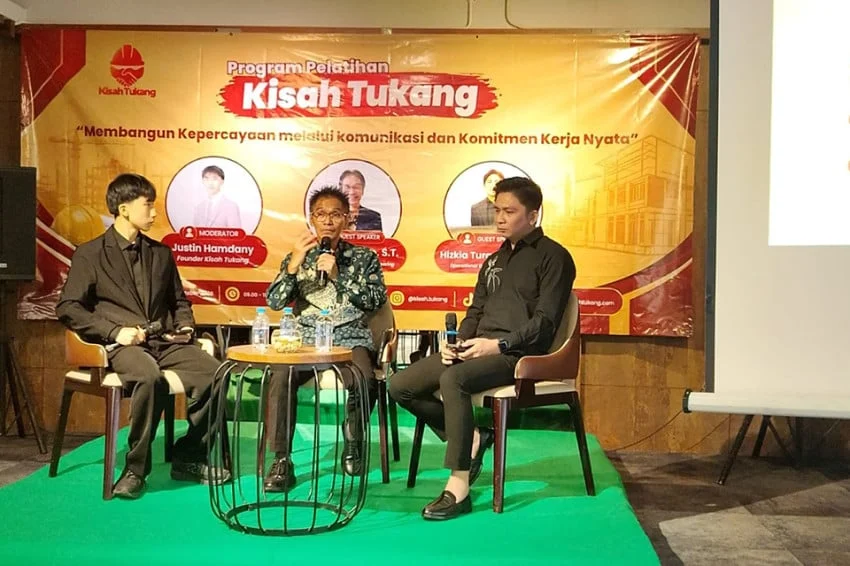
The urgency of this shift was highlighted during a specialized training session held on Friday, October 23, 2026, at the Hotel Posto Dormire Susilo in West Jakarta. Titled "Building Trust through Communication and Tangible Work Commitment," the workshop brought together 53 informal construction workers—ranging from general masons and carpenters to specialized painters—to address the perennial challenges of the construction trade. The event served as a focal point for discussing the friction points that frequently arise during residential and commercial projects: misaligned expectations, mid-project design changes, supply chain delays, and the delicate management of client complaints.
The Genesis of the Kisah Tukang Initiative
The initiative was founded by Justin Hamdany, who observed a recurring pattern of economic instability among skilled laborers. In his dialogues with workers across the Greater Jakarta area, Hamdany noted a profound disconnect between the high quality of craftsmanship and the workers’ inability to sustain consistent employment. Many of these individuals had spent decades refining their technical skills through apprenticeship and field experience, yet they remained vulnerable to the "feast or famine" cycle that defines much of the informal construction market.
Hamdany’s observations revealed that when a project concludes, many talented workers struggle to find new leads, often because their professional network is limited to word-of-mouth recommendations that lack a formal layer of trust-building. Recognizing that technical ability alone does not guarantee a steady stream of income, Hamdany conceptualized Kisah Tukang as a bridge between raw skill and professional maturity. The goal is not merely to teach a trade, but to provide the pedagogical framework for project management, customer service, and professional conduct.
The Anatomy of Communication Failures in Construction
In the construction sector, the "triangle of friction"—comprising the project owner, the foreman, and the worker—is a frequent site of operational failure. Industry data suggests that a significant percentage of construction disputes arise not from physical defects, but from cognitive dissonance regarding the final output. When communication regarding design intent, material quality, and timeline constraints is vague, the resulting gap between the client’s vision and the worker’s execution often leads to financial losses, project abandonment, or litigation.
During the Jakarta workshop, participants dissected real-world scenarios that illustrate these pitfalls. A primary point of contention is often the "as-built" reality versus the "conceptual" design. When a client requests a design change halfway through a renovation, a worker who lacks strong communication skills may either blindly agree—leading to budget overruns—or flatly refuse, causing friction. The training emphasized the necessity of proactive negotiation: explaining the implications of design changes on both the budget and the structural integrity of the project before any work commences.
Furthermore, the session addressed the issue of material procurement. In the Indonesian informal sector, workers are often tasked with managing material budgets. Delays in delivery or the procurement of substandard items are common triggers for client distrust. By training workers to provide transparent, itemized updates and to manage expectations regarding lead times, the initiative aims to replace suspicion with a professional partnership model.
Contextualizing the Informal Construction Sector in Indonesia
The relevance of this training is underscored by the broader economic context of Indonesia’s construction sector. According to data from the Ministry of Public Works and Housing (PUPR), the construction industry remains one of the largest employers of labor in the country. However, a significant portion of this workforce operates within the informal sector, lacking formal certification or standardized business training.
The government has recognized this vulnerability, as evidenced by various state-led initiatives aimed at professionalizing the workforce, such as the training programs designed for the construction of the New Capital City (IKN) in East Kalimantan. The government’s efforts to certify workers are largely technical in nature, focusing on safety standards, structural engineering compliance, and the use of modern machinery. Kisah Tukang fills a critical niche by addressing the "human element" that official government certifications often overlook. While a certificate may prove a worker can pour concrete according to code, it does not certify their ability to handle a difficult client, manage a project schedule, or negotiate a fair contract—skills that are arguably just as essential for the survival of a micro-enterprise.
Official Responses and Industry Implications
While there is no formal legislative mandate requiring "soft skills" training for construction workers, industry experts suggest that the market is beginning to self-regulate. Homeowners and small-scale developers are increasingly using digital platforms to source labor, where ratings and reviews serve as the new currency of trust. In this digital-first ecosystem, a worker’s ability to communicate clearly, show up on time, and provide regular, polite updates directly influences their digital reputation.
"We want to help our fellow workers develop communication skills, increase their professionalism, and assist them in cultivating healthy relationships with their clients," Justin Hamdany stated during the event. This sentiment reflects a growing trend of "social entrepreneurship" within the labor sector, where the goal is to raise the floor for the entire industry rather than merely optimizing individual production.
The implications for the construction industry are profound. If the informal sector can successfully adopt these professional standards, it could lead to:
- Reduced Project Costs: Improved communication leads to fewer errors, less rework, and more accurate budget forecasting, ultimately saving money for both the worker and the client.
- Increased Labor Productivity: Workers who are empowered to manage their own projects and communicate effectively are less likely to encounter "bottleneck" scenarios where work stops due to uncertainty.
- Better Consumer Confidence: A more professional workforce encourages property owners to engage in more renovation and construction projects, stimulating the local economy.
- Standardization of Business Practices: As these training models proliferate, they could set a new industry benchmark for what constitutes a "professional" service in the informal sector.
A Chronology of Professional Development
The trajectory of this movement can be traced back to the post-pandemic recovery phase, where the construction industry saw a surge in residential renovation projects. As homeowners spent more time in their living spaces, demand for high-quality, reliable, and communicative contractors skyrocketed. However, the supply side remained fragmented.
By mid-2025, several grassroots organizations began identifying that the primary complaint from homeowners was not the quality of the finish, but the lack of transparency. In response, 2026 has seen a surge in targeted workshops. The October 23 session at Hotel Posto Dormire represents a maturation of these efforts, moving beyond simple "how-to" seminars toward comprehensive business management workshops.
Looking Ahead: The Future of the Skilled Labor Force
The success of the "Building Trust through Communication" initiative will ultimately be measured by the retention rates of the participating workers and their ability to command better rates for their services. As the construction industry continues to integrate with digital tools, the "tukang" of the future will need to be as comfortable with a messaging app and a digital invoice as they are with a hammer and trowel.
The broader lesson from the Kisah Tukang initiative is that professionalization is not an elite concept reserved for corporate contractors. It is a fundamental requirement for anyone operating in a service-based economy. By prioritizing interpersonal competence alongside technical skill, Indonesia’s construction workers are positioning themselves to thrive in a market that increasingly values accountability, reliability, and clear communication as much as it values the structural integrity of the buildings they construct.
As this trend continues, the industry is likely to see a shift toward a more formalized, transparent, and efficient informal labor market. This evolution does not just benefit the individual worker; it elevates the standards of the entire construction ecosystem, ensuring that the foundational work of building the nation is performed by a workforce that is as intellectually equipped as it is physically capable. The transformation of the "tukang" from a traditional laborer to a modern, professional service provider is well underway, setting a new precedent for the future of construction in Indonesia.