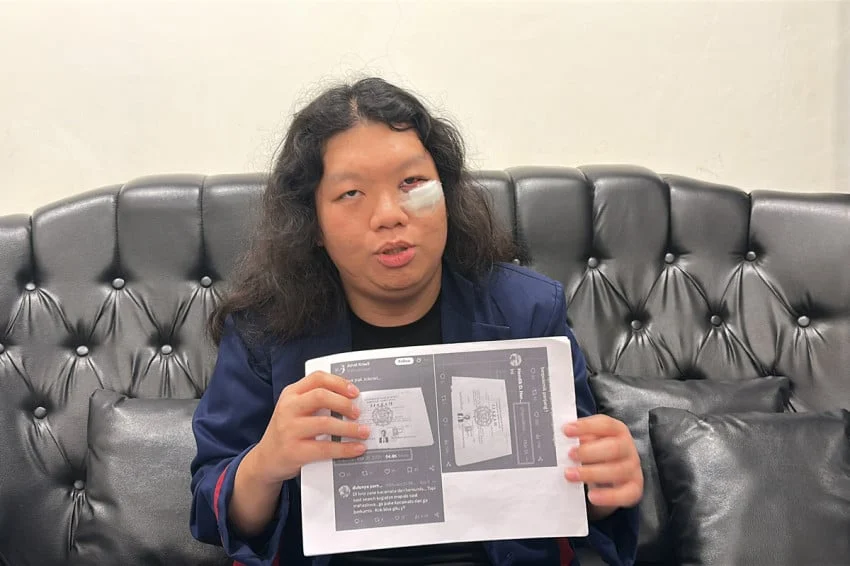
The safety of civil society advocates and political activists in Indonesia has once again been thrown into the spotlight following a violent assault on Luke Susilo, a prominent activist affiliated with the Gerakan Terus Jadi Anti Pembual (Terjal) movement. Susilo was reportedly attacked by two unidentified individuals late Thursday evening, November 5, 2026, near the East Jakarta District Court. The incident has sent shockwaves through local activist circles, prompting renewed concerns over the rising vulnerability of individuals monitoring politically sensitive legal proceedings.
According to medical reports and statements gathered from the victim, the assault resulted in severe physical trauma, specifically a deep laceration beneath the eye that required immediate, specialized intervention by a plastic surgeon. The attack has not only sparked outrage among human rights defenders and civil society organizations but has also reignited national discussions regarding the protection of free speech, political dissent, and the rule of law in contemporary Indonesia.
Chronology of the Incident
The events leading up to the assault began earlier in the day on November 5, 2026. Luke Susilo was attending and monitoring court proceedings at the East Jakarta District Court. The trial in question revolved around a high-profile case concerning the authenticity of former President Joko Widodo’s university diploma—a contentious public issue that has drawn significant media attention and public polarization. Among the defendants in the monitored proceedings were public figures Roy Suryo and Dr. Tifa, both of whom have been vocal critics involved in various legal challenges against state policies and historical records.
As the court session concluded late in the evening, Susilo left the courthouse premises intending to return home. At approximately 11:00 PM Western Indonesia Time (WIB), while walking toward the Penggilingan Transjakarta bus stop near the district court, the situation escalated into a physical confrontation.
Preliminary investigations and the victim’s account indicate that the physical altercation was preceded by a verbal exchange. While walking, Susilo overheard a conversation between two pedestrians—an adult man and woman—who were loudly discussing the severe legal penalties associated with the Electronic Information and Transactions (ITE) Law, specifically pointing to a potential 12-year prison sentence under Article 35.
Prompted by the overheard conversation, Susilo reportedly made a spontaneous remark concerning broader political narratives. His comments touched upon sensitive national security topics, including allegations of treason (makar) and purported wiretapping activities involving President Prabowo Subianto, alongside references to former National Police Chief General Listyo Sigit Prabowo. Shortly after this verbal exchange, two unknown individuals approached Susilo and subjected him to a sudden physical assault before fleeing the scene into the surrounding neighborhood.
Context and Broader Implications
The attack on Luke Susilo does not occur in a vacuum. It takes place against a backdrop of increasing friction between state authorities, legal bodies, and various political opposition groups or anti-corruption activists. Monitoring trials that involve high-profile political figures—such as the ongoing disputes over former President Joko Widodo’s credentials or cases managed under the stringent provisions of the ITE Law—often places activists in volatile environments.

Civil society watchdogs have long argued that public observers, journalists, and activists face disproportionate risks when engaging with politically sensitive trials. The use of the ITE Law, in particular, has been a frequent subject of debate among legal scholars and human rights advocates, who contend that certain articles are overly broad and can be weaponized to suppress critical public discourse.
Furthermore, incidents of physical violence directed at individuals involved in public accountability campaigns undermine the foundational principles of a democratic state. When activists monitoring court proceedings are targeted with street-level violence, it creates a chilling effect on freedom of assembly and the public’s right to transparent judicial oversight. Legal analysts point out that intimidation tactics not only harm the immediate victims but also erode public trust in the institutional safety of the justice system, where courts should ideally remain neutral and secure zones for all participants, observers, and critics alike.
Reactions from Civil Society and Legal Observers
In the wake of the assault, various civil society organizations have expressed deep concern over the physical safety of political activists in Indonesia. The incident has drawn immediate comparisons to previous high-profile attacks on human rights defenders, such as acid attacks and street-level harassments that have historically plagued transparency advocates in the country.
Legal aid organizations and activist networks have called upon local law enforcement agencies to conduct a swift, thorough, and transparent investigation to identify and apprehend the perpetrators. There is mounting pressure on the Jakarta Metropolitan Police and the East Jakarta Sub-regional Police to review surrounding CCTV footage, interview potential eyewitnesses, and determine whether the attack was a random act of street violence or a targeted retaliation connected to Susilo’s activism and his presence at the East Jakarta District Court.
Representatives from Terjal have asserted that they will not be intimidated by acts of violence aimed at silencing their advocacy. They maintain that monitoring judicial processes is a constitutional right protected under Indonesian law, and any attempt to deter citizens from exercising this right through physical force represents a direct threat to democratic governance.
Looking Ahead
As Luke Susilo continues his medical recovery under the care of surgical specialists, the broader implications of the attack remain a critical focal point for legal experts and human rights advocates in Indonesia. The case serves as a stark reminder of the physical perils faced by those who challenge established narratives or participate in the public monitoring of politically charged litigation.
Law enforcement authorities are under intense public scrutiny to deliver results in the investigation. The outcome of the police inquiry will likely set a significant precedent regarding the state’s capacity and commitment to safeguarding political activists, ensuring that public oversight of the judiciary can continue free from fear, intimidation, and physical harm.