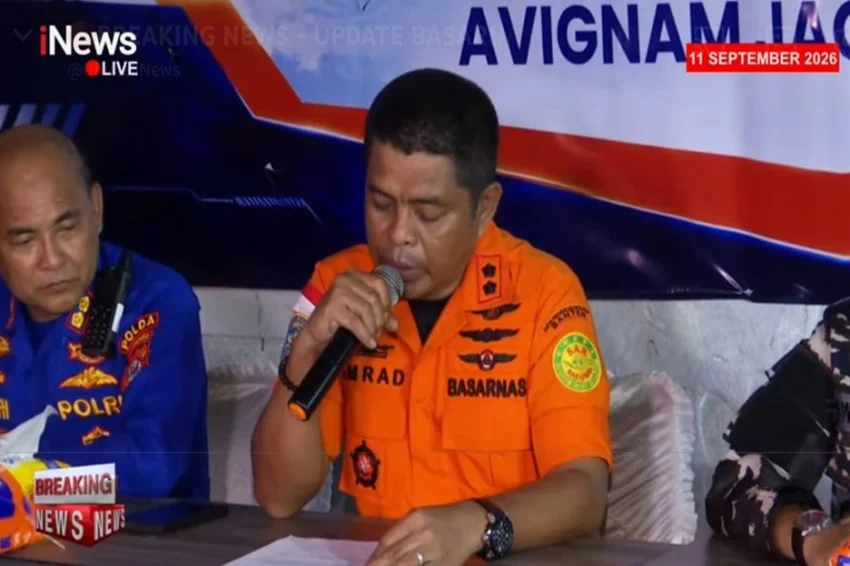
The search and rescue operation led by the Banten Search and Rescue Office (Basarnas) has entered a critical phase as joint teams intensify efforts to locate five journalists and ship crew members who lost contact while covering the activity of Mount Anak Krakatau. The incident has drawn widespread national attention, prompting an exhaustive multi-sector search operation involving maritime, land, and aerial assets to sweep the treacherous waters and islands surrounding one of Indonesia’s most active and volatile volcanic peaks. Despite favorable weather conditions allowing for comprehensive coverage across designated search zones, initial sweeps have yielded no definitive signs of the missing individuals, escalating anxiety among families, media organizations, and the broader journalistic community across the archipelago.
Comprehensive Land and Maritime Search Operations
Amrad, the Head of the Banten Search and Rescue Office, provided an official update detailing the deployment of tactical units assigned to locate the missing vessel and its occupants. According to Amrad, the search strategy on the designated operational day incorporated extensive terrestrial sweeps across several strategic islands situated in close geographical proximity to Mount Anak Krakatau.
"We are conducting systematic sweeps around the Anak Krakatau area, focusing on key designated points," Amrad stated, outlining the tactical deployment of personnel on the ground.
The operation involved specialized rescue personnel executing thorough coastal and inland searches across three distinct islands surrounding the volcanic complex. Operating under a tight operational window dictated by daylight and sea conditions, the search teams maintained ground operations for approximately three hours per sector.
"Our personnel conducted ground sweeps across three islands surrounding Mount Anak Krakatau for roughly three hours. Fortunately, the weather conditions were supportive," Amrad noted.
Despite the favorable meteorological conditions that allowed rescue boats and aerial surveillance units to operate without major disruptions, the intensive sweeps across four primary operational sectors and one specialized sector—which included aerial reconnaissance flights—concluded without positive results.
"The search concluded with a nil result across all four standard sectors and one special sector, including the aerial search component that we conducted," Amrad confirmed.
Chronology of the Incident and Escalation
The sequence of events began when a vessel carrying a reporting team comprising professional journalists and necessary ship crew embarked on a journalistic assignment to document the heightened volcanic activity of Mount Anak Krakatau. The Sunda Strait, where the volcano is located, is historically recognized as a zone requiring stringent maritime navigation protocols, particularly due to ongoing volcanic unrest, shifting underwater topography, and unpredictable meteorological changes.
As the vessel approached the designated monitoring perimeter near the volcanic island, communication channels with the shore-based desk and colleagues abruptly failed. Initial attempts by media headquarters to re-establish contact via marine radio and cellular networks proved unsuccessful. Following standard emergency notification protocols, maritime authorities and Basarnas were alerted to the lost contact status of the vessel.
Upon receiving the distress notification, Basarnas Banten immediately mobilized a unified command center, coordinating resources from the Indonesian Navy, water police, local volunteer organizations, and disaster management agencies. The operation was divided into distinct search sectors to maximize coverage area while mitigating risks to rescue personnel operating in proximity to an active volcano capable of sudden phreatic or strombolian eruptions.
Background Context: The Volcanic Hazard of Mount Anak Krakatau
Mount Anak Krakatau, which translates to "Child of Krakatoa," emerged from the caldera of the legendary Krakatoa volcano, which cataclysmically erupted in 1883. Situated in the Sunda Strait between the islands of Java and Sumatra, Anak Krakatau has been in an intermittent state of active volcanism since its emergence above sea level in the 1920s. The volcano remains under continuous observation by the Center for Volcanology and Geological Hazard Mitigation (PVMBG), given its history of rapid growth, flank collapses, and hazardous explosive events.
Reporting on volcanic activity in this region carries inherent occupational hazards. Journalists and media crews frequently deploy to the Sunda Strait to document eruptions, lava flows, and ash plumes to keep the public informed about natural hazards. However, the dynamic environment—characterized by sudden sea turbulence, toxic volcanic gases, and the potential for localized tsunamis triggered by underwater landslides—demands rigorous adherence to safety protocols. The disappearance of the five individuals highlights the profound risks journalists routinely assume in the field of disaster and environmental reporting.
Solidarity and Public Response: Solidarity Vigils and Prayers
As the search operation extended into its subsequent days without concrete breakthroughs, the journalistic community mobilized in solidarity with the missing individuals and their families. Organizations such as the Alliance of Independent Journalists (AJI), the Indonesian Photojournalists (PFI), and various press freedom advocacy groups organized public solidarity gatherings, prayer sessions, and media vigils.
Notably, the Jakarta chapter of the Indonesian Photojournalists (PFI Jakarta) hosted a public solidarity and prayer event at prominent public gathering spaces, including the Bundaran HI area in central Jakarta. Fellow journalists, photographers, and members of the public gathered to offer prayers for the safe rescue of the five missing colleagues. The emotional gatherings served as a poignant reminder of the vital role media workers play in high-risk environments and underscored the collective anxiety shared by the national press corps regarding the safety of front-line reporters.
Family members of the missing journalists and crew have maintained a constant vigil at the makeshift crisis coordination posts established near the departure ports in Banten. Local authorities, alongside psychological support teams deployed by social agencies, have been providing counseling and regular briefings to the families to keep them informed of the tactical progress and challenges encountered by the rescue teams.
Methodology and Challenges of the Search and Rescue Mission
The ongoing search and rescue mission faces logistical and environmental complexities inherent to the geography of the Sunda Strait. The primary challenges identified by maritime coordination units include:
- Maritime Currents and Drift Patterns: The waters surrounding Mount Anak Krakatau are influenced by complex tidal currents flowing between the Java Sea and the Indian Ocean. Search models must account for drift calculations based on wind speed, wave action, and tidal coefficients to project the potential trajectory of a drifting or submerged vessel.
- Volcanic Exclusion Zones: The active status of Mount Anak Krakatau imposes safety restrictions on rescue vessels and aircraft. Operating too close to the crater exposes teams to sudden ejecta, falling ash, and ballistic projectiles, necessitating a calculated balance between operational reach and personnel safety.
- Subsurface Hazards: The topography surrounding the volcano includes steep underwater slopes and remnants of past collapses, complicating sonar deployment and underwater ROV (Remotely Operated Vehicle) operations.
- Visibility and Atmospheric Conditions: While recent days experienced favorable weather, tropical maritime climates in the Sunda Strait are notoriously volatile, subject to sudden squalls, heavy fog, and blinding rainstorms that can abruptly suspend aerial and visual search components.
Despite these hurdles, Basarnas has affirmed its commitment to maintaining the search operation in accordance with standard international search and rescue (SAR) protocols, which dictate the continuation of active sweeps for a mandatory duration unless compelling evidence dictates a reassessment of the mission phase.
Implications for Media Safety and Disaster Reporting Protocols
The incident involving the missing journalists and crew near Mount Anak Krakatau has triggered critical evaluations within media institutions regarding safety protocols for field reporting in hazardous environments. Industry observers and press safety advocates are emphasizing several key implications and necessary reforms:
- Mandatory Risk Assessments: Media houses are being urged to implement rigorous pre-assignment risk evaluations before deploying personnel to active disaster zones, volcanic areas, and high-risk maritime zones.
- Advanced Communication Technology: The reliance on standard mobile communication is often inadequate in remote maritime or mountainous regions. The incident underscores the necessity of outfitting field crews with satellite communication devices, personal locator beacons (PLBs), and real-time GPS tracking systems.
- Comprehensive Safety Training: Journalists assigned to environmental and disaster beats require specialized training in survival skills, maritime safety, volcano hazard awareness, and emergency evacuation procedures.
- Institutional Responsibility: Media management carries an ethical and legal obligation to ensure that reporters and crew members are provided with adequate personal protective equipment (PPE), reliable transport vetted for specific environmental conditions, and clear protocols for aborting missions when safety thresholds are breached.
As the search operation continues under the coordination of Basarnas Banten, federal agencies, local authorities, and the media community remain steadfast in their efforts. The primary focus remains firmly fixed on locating the missing five individuals, while the broader national conversation turns toward reinforcing the safety architecture that protects those who document the raw and often perilous forces of nature.