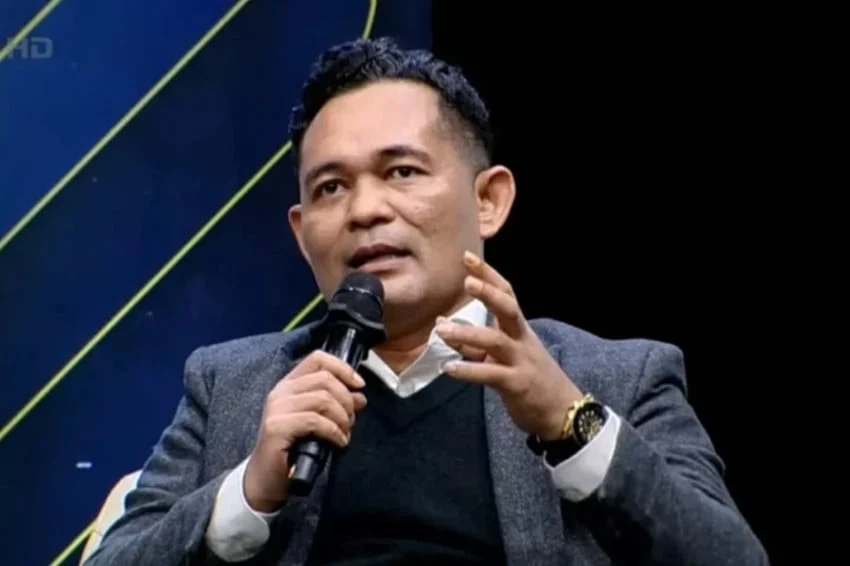
The Indonesian security landscape is currently bracing for a series of potential public mobilizations widely identified in intelligence reports as the "Black September" movement. As concerns mount regarding the stability of the capital and surrounding urban centers, Boni Hargens, a prominent analyst specializing in politics, law, and intelligence, has voiced his confidence in the Indonesian National Police (Polri) to maintain national order while upholding constitutional mandates. This period, historically marked by heightened socio-political tension in Indonesia, requires a delicate balance between public safety and the fundamental right to freedom of expression.
The Context of Black September
The term "Black September" has gained traction within security circles and social media discourse, signaling a potential wave of organized protests and demonstrations scheduled throughout the month. While the specific objectives of these planned actions remain diverse—ranging from socio-economic grievances to political demands—the primary concern for the state is the potential for these movements to escalate into civil unrest or disrupt public infrastructure.
In Indonesia, September carries a heavy historical weight, often associated with political activism and commemorations of past national events. Security analysts observe that this specific month is frequently utilized as a focal point for various grassroots organizations to demand policy reforms. The current iteration of these movements is being monitored by the Indonesian National Police (Polri) to ensure that the constitutional right to protest, guaranteed under Law No. 9 of 1998, does not infringe upon the safety and rights of the broader public.
Evaluating the Polri Mandate: The PRESISI Paradigm
At the core of the state’s response is the internal framework known as "PRESISI"—an acronym representing Prediktif (Predictive), Responsibilitas (Responsibility), and Transparansi Berkeadilan (Transparency and Justice). Introduced by Chief of National Police General Listyo Sigit Prabowo, this paradigm represents a shift toward more sophisticated, intelligence-led policing.
Boni Hargens emphasizes that the effectiveness of the current security strategy hinges on the "Predictive" component. By utilizing advanced data analytics and on-the-ground intelligence, the police aim to identify potential flashpoints before they manifest into large-scale disturbances. "This approach encourages the police to be proactive rather than reactive," Hargens noted during a media briefing in Jakarta. By prioritizing de-escalation tactics and open communication channels with civil society groups, the police aim to mitigate the necessity of forceful interventions.
The shift toward a more nuanced approach is not merely a tactical preference; it is a response to the evolving expectations of the Indonesian public. In a democratic society, the legitimacy of the police force is often judged by how it handles dissent. Consequently, the command structure is under pressure to prove that it can manage high-tension scenarios without resorting to the heavy-handed tactics that characterized security operations in the pre-reform era.
Chronology of Pre-Event Monitoring
The intelligence community and law enforcement agencies have been tracking the indicators of Black September since late August. According to internal reports, the following timeline highlights the progression of the government’s preparedness:
- Late August: Monitoring of digital chatter and organized group meetings began, identifying early calls for rallies to be held throughout September.
- Early September: The National Police conducted a series of internal briefings to synchronize regional command strategies, emphasizing the "soft approach" to crowd management.
- September 10, 2026: Senior police officials, including the Deputy Chief of the National Police, issued formal public statements urging caution and requesting that potential protesters remain within the bounds of legal regulations.
- Current Phase: Ongoing intelligence gathering continues to assess the risk levels of specific locations, with increased patrol activity observed around government buildings and vital economic hubs.
Supporting Data and Institutional Readiness
The capacity of Polri to manage large-scale civil activity is supported by years of institutional growth and the adoption of technology-driven security systems. Data from previous large-scale demonstrations in Jakarta—including the 2019 and 2020 major protests—suggests that the police have significantly improved their logistics, personnel coordination, and communication strategies.
Furthermore, the integration of the "Electronic Traffic Law Enforcement" (ETLE) and digital monitoring systems has allowed for more efficient crowd control. By utilizing surveillance technology, security forces can now monitor crowd density and movement in real-time, allowing for rapid deployment of resources where they are most needed. This technological edge is intended to minimize the duration of road closures and reduce the disruption to the daily lives of citizens.
However, the challenge remains the human element. The police face the constant difficulty of maintaining discipline among thousands of officers deployed in highly stressful environments. Hargens argues that the success of these operations depends on the consistency of the chain of command, ensuring that every officer on the ground adheres to the standard operating procedures that emphasize human rights.
Official Responses and Public Safety Mandates
The Deputy Chief of the National Police (Wakapolri) has explicitly urged the public to remain vigilant and to verify information circulating regarding the "Black September" actions. The police warn that the dissemination of misinformation or the incitement of violence during these periods can lead to criminal consequences.
The police mandate is two-fold:
- The Protection of Rights: Ensuring that the right to freedom of speech and assembly is protected, as mandated by the 1945 Constitution.
- The Maintenance of Kamtibmas: Upholding public order (Keamanan dan Ketertiban Masyarakat) to ensure that the economy and public services remain uninterrupted.
Government officials have also stressed that the police are not the only stakeholders in this situation. Local community leaders, student organizations, and political figures are being encouraged to engage in dialogue to prevent the need for street protests. This collaborative approach, often referred to as "community policing," is central to the strategy of minimizing social friction.
Broader Implications for National Stability
The handling of the Black September phenomenon serves as a litmus test for the stability of the national security apparatus. In a geopolitical context where internal stability is crucial for economic growth, any significant breakdown in order could deter foreign investment and disrupt supply chains.
The implications of the current security strategy are significant for several reasons:
- Democratic Consolidation: The manner in which the police manage these events will influence public trust in the institution. Successful de-escalation confirms the maturity of the Indonesian democratic process.
- Operational Standards: If the police can navigate the month without major incidents, it will likely cement the PRESISI framework as the permanent standard for future police operations in the country.
- Public Perception: The media coverage of these events will play a critical role in shaping the narrative. Transparency in police communications will be essential to counter the influence of radical elements that might attempt to hijack legitimate protest movements for destructive ends.
Analysis: Beyond the Protests
Boni Hargens observes that the focus should not only be on the potential for conflict but on the underlying issues that drive these movements. "The police can manage the symptoms of unrest, but the resolution of the issues behind them requires political and social dialogue," he explained.
While the police are tasked with the "pro justitia" (for the sake of justice) enforcement of the law, the long-term solution to the recurrence of "Black September" events lies in the ability of the state to address the grievances of its citizens through formal legislative and policy channels. When citizens feel that their voices are heard and that their grievances are being addressed, the motivation for disruptive street protests naturally diminishes.
As September progresses, the focus remains on the streets of Jakarta and other major cities. The Indonesian National Police are currently in a heightened state of readiness, balancing the constitutional mandate to allow for freedom of expression with the equally important duty of ensuring that the public remains safe. The confidence expressed by observers like Boni Hargens suggests that, despite the challenges, the state is better prepared now than it has been in previous years to manage the intersection of political activism and public security.
In conclusion, the situation serves as a reminder of the evolving nature of democracy in Indonesia. The balance between freedom and order is a constant work in progress, and the events of the coming weeks will likely serve as a defining moment for the effectiveness of the modern, PRESISI-based policing model. As all eyes remain on the capital, the primary expectation from the public remains clear: that the rule of law prevails, the rights of the individual are respected, and the stability of the nation remains intact.