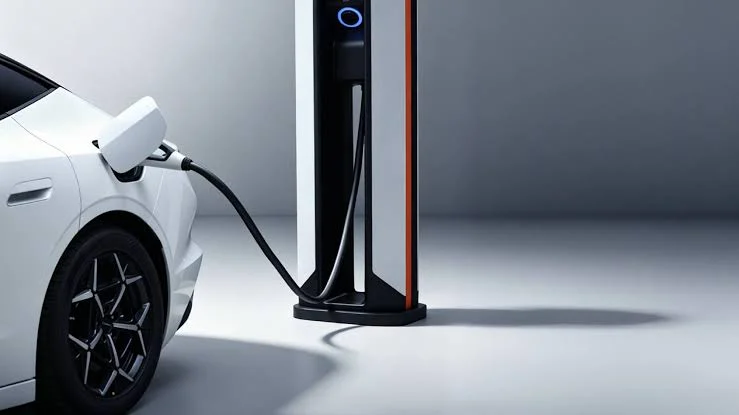
The global electric vehicle landscape is undergoing a monumental paradigm shift, driven primarily by intense technological rivalry among Chinese automotive giants. In a bold move that directly challenges established market leaders such as BYD, major automotive conglomerate Geely Auto has officially unveiled its groundbreaking "Geely Smart Charge" technology. This next-generation ultra-fast charging ecosystem boasts an astonishing peak power delivery of up to 2,250 kilowatts—equivalent to 2.25 megawatts—channeled through a single charging connector. Announced amid an escalating race for supremacy in EV recharging infrastructure, this development shatters previous industry benchmarks and redefines consumer expectations regarding refueling times for battery-powered automobiles.
Main Facts of the Geely Smart Charge Ecosystem
The newly introduced Geely Smart Charge system represents a massive leap forward in high-power energy transfer. At its core, the technology is governed by an advanced artificial intelligence energy management model known as "Xingrui PowerMind." This sophisticated AI architecture is tasked with continuously optimizing energy distribution and managing battery thermal dynamics during ultra-high-current charging sessions.
The system operates across three primary functional pillars: Extreme Charge, Smart Charge, and Auto Charge. Together, these modalities ensure that the immense electrical current delivered to the vehicle is managed safely, efficiently, and with minimal degradation to the underlying battery chemistry. According to industry reports originating from automotive intelligence platforms on September 23, 2026, Geely’s achievement of 2.25 megawatts of peak power through a single connector establishes a brand-new benchmark for the global automotive sector, placing immense pressure on competitors like BYD, CATL, and Nio to accelerate their own research and development pipelines.
Chronology and Background of the Ultra-Fast Charging Race
The genesis of Geely’s record-breaking charging technology can be traced back to the broader, aggressive push by Chinese automakers to eliminate range anxiety and reduce charging times to levels comparable to conventional internal combustion engine refueling. Over the past several years, the Chinese EV market has transitioned rapidly from 400-volt architectures to 800-volt systems, and now, into ultra-high-voltage domains exceeding 1,000 volts.
Throughout 2024 and 2025, various manufacturers vied for supremacy by introducing 400 kW to 600 kW DC fast chargers. However, thermal management remained a critical bottleneck, as pushing massive currents into lithium-ion batteries inevitably generates extreme heat, accelerating capacity degradation and posing safety risks. Recognizing this hurdle, Geely accelerated its integration of AI-driven thermal forecasting.
The culmination of these multi-year engineering efforts materialized in late 2026 with the formal presentation of the Xingrui PowerMind AI model and the subsequent validation testing conducted by authoritative third-party organizations. By bridging the gap between high-voltage electrical engineering and predictive machine learning, Geely successfully transformed theoretical high-power charging into a viable, real-world application.
Supporting Data and Technical Validation
To substantiate claims that often sound more like science fiction than automotive engineering, rigorous empirical data has been provided by independent testing authorities. Data sourced from the official evaluation protocols of the China Automotive Technology and Research Centre (CATARC) sheds light on the actual performance capabilities of the new technology under real-world stress conditions.
In empirical testing involving a Lynk & Co 10 vehicle equipped with the Geely Smart Charge architecture, the system recorded an astonishing measured peak charging power of 1,093 kW. While the theoretical architecture is capable of delivering up to 2,250 kW, this initial real-world implementation demonstrates that even under conservative test parameters, the vehicle can absorb energy at rates previously thought unattainable for passenger cars.
Furthermore, thermal safety metrics recorded during these tests demonstrate the efficacy of Geely’s predictive algorithms. During a comprehensive charging cycle spanning from 10 percent to 97 percent state-of-charge, the battery’s thermal envelope was strictly controlled. The system successfully maintained the battery’s average temperature below 55 degrees Celsius for 57 percent of the total charging duration. The absolute maximum temperature recorded across the entire high-intensity charging event peaked at 64 degrees Celsius—a remarkably safe threshold given the colossal magnitude of energy being transferred in such a condensed timeframe.
The secret behind this thermal stability lies in the system’s advanced predictive thermal algorithm. Unlike reactive cooling systems that respond only after temperature spikes occur, Geely’s AI-driven architecture is capable of anticipating fluctuations in battery temperature a full 30 seconds before they actually manifest. This predictive capability allows the vehicle and the charging station to dynamically modulate current delivery in real time, balancing maximum charging speed with optimal battery preservation.
Industry Implications and Competitive Landscape
The introduction of a 2,250 kW charging system carries profound implications for the global automotive market, particularly in China where charging infrastructure and EV adoption rates lead global trends. For years, BYD has dominated the New Energy Vehicle (NEV) market through vertical integration, cost efficiency, and massive production scale. However, technology-driven differentiation—such as ultra-fast charging and autonomous driving integration—remains a critical battleground where rival automakers like Geely seek to capture market share.
From an infrastructure perspective, deploying single-connector systems capable of delivering over two megawatts of power necessitates a massive overhaul of grid connectivity and localized energy storage solutions. Traditional power grids would suffer catastrophic overloads if multiple 2.25 MW chargers were deployed simultaneously without supplementary buffer batteries or microgrid integration. Consequently, Geely’s technological breakthrough is expected to catalyze parallel investments in energy storage systems and ultra-high-capacity sub-stations across major metropolitan transport corridors.
Moreover, the psychological barrier of refueling times is rapidly dissolving. If commercialized at scale, technologies derived from the Geely Smart Charge platform could enable electric vehicles to replenish hundreds of kilometers of driving range in the time it takes a driver to step out of the car, purchase a beverage, and return to the driver’s seat. This parity with gasoline-powered vehicles effectively neutralizes one of the primary consumer arguments against transitioning to electric mobility.
Looking ahead, industry analysts anticipate that competitors will respond with their own iterative improvements, potentially pushing multi-megawatt charging from a proprietary luxury feature into an expected industry standard for premium and high-performance electric vehicles. As Geely continues to roll out this technology across its diverse brand portfolio—which includes Zeekr, Lynk & Co, Polestar, and Volvo—the pressure on global legacy automakers and domestic rivals alike will intensify significantly. The race for the ultimate charging speed has officially entered the megawatt era, permanently altering the competitive dynamics of the international automotive industry.