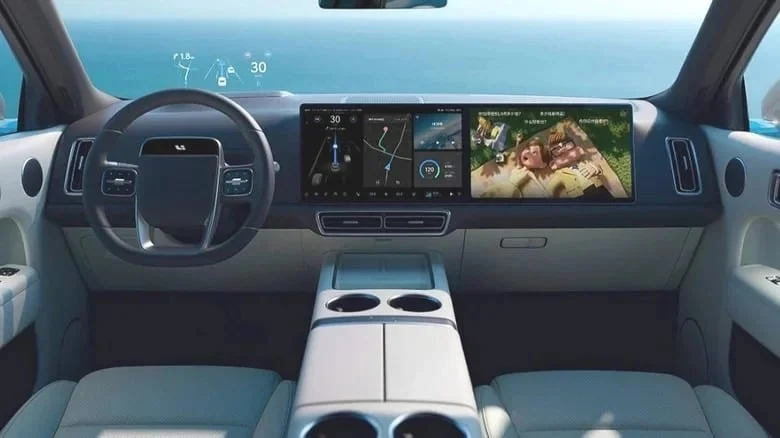
Beijing is once again positioning itself at the vanguard of automotive regulatory reform, this time setting its sights on the increasingly digitized and screen-dominated interiors of modern vehicles. Following rigorous scrutiny and subsequent restrictions placed on electronic door handles—which have sparked safety debates globally—the Chinese government is now taking aim at the sprawling touchscreens, reclining luxury seats, and complex voice-command systems that have become hallmarks of contemporary cabin design.
According to recent policy drafts and industry disclosures, the Ministry of Industry and Information Technology (MIIT) of the People’s Republic of China is actively reviewing a comprehensive set of new regulations concerning automotive interior technology and equipment. This regulatory push comes in direct response to an intensely competitive domestic automotive market where manufacturers continually attempt to outdo one another by outfitting vehicles with cinema-sized displays, highly automated seating arrangements, and expansive digital interfaces.
Under the proposed guidelines, massive infotainment displays, advanced head-up displays (HUDs), and other auxiliary screens will face stringent evaluations. Before receiving market authorization, these technologies must undergo rigorous testing to determine their impact on driving safety, physical resistance to sudden impacts, and overall reliability under extreme operating conditions. Any interior display design deemed excessively distracting or structurally hazardous faces the distinct possibility of being rejected for commercial production and deployment. Furthermore, Chinese regulators are contemplating preemptive bans on emerging automotive trends such as folding screens, effectively drawing a hard line against further visual complexity in the cockpit.
Beyond visual displays, the regulatory crosshairs are also pointed at specialized comfort features that have gained massive popularity among electric vehicle (EV) buyers. Among them are "zero gravity" seats, which allow occupants to recline into deeply horizontal positions while utilizing integrated leg rests. While these seats are marketed as the ultimate solution for relaxation during long trips or while charging, safety authorities argue they pose severe risks during collisions. Consequently, China is moving toward prohibiting the activation of these reclining modes while the vehicle is actively in motion.
Additional proposals under review include tighter limitations on unorthodox daytime running light (DRL) designs that fail to meet standardized safety visibility criteria, as well as functional restrictions on voice-control systems. Under the new framework, voice-activation software may be legally restricted to essential operational commands—such as turning on the headlights, unlocking doors, or popping the hood—rather than controlling critical climate, navigational, or driving parameters that could divert a driver’s attention from the road.
The Evolution of In-Car Digital Real Estate
To understand the weight of MIIT’s proposed regulations, one must examine the rapid transformation of the automotive interior over the past decade. For more than a century, automobile dashboards were defined by analog instrumentation: mechanical speedometers, physical dials, tactile knobs, and simple radio units. These physical interfaces allowed drivers to operate vehicle functions via muscle memory, minimizing the duration of visual distraction.
However, the advent of the smartphone era fundamentally altered consumer expectations, bleeding into the automotive sector. As touchscreen technology became ubiquitous, automakers quickly realized that replacing physical buttons with digital panels drastically reduced production costs while bestowing a futuristic aesthetic upon the vehicle. What began as modest seven-inch center consoles quickly evolved into sprawling, dashboard-spanning displays measuring upwards of fifteen, thirty, or even forty inches.
This digital arms race was supercharged by the rapid rise of China’s domestic electric vehicle market. Brands such as BYD, Nio, Xpeng, Li Auto, and foreign entrants like Tesla transformed the automobile from a mechanical transportation device into a rolling smart device, often referred to in industry parlance as the "third living space." In these vehicles, physical buttons were almost entirely eradicated, forcing drivers to navigate deeply nested digital menus simply to adjust the air conditioning, change airflow directions, or alter side-mirror positions.
While tech-savvy consumers initially welcomed this minimalist design philosophy, transportation safety experts, ergonomists, and regulators began raising alarms. Multiple independent studies from traffic safety organizations worldwide have consistently demonstrated that interacting with touchscreen menus—particularly while traveling at high speeds—significantly increases cognitive and visual load, exponentially raising the risk of traffic collisions. By stepping in with comprehensive standardization and restriction proposals, the Chinese government is signaling that the era of unfettered cabin digitization may be coming to an end.
Chronology of Regulatory Intervention in China’s Automotive Sector
The potential ban on oversized screens and reclining seats is not an isolated policy decision; rather, it represents the latest milestone in a systematic effort by Chinese regulatory bodies to rein in potentially dangerous automotive trends. The chronology of these safety interventions highlights Beijing’s proactive approach to vehicle oversight:
Late 2021 to 2022: As domestic EV startups began pushing the boundaries of cabin technology, traffic safety researchers in China first raised informal concerns regarding driver distraction caused by multi-screen layouts that spanned the entire width of the dashboard. Regulators began quietly monitoring ergonomic studies related to visual overload.
Mid-2023: Following several high-profile accidents involving modern electric vehicles equipped with flush-mounted electronic door handles—which complicated rescue efforts when electrical power failed after a crash—MIIT and related agencies initiated preliminary reviews into structural and electronic safety redundancy for cabin hardware.
Late 2023: Discussions broadened from exterior entry mechanisms to interior user interfaces. Initial drafts concerning the safety implications of head-up displays and immersive infotainment screens were circulated among select industry stakeholders for closed-door feedback.
Early 2024: The conversation intensified as manufacturers began teasing even more radical interior concepts, including flexible, rollable displays and fully reclining sleeper seats marketed for autonomous driving modes that are not yet legally permitted on public roads.
Current Phase: The Ministry of Industry and Information Technology (MIIT) is actively compiling feedback on formal regulatory proposals. These proposals explicitly outline mandatory impact resistance tests for screens, restrictions on zero-gravity seating while in motion, and functional caps on voice-activation software. If finalized, these guidelines will be integrated into China’s national vehicle type-approval process, effectively barring non-compliant vehicles from the world’s largest automotive market.
Industry Data and Safety Implications
The economic and manufacturing implications of MIIT’s proposed regulations are profound. China is not only the world’s largest automotive market by volume, producing over 30 million vehicles annually, but it is also the primary export hub for millions of smart electric vehicles shipped to Europe, Southeast Asia, Latin America, and the Middle East. Consequently, regulatory shifts in Beijing frequently exert a gravitational pull on global automotive design standards.
According to data compiled by automotive safety research groups, driver distraction accounts for a significant percentage of annual traffic fatalities globally. A widely cited study by the UK-based Transport Research Laboratory (TRL) found that interacting with touchscreens can increase reaction times by up to 57 percent—a performance degradation worse than the effects of driving under the influence of alcohol or cannabis. When extended to modern Chinese EVs, where functions like windshield wiper speed and ventilation are embedded within sub-menus, the cognitive burden multiplies.
Furthermore, safety data regarding interior crash dynamics supports the proposed restrictions on zero-gravity and fully reclining seats. Traditional automotive safety systems—including airbags, seatbelt pre-tensioners, and crumple zones—are meticulously engineered assuming the occupant is seated in an upright, locked position facing forward. When a passenger reclines flat or assumes a zero-gravity posture, the geometry of the seatbelt changes relative to the body’s skeletal structure. In the event of a frontal collision, a reclined passenger is at severe risk of "submarining," a phenomenon where the occupant slides underneath the lap belt, leading to catastrophic abdominal and spinal injuries. By seeking to disable these reclining functions while the vehicle is in motion, regulators are aligning cabin comfort features with fundamental laws of crash physics.
Official Responses and Stakeholder Reactions
While the proposed regulations have been broadly welcomed by traffic safety advocates, reactions from the automotive manufacturing sector have been notably complex.
Representatives from major domestic technology-focused automakers have expressed quiet concern regarding how these rules will impact product differentiation. For years, Chinese EV brands have marketed massive interior screens and luxury lounge seating as primary competitive advantages over legacy foreign automakers. Stripping away these features, or forcing significant redesigns to meet new impact-resistance and distraction standards, could neutralize a key selling point that has resonated deeply with domestic tech consumers.
Conversely, legacy manufacturers and traditional suppliers have viewed the regulatory trajectory with cautious optimism. Companies that specialize in physical switchgear, tactile control modules, and mechanical redundancy have argued that the pendulum swung too far toward cost-saving digitization. Industry insiders suggest that many automakers were already quietly evaluating the reintroduction of physical buttons, not merely due to impending regulations, but because of mounting consumer feedback criticizing the impracticality of all-touch dashboards.
From the regulatory perspective, MIIT officials have maintained a steadfast focus on public safety. In public briefings and industry symposiums, representatives have reiterated that technological innovation in the automotive sector must never outpace the fundamental requirement of safeguarding human life. The ministry’s stance underscores a broader governmental philosophy in Beijing: while technological leadership is a national priority, consumer safety and societal well-being remain non-negotiable boundaries.
Broader Global Impact and Future Market Outlook
The implications of China’s impending restrictions extend far beyond its domestic borders. Because many Chinese automakers are aggressively expanding their international footprints—exporting advanced electric and hybrid vehicles to Europe, Australia, and developing markets—design decisions made to comply with MIIT regulations often dictate global product specifications. It is economically unfeasible for most manufacturers to build entirely separate interior architectures for domestic consumption versus export markets; thus, safety compliance in China frequently establishes a de facto global standard.
Furthermore, international regulatory bodies such as the United Nations Economic Commission for Europe (UNECE) and the U.S. National Highway Traffic Safety Administration (NHTSA) have been closely monitoring the situation. While Western regulators have historically focused on advanced driver-assistance systems (ADAS) and crash-test ratings, the exponential rise of distracting in-car touchscreens has emerged as a shared global regulatory anxiety. China’s decisive move to codify screen restrictions and seat-position limitations may well accelerate similar legislative efforts in Europe and North America.
As the policy drafts progress toward formal implementation, automakers operating within China face a critical transition period. Engineering teams must pivot away from software-heavy, screen-centric cabin designs and begin re-engineering interiors to incorporate safer, more ergonomically sound physical controls. For consumers, the vehicles of tomorrow may look slightly less like futuristic sci-fi command centers and somewhat more like traditional automobiles—a compromise prioritizing human safety over digital excess.