A recent investigative documentary produced by Australia’s ABC News has ignited an urgent global debate regarding the cybersecurity integrity of modern electric vehicles (EVs), with a specific focus on Chinese-manufactured models. The investigation, which highlighted the potential for unauthorized remote access to vehicle systems, has brought to the forefront the risks associated with the increasing connectivity of modern transportation. As the automotive industry transitions toward "software-defined vehicles," the ability to remotely control critical hardware—from door locks to cabin microphones—has shifted from the realm of science fiction to a tangible security challenge.
The focal point of the investigation involved a controlled experiment conducted on the BYD Shark 6 pickup truck. Cybersecurity expert Dan Hreszczuk, tasked with evaluating the vehicle’s digital architecture over a two-week period, successfully identified significant vulnerabilities that allowed him to bypass authentication protocols. Without the need for a traditional password or complex encryption key, Hreszczuk was able to manipulate several mechanical and electrical functions while the vehicle was in motion. These functions included the operation of windshield wipers, the activation of headlights, the locking and unlocking of doors, and even the remote control of the vehicle’s audio system. Perhaps most alarmingly, the researcher demonstrated that the vehicle’s internal microphones could be accessed remotely, effectively turning the car into a surveillance device capable of eavesdropping on private conversations within the cabin.
Chronology of the Investigative Findings
The investigation did not emerge in a vacuum. It follows a period of rapid international expansion for Chinese EV manufacturers, including BYD and Xpeng, which have aggressively entered markets in Europe, Southeast Asia, and Australia. The timeline of concerns began to sharpen as automotive analysts noted the "always-on" nature of modern EV connectivity.
In the weeks leading up to the report, researchers scrutinized the backend infrastructure of various Chinese EV brands. The investigation revealed that the data aggregation practices of these manufacturers are extensive. Modern EVs function essentially as mobile data centers, continuously streaming telemetric data—including real-time GPS location, battery health, charging patterns, and driver behavior—back to manufacturer-owned servers.
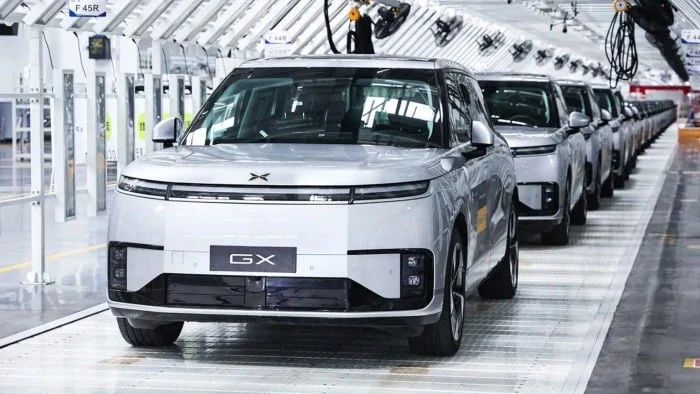
The investigation into Xpeng further exacerbated these fears. An individual claiming to possess internal access to Xpeng’s network demonstrated the ability to monitor the Xpeng G6 model in real-time. This access extended beyond mere location tracking to include sensitive metrics such as steering wheel angle, seating status, and velocity. The ability to monitor such granular data in real-time raises fundamental questions regarding the privacy of consumers and, more significantly, the potential for state-level surveillance if these data pipelines are compromised or compelled by local regulations.
Data Privacy and the "Software-Defined" Vehicle
The transition to software-defined vehicles—where the car’s performance is governed by code rather than mechanical linkages—has revolutionized the driving experience. However, this shift has also expanded the "attack surface" for cybercriminals. Every connection point, whether via cellular networks (5G/LTE), Wi-Fi, Bluetooth, or physical ports, represents a potential vulnerability.
Data collected by vehicles today goes far beyond navigation. Manufacturers harvest information on contact lists synced from mobile devices, voice command history, and, in some cases, cabin-facing camera data used for driver monitoring systems. When this data is transmitted to servers located outside the country of origin, it creates a geopolitical friction point. For government officials, military personnel, or corporate executives who drive these vehicles, the threat of sensitive information leakage is not merely a privacy issue; it is a matter of national security.
Expert Analysis and Technical Implications
The technical findings presented by Hreszczuk suggest that the vulnerabilities in the BYD Shark 6 may stem from lax authentication standards at the firmware level. In the cybersecurity industry, the "principle of least privilege" dictates that systems should only be accessible via secure, encrypted channels. If a researcher can access a vehicle’s primary functions without a password, it suggests that the integration between the infotainment system and the vehicle’s Controller Area Network (CAN bus) is not adequately segmented.
Segmentation is a critical security feature in modern automotive design. It ensures that if an attacker compromises the entertainment system (which is connected to the internet), they cannot "jump" into the powertrain or steering systems. If these segments are not isolated, a remote hacker could theoretically cause a vehicle to accelerate, brake, or steer abruptly, creating an immediate physical danger to the occupants and other road users.
Industry and Official Responses
In response to the documentary, representatives from the automotive sector have generally emphasized their commitment to data protection. BYD and Xpeng, while not commenting on the specific exploits mentioned in the documentary, have previously stated that they comply with all local data residency laws and that their vehicles utilize industry-standard encryption protocols.
However, the international regulatory environment is tightening. The European Union and the United States have begun drafting legislation aimed at curbing the potential risks associated with "connected vehicles." In the U.S., the Department of Commerce has proposed rules that would effectively ban the use of Chinese-made software and hardware in connected vehicles on American roads, citing concerns over "foreign adversary" access to critical infrastructure. Similar discussions are occurring within the Australian government, where security agencies have been tasked with assessing whether the connectivity features of imported vehicles pose an "unacceptable risk" to national security.
Broader Impact and Future Outlook
The broader implications of this investigation are twofold: consumer trust and regulatory oversight. For the average consumer, the convenience of remote updates and app-based vehicle control is highly attractive. However, the realization that these features can be exploited to facilitate surveillance or remote control may dampen demand for highly connected models.
Furthermore, the automotive industry faces a significant challenge in standardizing cybersecurity practices. Unlike the IT sector, which has decades of experience in "patching" vulnerabilities, the automotive industry is still learning how to manage the lifecycle of software in a machine that is expected to remain operational for fifteen to twenty years. The risk is that as software becomes outdated, the security patches may cease to be released, leaving older vehicles vulnerable to increasingly sophisticated cyber threats.
The current situation serves as a wake-up call for both manufacturers and regulators. The focus must shift from purely optimizing performance and connectivity to prioritizing "security-by-design." This entails:
- End-to-End Encryption: Ensuring all data transmitted between the vehicle and the cloud is fully encrypted and authenticated.
- Network Segmentation: Physically or logically isolating critical driving systems from the infotainment and telematics units.
- Data Localization: Ensuring that sensitive telemetric data is processed and stored within the jurisdiction where the vehicle is registered, minimizing the risk of cross-border data exposure.
- Transparency: Providing consumers with clear information on what data is being collected, how it is being stored, and who has access to it.
Conclusion
The documentary by ABC News has successfully moved the conversation about EV security from technical forums into the public consciousness. As electric vehicles continue to replace internal combustion engines, they will become the most significant IoT (Internet of Things) devices in the average person’s life. The vulnerabilities identified in the BYD Shark 6 and Xpeng G6 are likely just the tip of the iceberg in an industry that is still maturing its security protocols.
As the digital and physical worlds continue to merge within the cockpit of the modern automobile, the responsibility lies with both manufacturers and international regulatory bodies to ensure that innovation does not come at the cost of public safety. The future of transportation will be electric, but if it is to be sustainable, it must also be secure. The coming months will likely see increased pressure on Chinese manufacturers to open their software systems to independent third-party audits to regain public confidence and satisfy the rigorous security requirements of international markets. Whether these manufacturers can adapt their security architectures to meet these global standards will be a defining factor in their ability to continue their global expansion.