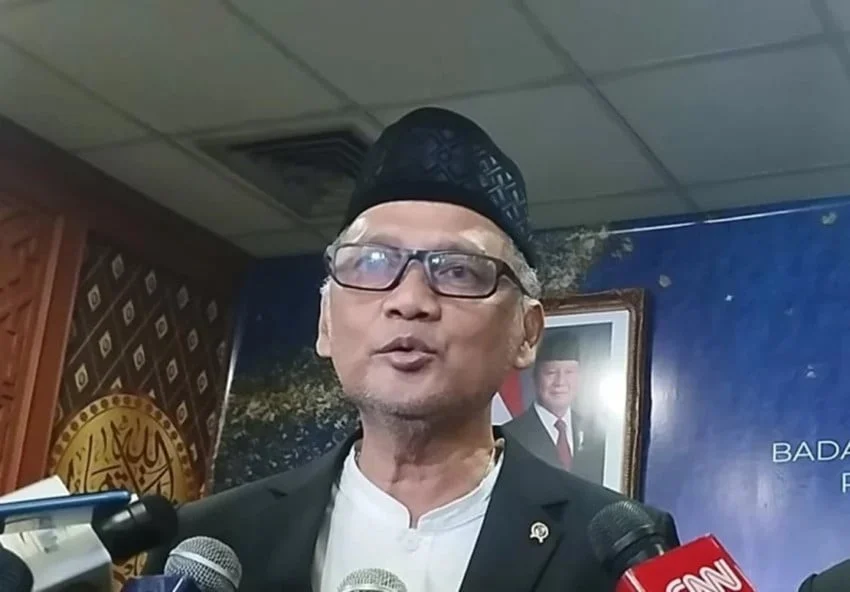
Minister of Hajj and Umrah Mochamad Irfan Yusuf, widely known as Gus Irfan, has formally addressed public concerns regarding the appointment of his son and several associates to advisory roles within the newly established Badan Penyelenggara Haji (BP Haji). The controversy, which has gained traction in political and social circles, centers on allegations of nepotism during the initial organizational phase of the government agency. In his official statement released on Monday, October 26, 2026, the Minister clarified that the involvement of his family members and former students—known as santri—was a temporary, voluntary measure necessitated by the acute lack of administrative infrastructure during the agency’s inception.
The Genesis of BP Haji and Administrative Constraints
The establishment of BP Haji represents a significant shift in Indonesia’s religious governance, transitioning the management of Hajj pilgrimages from a ministerial division to an independent body. According to the Minister, the transition period was marked by a complete absence of fundamental operational assets. When the agency was first carved out of the previous ministry structure, it lacked the basic requirements for a functional government entity: a physical office, a established organizational chart, and a budget for support staff.
Gus Irfan described the atmosphere during those initial months as a "start-up" phase for the state. "When we walked out of the palace, we had no staff, we had no office, we had nothing," the Minister remarked. This vacuum forced the administration to look toward existing networks for immediate assistance. The Minister asserted that his son and several of his trusted santri were brought in not as formal, salaried civil servants, but as a stop-gap measure to ensure that the vital logistical preparations for the upcoming Hajj seasons were not disrupted by administrative inertia.
Chronology of the Involvement
The timeline provided by the Ministry indicates that this arrangement lasted for a duration of approximately three to four months. During this period, the volunteers assisted with the drafting of internal policies, the organization of data regarding the upcoming Hajj logistics, and the initial setup of the agency’s digital infrastructure.
- Phase 1: Formation (Month 0-1): The government mandates the creation of BP Haji. The Minister finds himself without a permanent office or budget allocation for staffing.
- Phase 2: Emergency Response (Month 1-4): The Minister brings in close associates and family members to assist in the daily operations of the transition team. The Minister maintains that these individuals performed administrative tasks on a strictly voluntary basis.
- Phase 3: Formalization (Month 4-Present): As the Ministry secured its budget and drafted official recruitment procedures, the agency transitioned to hiring professional staff through standard government bureaucratic protocols. The Minister claims that at this point, the informal assistance from his inner circle was phased out.
Supporting Data: The Magnitude of Hajj Logistics
The controversy arrives at a sensitive time for the Ministry, which is currently navigating the complex financial planning for the 2027 Hajj pilgrimage. Earlier this week, the Ministry of Hajj and Umrah (Kemenhaj) proposed a total cost of Rp107.3 million per pilgrim for the 2027 season, with the government-subsidized portion resulting in an out-of-pocket cost of Rp42.9 million for the individual pilgrims.
Managing the logistics for over 200,000 Indonesian pilgrims requires an immense administrative apparatus. Data from the 2025-2026 cycles shows that any delay in the formation of the governing body could have had catastrophic consequences for the Hajj quota, visa processing, and transportation arrangements. Analysts argue that while the urgency of the situation explains the Minister’s decision to utilize his personal network, it also highlights the systemic vulnerabilities inherent in creating new government bodies without a clear transition budget.
Ethical Implications and Transparency Concerns
The involvement of family members in government positions, even if voluntary, often invites scrutiny regarding the principles of Good Governance. Under the Indonesian Civil Service Law, the appointment of personnel must adhere to meritocratic standards and transparency. Critics have argued that even if the work was unpaid, the proximity to power allows family members to influence policy decisions or gain access to classified government information, which constitutes a potential conflict of interest.
Legal observers have noted that while there may not be a specific violation of the law regarding "unpaid volunteerism," the optics of the situation present a political challenge for the administration. The government’s emphasis on transparency in the wake of recent reforms makes any deviation from standard recruitment practices a focal point for legislative oversight.
Official Responses and Legislative Oversight
While the Minister has defended the actions as a necessary sacrifice for the continuity of the state, members of the House of Representatives (DPR) have indicated that they intend to seek further clarification during upcoming budget hearings. The primary question for lawmakers is whether the reliance on personal networks created a precedent that could undermine the professionalism of the newly formed BP Haji.
In his defense, Gus Irfan emphasized that the volunteers received no compensation from the state budget. He argued that their presence saved the government significant costs during the critical startup phase and prevented the loss of time that would have been required for a formal, competitive recruitment process during an emergency transition.
Broader Impact on Public Trust
The public perception of the Ministry of Hajj is intrinsically linked to the efficacy of the Hajj pilgrimage management. For the average Indonesian citizen, the focus remains on the affordability and quality of the Hajj service. If the administrative controversy distracts the Ministry from its core objectives—such as the negotiation of Hajj costs—it could lead to a decline in public confidence.
Economic analysts point out that the proposed cost of Rp107.3 million per pilgrim is already a point of contention for many families. If the Ministry is seen as prioritizing personal connections over professional governance, the public will likely be more critical of these proposed fee increases. Ensuring that the Ministry remains focused on its mandate is crucial for maintaining stability in the upcoming fiscal year.
The Road Ahead: Professionalizing BP Haji
Moving forward, the Ministry is expected to release a detailed report on the recruitment process for the remaining vacant positions within BP Haji. The goal is to shift from the initial "emergency" setup to a permanent, transparent, and merit-based organizational structure. This will likely involve:
- Open Recruitment: Implementing a standardized, public-facing recruitment process for all permanent staff positions.
- Audit of Governance: Undergoing an internal audit to document all administrative activities during the transition period to ensure compliance with the law.
- Stakeholder Engagement: Increasing communication with the public and Hajj representative groups to address concerns regarding the management of the Hajj fund.
The Minister’s statement on Monday serves as an attempt to close the chapter on these allegations by providing context to the decisions made in the heat of the transition. However, as BP Haji continues to evolve, the burden of proof will remain on the Ministry to demonstrate that it is operating in full accordance with national standards of integrity.
The intersection of religious governance and public administration in Indonesia is a complex field. The case of the Ministry of Hajj and Umrah serves as a reminder that in the process of building new national institutions, the adherence to established administrative norms is just as important as the speed of execution. As the 2027 Hajj season approaches, the focus will likely shift back to the Ministry’s performance in managing the logistics of the pilgrimage, but the questions raised this week regarding internal appointments will remain a benchmark for how the agency manages its public image and operational ethics in the long term.
In conclusion, while Minister Mochamad Irfan Yusuf has provided a functional explanation for the presence of his associates during the infancy of BP Haji, the event underscores the broader challenges of institutionalizing new government agencies. Whether these actions will impact the long-term credibility of the Ministry remains to be seen, but the transparency of future recruitment will be the ultimate litmus test for the administration’s commitment to good governance. For now, the Ministry remains focused on its primary objective: ensuring that the 2027 Hajj pilgrimage proceeds with the necessary financial stability and administrative rigor that the Indonesian public expects.