A Strategic Pivot Toward the 33rd HMI Congress
The launch of the book takes place in a highly charged political atmosphere as the organization approaches the 33rd HMI Congress, scheduled to be held in Lampung in November 2026. HMI, recognized as one of Indonesia’s oldest and most influential student organizations, has historically served as a critical breeding ground for the nation’s political, academic, and business leadership.
For Rifyan Ridwan Saleh, the book is not merely a collection of essays but a structured roadmap intended to address the complexities of the modern Indonesian sociopolitical landscape. By positioning his candidacy around a comprehensive written agenda, Saleh is attempting to shift the discourse of the upcoming congress from personality-based politics toward a more substantive, policy-oriented debate.
Intellectual Discourse and Expert Analysis
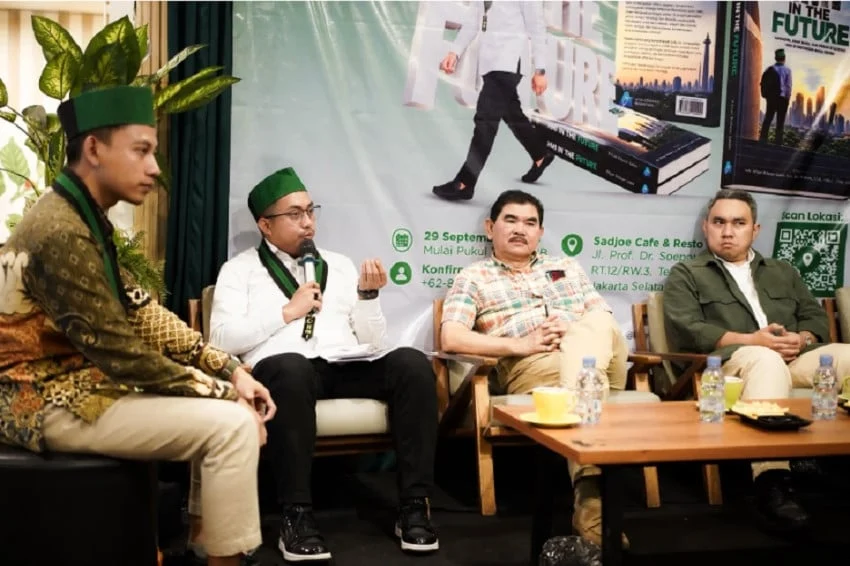
The book launch was accompanied by a panel discussion that featured voices from diverse professional sectors, underscoring the relevance of HMI’s future direction to the broader Indonesian state apparatus.
Ilham Akbar Mustafa, Staf Khusus to the Minister of Migrant Worker Protection (P2MI) focusing on Digital Transformation and Public Service Strengthening, lauded the initiative. He noted that in the lead-up to any HMI congress, the organization often faces the risk of becoming mired in procedural maneuvering. According to Mustafa, Saleh’s commitment to presenting a written manifesto serves as a template for "intellectualizing" the electoral process, forcing other candidates to define their platforms with similar rigor.
Professor Juanda, a Guru Besar in Constitutional Law at Esa Unggul University, provided a legal and institutional perspective. He emphasized that for an organization like HMI to maintain its relevance in an era of rapid digital disruption and evolving constitutional challenges, it must modernize its internal governance. His contribution to the discussion highlighted the necessity for HMI to act as a bridge between the idealism of the student movement and the pragmatic requirements of statecraft.
Ojak Situmeang, a Managing Partner and Co-Founder of OS Law Partnership, added a practitioner’s perspective, noting that the challenges facing the next generation of Indonesian leaders require a synthesis of legal literacy and adaptive leadership. The discussion concluded that the future of HMI is intrinsically linked to its ability to cultivate human resources capable of navigating the globalized economy while maintaining the organization’s foundational commitment to the values of Islam and the Indonesian state.
The Philosophy of Service and Leadership
During the formal declaration, Rifyan Ridwan Saleh articulated a leadership philosophy that prioritizes the institutional mission over personal ambition. He stated that the publication of his ideas was a deliberate step to ensure that his vision for HMI is publicly accessible and subject to scrutiny.
"I do not want these ideas to remain mere words on a page. I have chosen to fight for them," Saleh remarked. "My decision to run for the General Chairmanship of PB HMI for the 2027–2029 period is driven by a desire to dedicate my energy, intellect, experience, and time to the community and the nation through this organization."
Saleh’s stance reflects a growing sentiment among the HMI rank-and-file that the organization must evolve beyond its traditional role as a protest movement. He argues that the contemporary era demands an "HMI that creates," a body that produces leaders equipped with digital literacy, ethical integrity, and a proactive approach to national policy challenges. He stressed that the position of General Chair is merely a vehicle—a "tool for institutionalizing ideas"—rather than an end in itself.
Historical Context and Institutional Significance
The Himpunan Mahasiswa Islam (HMI) was founded on February 5, 1947, in Yogyakarta. Throughout its nearly 80-year history, it has been a barometer for the health of Indonesia’s democratic development. As the organization prepares for its 33rd Congress in Lampung, the stakes are perceived as exceptionally high. The country is currently undergoing significant administrative and digital transformations, and the role of youth organizations in shaping the national narrative is under renewed focus.
Previous congresses have occasionally been characterized by intense competition and fragmentation. The emergence of candidates who lead with intellectual frameworks—such as Saleh’s focus on future-proofing the organization—is viewed by political analysts as a positive development for internal democratic culture. This mirrors the trajectory of other candidates, such as Nur Latuconsina, who has similarly campaigned on the theme of "HMI Resilience," further signaling that the 33rd Congress will likely be a battleground of competing visions for the organization’s identity in the mid-21st century.
Broader Implications for Indonesian Civil Society
The discourse surrounding Saleh’s book launch suggests that HMI is currently undergoing a period of self-reflection. The organization is grappling with the challenge of remaining the "independent agent of change" it was designed to be, while responding to the pressures of a highly digitized political economy.
Analysts observing the HMI landscape point to three key areas where the next leadership will be tested:
- Digital Integration: How HMI uses technology to organize and advocate for its members and the public.
- Policy Engagement: The ability of the organization to contribute meaningfully to national debates on law, economics, and human rights rather than merely responding to them.
- Internal Governance: The challenge of maintaining a unified structure across the massive, decentralized network of HMI branches across the Indonesian archipelago.
The involvement of figures like the Badko HMI of North Sumatra, which has secured high-level regional support for its own initiatives, indicates that the regional branches are also exerting more influence in the lead-up to the congress. This creates a complex electoral environment where candidates must balance local support with a national vision.
Future Outlook: Toward the 2027–2029 Term
As the 2026 congress approaches, the conversation initiated by Saleh’s work is expected to grow in scope. The document serves as a baseline against which other candidates will be measured. For the observers and members of HMI, the focus will remain on whether these proposed "new directions" can be successfully translated into sustainable programs that increase the organization’s impact on the welfare of the Indonesian people.
Saleh’s emphasis on "human resource development"—specifically producing members who are not only ideologically sound but also professionally capable—is a direct response to the criticism that student movements have become disconnected from the professional and technical realities of modern Indonesia.
Ultimately, the launch of HMI in The Future represents a shift in the tone of the upcoming leadership cycle. By choosing to frame his bid through a structured intellectual lens, Rifyan Ridwan Saleh has challenged his peers to engage in a debate of substance. Whether this shift will lead to a more effective, modernized HMI remains to be seen, but the intent to modernize the organization’s internal discourse is clear. The upcoming congress in Lampung will serve as the final crucible for these ideas, determining not just the leadership of the organization, but the strategic posture of HMI for the next decade of Indonesia’s national life.